

What Does "Open-Back Setting" Mean, And Why Is It Mandatory for Jyotish Jewelry?
Your Jyotish astrologer prescribed a Blue Sapphire. They told you it must be set in gold, worn on the middle finger — and that the stone must touch your skin.
If you've started shopping for a ring, you've likely encountered the term open-back setting. Or perhaps your jeweler mentioned it. Either way, if you're not sure what it means or why it matters so much for astrological jewelry, this post explains everything.
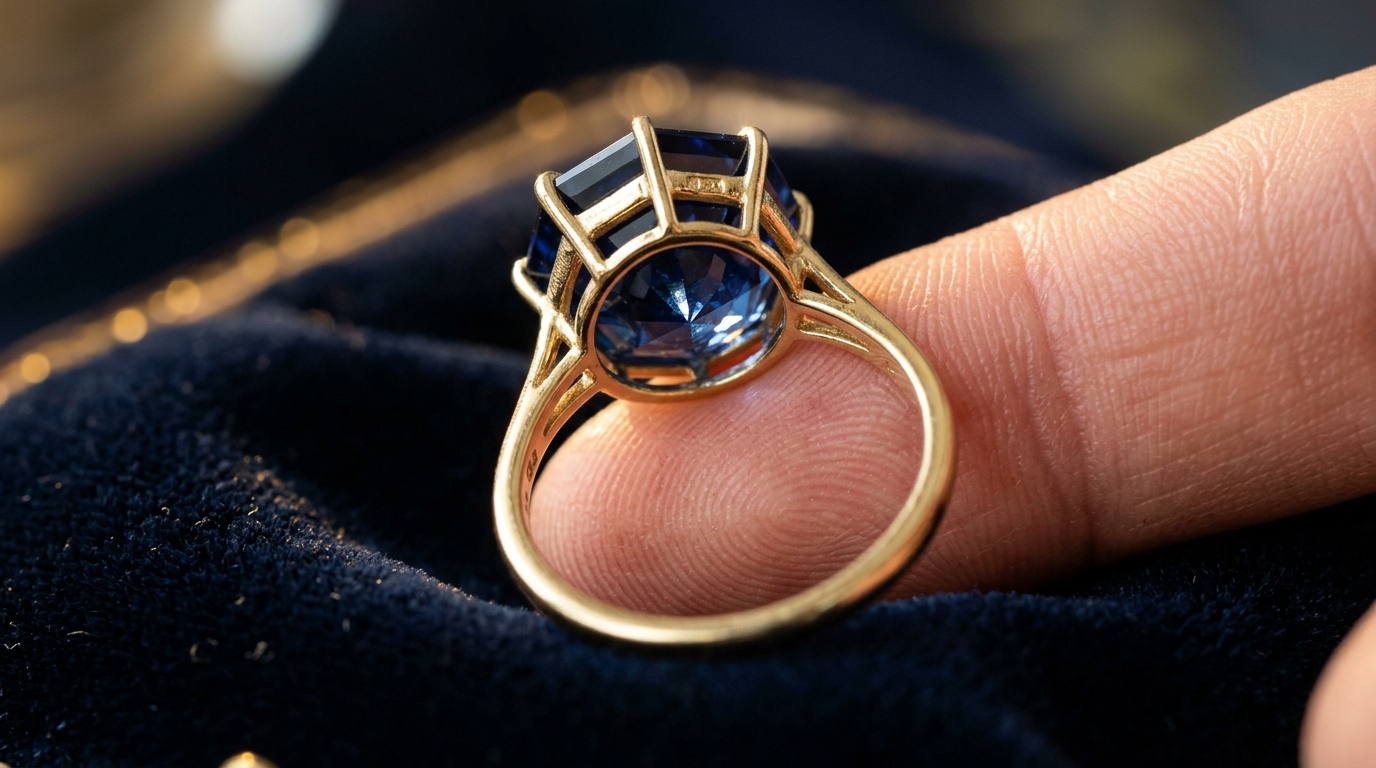
What Is an Open-Back Setting?
Every faceted gemstone has two main parts: the crown (the top, visible portion) and the pavilion (the bottom, pointed or flat underside). When a jeweler sets a stone into a ring or pendant, they must decide whether to leave the pavilion exposed or enclose it in metal.
An open-back setting leaves the pavilion of the gemstone exposed. There is no metal plate beneath the stone. When you wear the ring, the underside of the stone directly contacts your skin.
A closed-back setting — also called an enclosed or box setting — has a solid metal base that covers the pavilion entirely. The stone sits inside a sealed metal chamber. No part of the stone ever touches your body.
For commercial jewelry — engagement rings, pendants, fashion pieces — both settings are common and both are perfectly acceptable. The choice is typically made for aesthetic or durability reasons.
For Jyotish astrological jewelry, the distinction is not aesthetic. It is fundamental.
Why Open-Back Is Mandatory for Jyotish
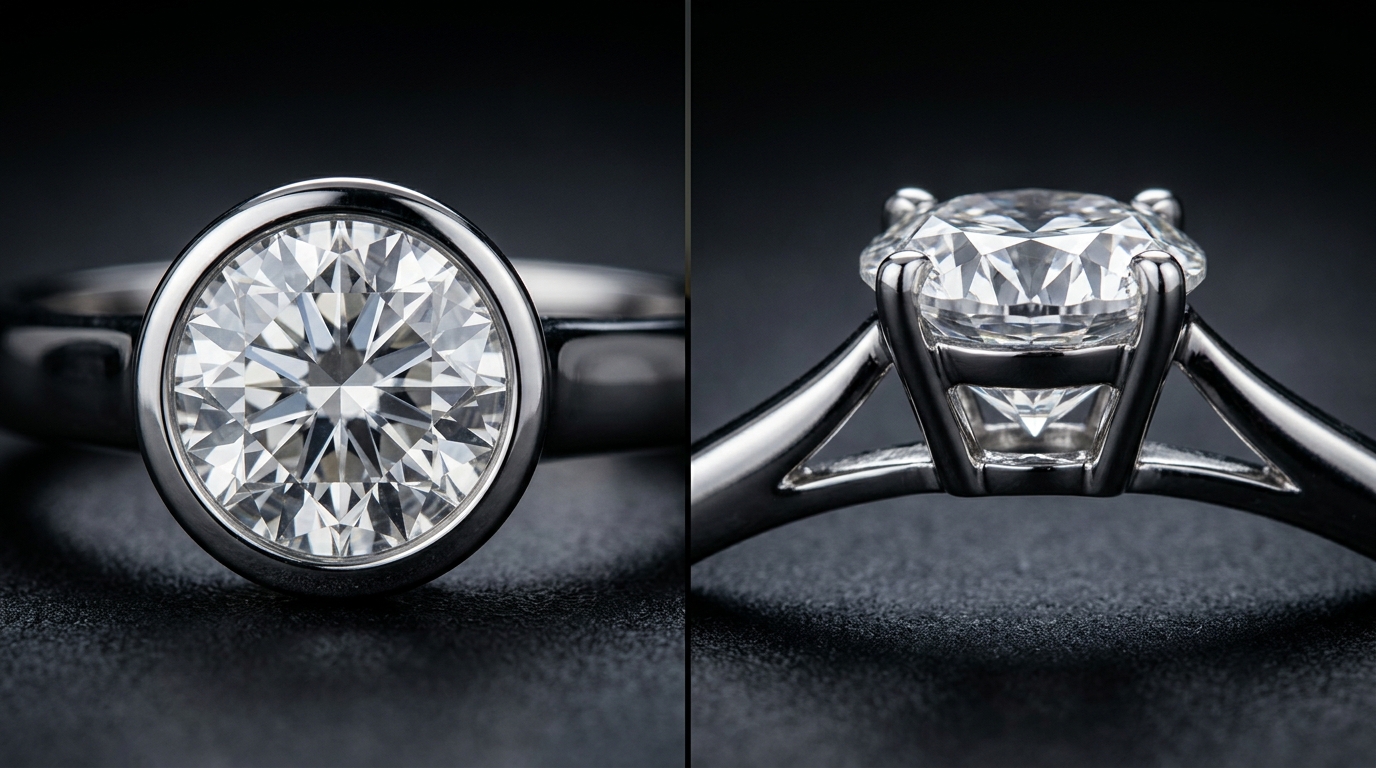
In Vedic astrology, a prescribed gemstone works by acting as a conduit for its corresponding planet's energy. The stone absorbs and transmits that planetary energy into the wearer's body through direct physical contact with the skin.
This is the mechanism that makes a Jyotish ratna effective — not wearing it near the body, but having the stone actually touch the body. The pavilion, being the densest and most energetically concentrated part of the faceted stone, is the primary point of transmission.
If a closed-back setting seals the pavilion inside a metal chamber, that contact is broken. The planetary energy has no pathway into the wearer. The stone, regardless of its quality or certification, cannot function as an astrological remedy.
This is not a minor technicality. Jyotish authorities across traditions are consistent on this point: a gemstone set in a closed-back setting cannot serve as a Jyotish ratna, regardless of any other quality. The setting is as important as the stone itself.
What to Ask Your Jeweler
Most jewelers working with customers on astrological pieces understand the open-back requirement. But assumptions cost money and time. Be explicit. When commissioning a Jyotish ring, confirm the following in writing:
- The pavilion of the stone must be exposed — no metal plate, no closed base.
- The stone must touch the skin when the ring is worn on the correct finger.
- The metal type — confirm gold, silver, or panchdhatu as prescribed by your astrologer.
- The finger — the prong geometry and ring shank design may differ based on which finger the ring is sized for.
If your jeweler is unfamiliar with the open-back requirement or pushes back on it, find a jeweler who works with astrological commissions. Many jewelers in communities with large South Asian clientele will be familiar with the specification immediately.
Planet–Metal–Finger Mapping for Jyotish Rings
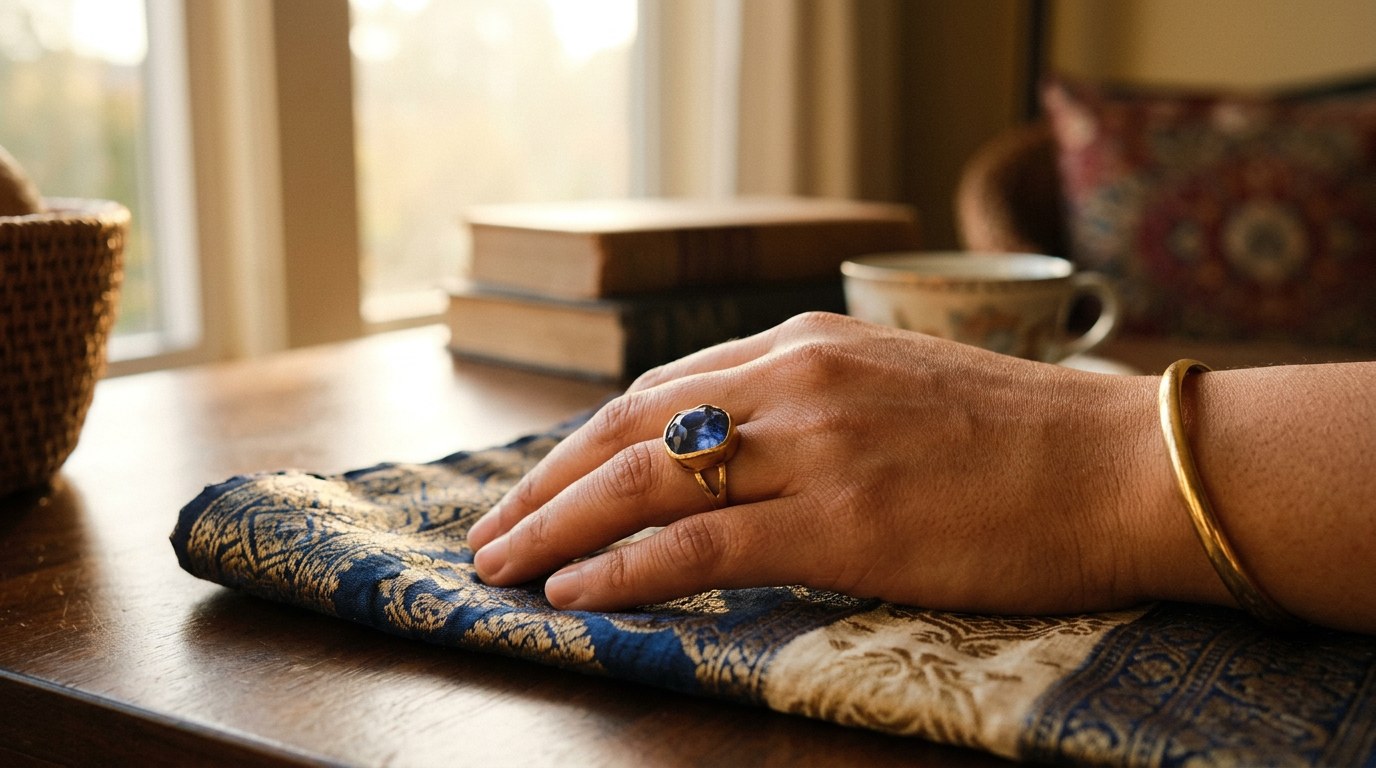
Your astrologer will prescribe a specific combination of stone, metal, and finger. Here is the standard Jyotish mapping for reference:
| Planet | Gemstone (Ratna) | Metal | Finger |
|---|---|---|---|
| Surya (Sun) | Ruby | Gold | Ring finger |
| Chandra (Moon) | Pearl | Silver | Little finger |
| Mangal (Mars) | Red Coral | Gold or Copper | Ring finger |
| Budha (Mercury) | Emerald | Gold | Little finger |
| Guru (Jupiter) | Yellow Sapphire | Gold | Index finger |
| Shukra (Venus) | Diamond / White Sapphire | Gold or Silver | Middle finger |
| Shani (Saturn) | Blue Sapphire | Gold or Silver | Middle finger |
| Rahu | Hessonite (Gomed) | Silver or Panchdhatu | Middle finger |
| Ketu | Cat's Eye (Lehsunia) | Silver or Panchdhatu | Ring finger |
Always follow your astrologer's specific prescription over general guidelines — individual charts may call for variations in metal or finger depending on planetary positions.
Buying the Stone Separately Is the Smarter Approach
Many buyers try to find a ready-made Jyotish ring — stone already set, available to purchase and wear. The problem with this approach is that you have no visibility into the stone's quality, treatment status, or certification before it is locked into a setting.
The recommended approach for serious Jyotish buyers is:
- Source a certified loose stone first — verify it is natural, untreated, and from a reputable source with a lab certificate.
- Commission the setting separately — take the loose stone to a jeweler and specify the open-back requirement, metal, and finger size explicitly.
- Verify before collection — before accepting the finished piece, check that the pavilion is fully exposed and the stone contacts your skin when worn.
This approach gives you full control over both the stone and the setting — which is the only way to guarantee a genuinely effective Jyotish ratna.
Browse Databazaar's certified natural loose gemstone collection — available for domestic US purchase with documentation confirming natural origin and treatment status. For the full guide on what to look for when buying a Jyotish stone, read our piece on how to read a gemological certificate.
Frequently Asked Questions
What is an open-back setting in jewelry?
An open-back setting is a ring or pendant design where the underside of the gemstone — the pavilion — is left exposed with no metal covering it. When worn, the stone makes direct contact with the skin. In a closed-back setting, a solid metal base covers the pavilion entirely, blocking all skin contact.
Why do Jyotish astrologers require an open-back setting?
In Vedic astrology, gemstones transmit planetary energy through direct physical contact with the body. An open-back setting allows the stone's pavilion to touch the skin, enabling this energy transfer. A closed-back setting physically blocks stone-to-skin contact, which Jyotish practitioners consider renders the gemstone ineffective as a planetary remedy.
What is the difference between an open-back and closed-back setting?
In an open-back setting, the gemstone's pavilion is exposed and touches the wearer's skin directly. In a closed-back setting, a metal plate or full bezel encases the pavilion in a sealed chamber with no skin contact. For ornamental jewelry, both are acceptable. For Jyotish astrological use, only open-back settings are considered valid.
Can any ring setting be made open-back for Jyotish?
Most traditional prong, claw, and bezel settings with open bases can be made open-back. The key requirement is that the pavilion must be accessible and in contact with skin when worn. A skilled jeweler can create an open-back version of most setting styles. Always confirm the specification explicitly with your jeweler before commissioning the piece.
Does the metal type matter for Jyotish rings?
Yes. In Jyotish, different planets are associated with specific metals — gold for Sun and Jupiter, silver for Moon, panchdhatu for Rahu and Ketu. Your astrologer will specify both the gemstone and the correct metal. Using the wrong metal is considered to compromise the astrological efficacy of the piece, even if the stone itself is correct.
Which finger should a Jyotish gemstone ring be worn on?
Each finger corresponds to a planet in Jyotish: index finger for Jupiter (Yellow Sapphire), middle finger for Saturn (Blue Sapphire), ring finger for Sun (Ruby), little finger for Mercury (Emerald). Your astrologer will prescribe the correct finger. Always follow your personal prescription over general guidelines.
Where can I buy a certified gemstone for an open-back Jyotish ring in the USA?
Databazaar.com stocks certified natural loose gemstones suitable for Jyotish use, available for domestic US purchase with no international ordering required. Each stone comes with documentation confirming natural origin and treatment status. Browse the natural gemstones collection here.