

7 Reasons Why You Should Invest in Tuscany Leather Goods
Imagine a leather bag that doesn’t just hold up over the years—it actually gets better. That’s the entire idea behind authentic Tuscany leather. It’s not just a material; it’s a piece of Italian heritage that ages with you, telling a story through a rich, beautiful patina that develops over time.
What Makes Tuscany Leather Unique

Tuscany leather isn't just another material you find in accessories; it's the benchmark for quality in the world of fine leather goods. Its reputation is built on centuries of tradition, incredible raw materials, and an artisanal process that few can replicate. Unlike mass-produced alternatives, every piece feels like it has a soul, carrying the mark of its origin in a small region of Italy where making leather is a true art form.
Think of it less as a manufactured item and more as a story you can hold in your hands. Its character comes from a combination of sensory details: a rich, earthy scent, a warm and supple feel, and a visual depth that only deepens with age. This isn't a static material; it’s alive, designed to change, adapt, and become even more beautiful with every use.
The Art of Aging Gracefully
The single most celebrated quality of Tuscany leather is its ability to develop a stunning, personal patina. A patina is that soft sheen and darkening that leather naturally acquires from sunlight, the oils from your hands, and daily life. While other leathers might crack, fade, or peel, Tuscan leather thrives on this process.
A genuine Tuscany leather product is a lifelong investment. It doesn't just endure; it evolves, with every scratch and mark contributing to a unique story that is entirely your own.
This remarkable aging comes from a specific, time-honored technique known as vegetable tanning. Instead of harsh chemicals, this method uses natural tannins from tree bark. It's a slow, organic process that preserves the hide's natural fibers, giving it unmatched strength and the ability to absorb the traces of its journey with you.
More Than Just a Material
Choosing Tuscany leather is about valuing more than just looks. It’s a nod to true craftsmanship and sustainability. Many tanneries in the region stick to strict environmental standards, making sure their traditional methods leave a minimal footprint on the planet.
Here’s what really sets it apart:
-
Unmistakable Aroma: It has a natural, woody, and slightly sweet scent—a world away from the chemical smell of cheaper, chrome-tanned leathers.
-
Rich, Warm Texture: The leather feels alive to the touch. It’s soft, warm, and substantial, promising both comfort and incredible durability.
-
Natural Imperfections: Authentic pieces will always show subtle variations in the grain. These aren't flaws; they're the signs of a genuine, natural product, not a synthetic imitation.
Ultimately, the allure of Tuscany leather is in its blend of history, quality, and personality. For those curious about a deeper dive, you can explore the distinctions between Tuscany leather and other Italian leather brands to fully appreciate its standing. It's this foundation that helps explain why it remains an enduring symbol of Italian luxury and timeless style.
The Heritage of Tuscan Tanning
To really get what makes Tuscany leather so special, you have to look back in time. This isn't just a material; it's a living piece of history, a craft with roots so deep they're woven into the very soul of Italy. The story starts centuries ago, echoing from the workshops of ancient Etruscan artisans to the powerful guilds of Renaissance Florence, where craftsmanship wasn't just a skill—it was a celebrated art form.
This rich legacy is completely tied to the land itself. The Arno River, which snakes through the region, provided the water essential for tanning. The dense Tuscan forests offered a natural bounty of chestnut, oak, and mimosa trees—the sources of the tannins that would preserve and color the hides. This perfect storm of natural resources and human ingenuity created the ideal environment for a legendary industry to be born.
From Ancient Artisans to Renaissance Masters
Working with leather in this part of the world is an ancient tradition. While the Etruscans laid the groundwork, the art truly began to take off during the Middle Ages. In the 1200s, the Republic of Pisa became a major hub, thanks to its prime location near cattle pastures and its access to Mediterranean ports for raw materials. When Florence conquered Pisa in the early 1400s, savvy Florentine families saw the incredible potential and invested heavily, moving the industry right into the heart of Tuscany along the Arno. You can dig deeper into this pivotal shift by exploring the history of Tuscan leatherworking cities and their evolution.
This move kicked off a golden age for Tuscan tanning. Powerful guilds were formed, not just to control trade but to enforce incredibly high standards of quality. A master tanner's reputation was everything, and the secrets of their craft were guarded jealously, passed down from one generation to the next.
This was never just a business; it was a family legacy. The knowledge of how to select the best hides, mix the perfect tannin blend, and work the leather by hand was a birthright, an inheritance more valuable than gold.
This fierce dedication ensured that even as economies shifted over the centuries, the craft survived and adapted, always renewing itself to meet the demands of international luxury markets.
The Enduring Legacy in Modern Workshops
Today, you can still feel that historical DNA in the workshops scattered across Tuscany. Sure, modern tools may have streamlined a few steps, but the core principles haven't budged. The obsession with quality, the reliance on natural ingredients, and the patient, hands-on approach are direct links to the past.
The unique character of Tuscany leather—its strength, its smell, its ability to get better with age—is a direct result of this unbroken heritage. That distinct, earthy aroma is a nod to the region's forests, much like how the cypress trees inspired the iconic scent of Blu Mediterraneo Cipresso di Toscana by Acqua di Parma.
Here’s how that heritage shows up today:
-
Generational Expertise: Many tanneries are still family-run, with artisans who learned the trade from their parents and grandparents.
-
Geographical Identity: The process is still fundamentally tied to the Tuscan environment, from the water they use to the local botanicals that create the tanning liquors.
-
Commitment to Tradition: The slow, deliberate method of vegetable tanning is a conscious choice to put quality over speed, just as it was centuries ago.
When you hold a piece of authentic Tuscany leather, you're holding more than just a product. You're connecting with a long line of artisans who perfected their craft through sheer dedication and a deep respect for their materials. It's this profound connection to its past that makes every item a genuine piece of Italian history.
Understanding Vegetable Tanning
So, what’s the real secret behind the durability and one-of-a-kind character of Tuscany leather? The answer isn't in some high-tech factory. It's in an ancient, eco-friendly process called vegetable tanning.
Think of it like aging a fine wine or a quality cheese—it's a slow, deliberate art that simply can't be rushed. This process is worlds away from modern mass production.
Instead of harsh chemicals, this traditional method relies entirely on nature. Tanneries in Tuscany use organic compounds called tannins, which they extract from the bark, leaves, and wood of trees like chestnut, quebracho, and mimosa. These natural agents are the magic ingredient, giving the leather its structure, color, and incredible longevity.
The Slow Craft of Transformation
Patience is everything in the vegetable tanning process. Raw animal hides are submerged in large wooden drums or pits, filled with a carefully balanced mix of water and these natural tannins. Over several weeks—sometimes even months—the tannins slowly work their way deep into the hide's fibers.
This slow absorption is absolutely crucial. It doesn’t just put a coating on the leather; it fundamentally changes its molecular structure. This preserves the natural proteins and makes the material unbelievably resilient. The method also respects the hide's original grain and texture, which is why no two pieces are ever exactly alike.
The beauty of vegetable tanning is that it works with the material, not against it. It enhances the leather's inherent qualities, preserving its strength and individuality, rather than masking them with an artificial finish.
This gentle, organic approach is what allows the leather to stay "alive." It’s ready to absorb the elements of its environment and develop that rich, beautiful patina over time. It’s also why vegetable-tanned leather is often hypoallergenic, since it avoids the heavy metals and acids used in other methods.
This image shows the distinct looks of vegetable-tanned, chrome-tanned, and aniline-finished leathers.
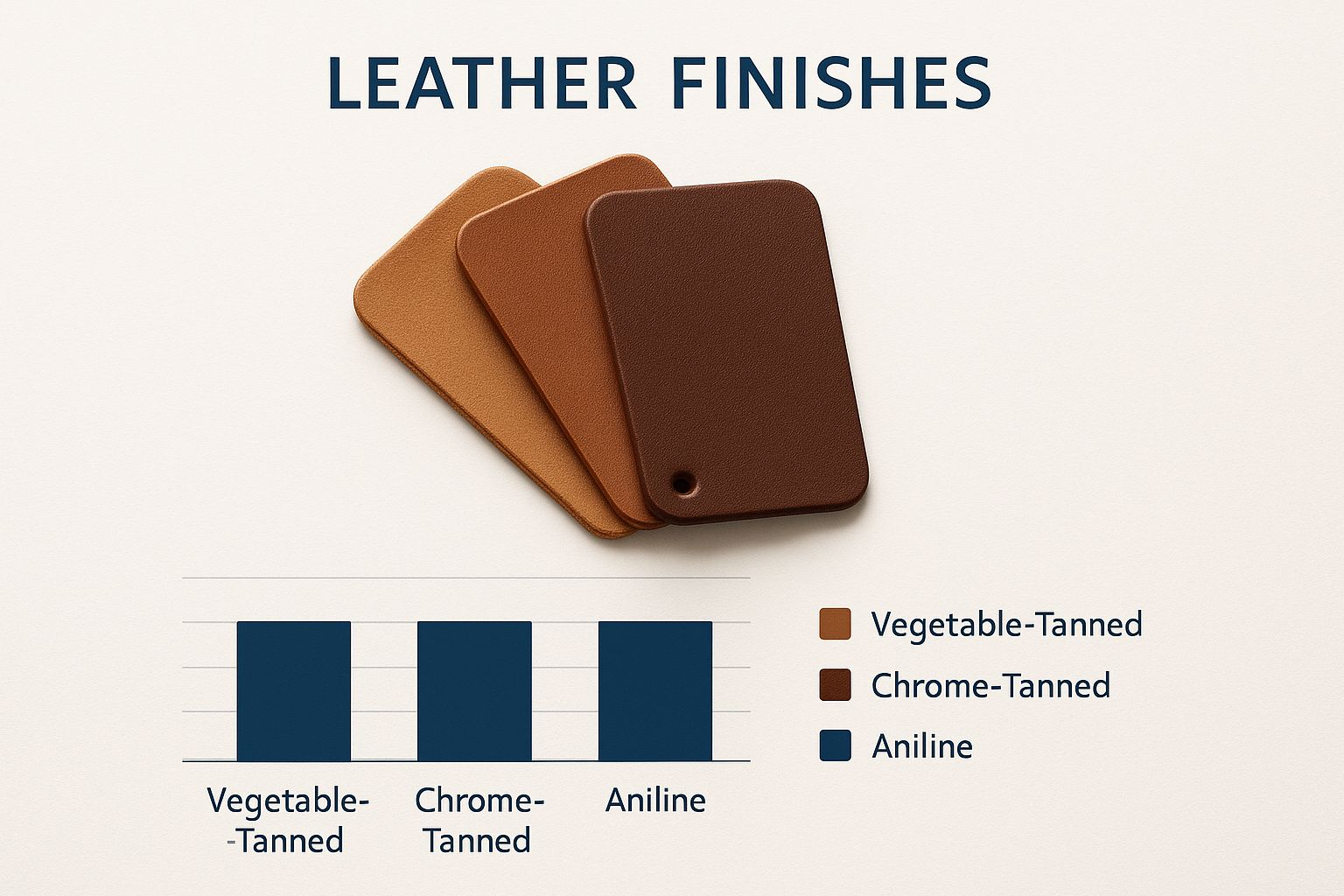
You can really see the warm, natural tones of vegetable-tanned leather, especially when compared to the more uniform and often brighter finishes of the alternatives.
A Stark Contrast to Modern Methods
To truly appreciate vegetable tanning, it helps to put it side-by-side with its modern, industrial counterpart: chrome tanning. Developed in the mid-19th century, chrome tanning uses chromium salts to process hides in as little as 24 hours. It's incredibly efficient and cost-effective, but that speed comes at a cost.
The process churns out a leather that's often softer at first and more resistant to water, but it just doesn't have the soul and durability of its vegetable-tanned cousin. The harsh chemicals can weaken the leather's natural fibers over the years, leading to cracks and preventing it from ever developing a beautiful patina.
Let's look at a clear breakdown of the key differences.
Vegetable Tanning vs. Chrome Tanning: A Comparison
This table really highlights the key differences between the traditional vegetable tanning process used for Tuscany leather and the modern chrome tanning method.
|
Feature |
Vegetable Tanning |
Chrome Tanning |
|---|---|---|
|
Tanning Agents |
Natural tannins from plants (bark, wood, leaves) |
Chromium salts and other synthetic chemicals |
|
Process Time |
30-60 days |
Approximately 24 hours |
|
Appearance |
Rich, deep, natural colors that darken over time |
Uniform color, often brighter, can look artificial |
|
Aging |
Develops a unique and beautiful patina |
Tends to crack or peel; does not age gracefully |
|
Environmental Impact |
Biodegradable and uses renewable materials |
Creates toxic wastewater containing heavy metals |
|
Craftsmanship |
Requires skilled artisans and generational knowledge |
Largely automated and industrialized |
Ultimately, choosing a Tuscany leather product is an endorsement of this centuries-old, sustainable craft. It’s a commitment to quality over speed and a celebration of a material that isn't just built to last—it’s designed to become more beautiful with every single year.
Top 7 Reasons You Should Investment in Tuscany Leather Goods
Buying a piece of Tuscany leather isn't just a purchase; it's the start of a long-term relationship. You're bringing home something that will actually get more beautiful and more you over time. While the leather itself makes anything feel luxurious, some items are just perfectly designed to show off its best qualities—from its sturdy structure to that famous, gorgeous patina it develops.
When you choose to invest in one of these pieces, you're moving beyond everyday accessories. You’re making a statement about quality and timeless style. Here are seven of the best ways to welcome the elegance and durability of authentic Tuscany leather into your life.
1. The Structured Briefcase
Nothing projects confidence in the professional world quite like a structured briefcase made from vegetable-tanned Tuscany leather. Its firm, polished surface means business, while the leather's natural strength guarantees it can handle the daily grind of a demanding career. Forget synthetic alternatives that scuff and fall apart; a Tuscan leather briefcase embraces the marks of a life well-lived.
With every meeting, commute, and business trip, it will slowly soften and its color will deepen, developing a unique patina that tells the story of your professional journey. This isn't just an item for carrying documents—it carries your legacy.
2. The Versatile Weekender Bag
For getaways and quick trips, a Tuscany leather weekender is unbeatable. This is where the material's incredible durability really gets to shine. A weekender is meant to be handled, tossed into overhead bins, and set down in new cities, so it has to be tough. Vegetable-tanned leather is naturally resilient and resists stretching, making it the perfect candidate for the job.
Its classic look is also wonderfully timeless, looking just as sharp on a rustic country escape as it does in a five-star hotel lobby. As it ages, the bag absorbs the memories of your travels, with every little scratch and shift in color adding to its character. This isn't just luggage; it's a travel companion that improves with every destination.
3. The Everyday Wallet
Your wallet is probably the most personal leather good you'll ever own. It's in your hands multiple times a day, lives in your pocket, and is a constant part of your routine. It’s exactly this daily interaction that helps Tuscany leather achieve its most beautiful patina. The natural oils from your hands and the friction from everyday use will gradually polish the surface and deepen its hue.
Choosing a Tuscan leather wallet means you're picking a piece that will literally evolve with you. It will mold to the shape of your pocket and develop a rich, glossy sheen that is completely unique to your life and habits.
It’s a small, daily luxury that constantly reminds you of the value of true craftsmanship. To get a better sense of why this material is such a smart buy, you can read our guide on why Tuscany leather is worth the investment.
4. The Timeless Leather Belt
A great belt is a cornerstone of any wardrobe, and one made from Tuscany leather is built to last for decades, not just a season. Unlike those bonded or synthetic leather belts that inevitably crack and peel, a solid strip of vegetable-tanned leather offers unmatched strength and longevity.
Over time, it will conform perfectly to your body without losing its shape or integrity. Whether you're pairing it with formal trousers or your favorite jeans, a Tuscan leather belt adds a touch of understated class. Its ability to age gracefully means it will be a staple in your closet long after fast-fashion accessories have been forgotten.
5. The Elegant Journal or Portfolio
There’s a special connection between the timeless act of writing and the enduring quality of Tuscany leather. A leather-bound journal or a portfolio cover gives your thoughts, sketches, or important papers the distinguished home they deserve. The tactile experience of holding a supple, warm leather cover can even enhance the creative or professional process.
As you fill the pages, the cover will collect its own stories through subtle marks and a deepening patina. It becomes more than just a notebook; it’s a personal archive, wrapped in a material that honors the importance of what's inside.
6. The Statement Leather Jacket
A leather jacket is already an icon, but crafting one from Tuscany leather takes it to a whole new level of luxury and toughness. While many jackets use softer lambskin, one made from vegetable-tanned cowhide has a more rugged, substantial feel. It gives you excellent protection from the elements and is incredibly resistant to tears and scuffs.
The best part? Over time, the jacket will break in beautifully, molding to the contours of your body for a fit that feels custom-made. The sleeves will crease just right, the color will become richer, and it will truly become a second skin—a testament to your personal style that will never go out of fashion.
7. Handcrafted Leather Shoes
Finally, a pair of handcrafted shoes made from Tuscany leather is a foundational investment in both style and comfort. The leather's natural ability to breathe makes it an amazing material for footwear, keeping your feet comfortable all day long. Even better, its strength and structure provide the support needed for a shoe that will last for years.
With proper care, a pair of Tuscan leather shoes can be resoled again and again, extending their life far beyond what mass-produced alternatives could ever offer. As they age, they develop a distinguished character, with the creases and patina reflecting your own journey, step by step. They’re the perfect anchor for a wardrobe built on quality.
How to Spot Authentic Tuscany Leather
In a market flooded with convincing knockoffs, learning how to tell real Tuscany leather from an imitation is a skill worth having. It’s the difference between investing in a piece with heritage and accidentally buying a disposable accessory. The good news? You don’t need to be a seasoned artisan. You just have to trust your senses, because genuine vegetable-tanned leather has a personality that synthetics simply can’t fake.
Your first clue is the smell. Authentic Tuscany leather has a rich, earthy, and slightly sweet aroma that comes from the natural wood and bark tannins used in its creation. Imitations or cheaper chrome-tanned leathers often give off a sharp, chemical odor. If it smells like plastic, it probably is.
Next, use your sense of touch. Real leather feels warm, soft, and alive. Press your finger into the surface—it should give a little and wrinkle naturally, like skin. A synthetic material will often feel cold, stiff, and lifeless, resisting your touch without that organic response.
Visual Clues to Authenticity
A careful look can tell you even more. True Tuscany leather is a natural material, so just like wood grain, it has character. Look for subtle imperfections like small variations in the grain, faint scars, or even tiny insect bites. These aren't flaws; they're the hallmarks of an authentic hide, telling the story of its natural origin.
Mass-produced "genuine leather," on the other hand, is often made from corrected grain. Its surface is sanded down and stamped with a perfectly uniform, artificial pattern. If the texture looks too flawless and repetitive, that’s a major red flag.
The most reliable guarantee of authenticity is the official trademark from the Genuine Italian Vegetable-Tanned Leather Consortium. This numbered, certified label ensures the leather was tanned exclusively in Tuscany using traditional, natural methods.
This little tag is your ultimate proof of quality, confirming the leather meets strict production and environmental standards. Once you feel confident, our guide on how to choose your first luxury leather bag can help you put these new skills to good use.
The Guarantee of the Consortium
That Consortium trademark is a powerful symbol of trust. The label, often a small tag shaped like a hand, comes with a unique serial number that can trace the leather right back to its tannery. It’s a guarantee of three key things:
-
Tuscan Origin: The leather was processed entirely within the Tuscan tanning district.
-
Vegetable Tanning: No toxic substances like chromium were used in the tanning process.
-
Ethical Production: The raw hides are by-products of the food industry, ensuring no animal was harmed for its skin alone.
Ultimately, developing an eye for quality materials is a valuable skill for any shopper. It’s not just about leather; applying this mindset to other purchases by understanding material distinctions like those between solid gold, gold filled, and gold plated jewelry can help you spot true value everywhere. By trusting your senses and looking for that official trademark, you can confidently distinguish a timeless masterpiece from a fleeting fake.
Caring For Your Leather Goods
When you bring home a piece of Tuscany leather, you're starting a relationship. This isn't just some static accessory you'll use for a season and toss aside; it's a living, breathing material that gets better with a little bit of attention. With the right care, your investment won't just last a lifetime—it will develop that stunning, one-of-a-kind patina it was designed for.
Think of vegetable-tanned leather like your own skin. It needs to be cleaned gently and moisturized to stay healthy and supple. The goal isn't to freeze it in time, keeping it looking brand new. It's about helping it age gracefully, protecting it from the elements so its true character can shine through over the years.
Essential Cleaning and Conditioning
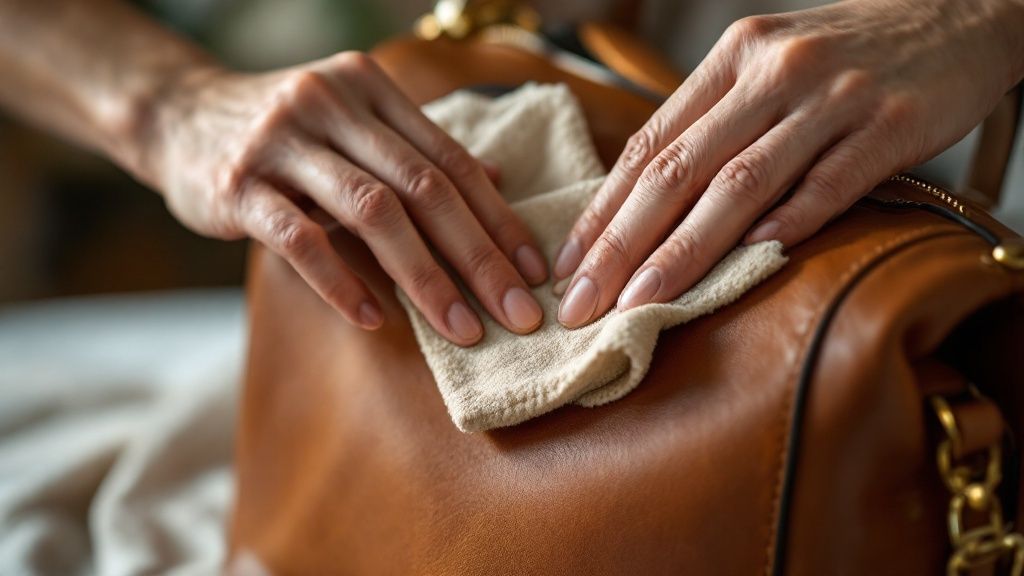
The foundation of great leather care is a simple, gentle routine. For everyday dust and light dirt, a soft, dry microfiber cloth is all you need to give it a quick wipe-down.
If it needs a more thorough cleaning, just slightly dampen the cloth with water and maybe a tiny drop of a pH-neutral cleaner. Stay far away from aggressive, chemical-based cleaners. They're way too harsh and will strip the natural oils right out of the hide, leaving it dry, brittle, and prone to cracking.
Conditioning is the next crucial step. Every few months—or whenever the leather starts to feel a bit dry to the touch—it's time to moisturize. Grab a high-quality, natural leather conditioner and a clean cloth. Work a small amount into the surface using gentle, circular motions. This is like feeding the leather; you're replenishing its essential oils, keeping it flexible, and deepening its rich, gorgeous color.
Proper care is a simple act of preservation. By using the right products, you're not just cleaning your bag or wallet—you're nurturing the natural fibers, ensuring it remains strong and beautiful for decades to come.
Handling Common Issues and Storage
Life happens, and your leather goods are bound to run into a few minor bumps and spills along the way. The key is to act quickly and gently.
-
Light Scratches: Many surface-level scuffs on Tuscany leather can be buffed right out with your fingertips. The natural oils from your skin are often enough to help the scratch blend back into the patina.
-
Water Spots: If you get caught in a light rain, don't just dab at the spots. Instead, take a slightly damp cloth and gently blend the moisture across the entire panel of the bag. This prevents those tell-tale water lines from forming as it dries naturally, away from any direct heat source.
When you’re not using your bag, storing it properly makes all the difference. Keep it in the dust bag it came with and find a cool, dry spot with good air circulation. Whatever you do, never store leather in plastic. That's a surefire way to trap moisture and invite mildew.
For more in-depth advice, this comprehensive guide on caring for leather dress shoes is a great resource, as many of the same principles apply. Good storage and maintenance are essential for all your fine accessories, like the beautiful styles in our collection of must-have leather bags for women. Follow these simple steps, and you’ll give your leather the best chance to thrive for years to come.
Still Have Questions? We’ve Got Answers
To wrap things up, let’s tackle a few of the most common questions people ask about Tuscany leather. Getting these details straight will help you feel confident in your choice, reinforcing everything we’ve covered about the quality, durability, and one-of-a-kind character of this Italian treasure.
Why Is Tuscany Leather So Expensive?
It all comes down to time, tradition, and top-tier materials. The higher price tag is a direct reflection of the slow, artisanal craft behind every hide.
Unlike mass-produced leathers that are chrome-tanned in about a day, the vegetable tanning process is a patient art form. It can take up to 60 days of meticulous work, using natural tannins from tree bark and the steady hands of skilled artisans. You're not just paying for a product; you're investing in centuries of craftsmanship and a superior material that’s built to last a lifetime.
Does Vegetable Tanned Leather Scratch Easily?
Yes, it does—and that’s one of its most celebrated features. Think of those marks not as damage, but as the leather writing its own story. Because the material is all-natural and isn't coated with a synthetic sealant, its surface is alive and interacts with its environment.
The real beauty of Tuscany leather is how it embraces life. Minor scuffs often blend into the material over time, adding to the rich, unique patina that develops. The natural oils from your hands can even buff out lighter scratches, making the piece uniquely yours.
This quality is a true sign of authenticity. It’s exactly what allows the leather to age so gracefully, unlike synthetic alternatives that just peel, crack, or fall apart.
Is Tuscany Leather Truly Waterproof?
Tuscany leather is naturally water-resistant, but it is not completely waterproof. The slow vegetable tanning process creates a dense fiber structure that helps it repel water to a degree. If you get caught in a light shower, you’ll probably see the water bead up on the surface, giving you plenty of time to wipe it dry.
However, if the leather becomes saturated, water can leave spots or cause slight darkening. The golden rule is to never let it soak and to always let it air dry naturally, far away from any direct heat source. A good conditioning cream will also boost its natural moisture resistance, keeping it protected for everyday adventures.
At Databazaar.com, we believe in the enduring value of true craftsmanship. Explore our curated collection of authentic Tuscany Leather bags and discover a piece that will tell your story for years to come.