Skip to content


Tuscany Leather: A Guide to Italian Craftsmanship
When you hear "Tuscany leather," you're hearing about more than just a material. It’s a shorthand for a centuries-old story of Italian artistry. This isn't just a brand; it’s a mark of quality for premium, vegetable-tanned leather from the heart of Tuscany, Italy—a region legendary for its craft. It's the kind of leather known for its incredible durability, rich aroma, and the beautiful way it ages.
The Soul of Italian Craftsmanship
So, what makes Tuscany leather more than just… leather? It’s the deep connection to tradition and a tanning process that artisans have been perfecting for generations. This isn’t the fast-fashion, mass-produced stuff. Each piece feels like it has a history, from the moment the finest raw hides are chosen to the final touches applied by hand. It’s a commitment that turns a simple accessory into a work of art.
The real magic of this leather is how it develops a patina over time. Think of it like a fine wine or a favorite pair of jeans—it just gets better with age. With every touch, it absorbs the oils from your skin, soaks in a little sunlight, and tells the story of your life. Scratches soften, the color deepens, and a unique sheen appears, making the item truly, uniquely yours.
What Makes It Different?
The biggest difference is in the time-honored methods. While over 90% of the world's leather is tanned with chromium salts—a fast, cheap chemical process—Tuscan artisans stick to a much slower, more natural technique. This patient approach gives the leather some incredible qualities:
-
Built to Last: The slow, natural tanning process makes the leather fibers stronger. These aren't products you replace next season; they're built to last a lifetime.
-
A Rich, Earthy Scent: Real Tuscany leather has a pleasant, distinct smell that comes from natural tannins—a world away from the chemical odor of chrome-tanned goods.
-
Eco-Friendly Roots: The tanning process uses natural tannins from things like chestnut or quebracho wood, making it much gentler on the environment.
This unique combination makes it the go-to material for high-end goods. While plenty of Italian regions make beautiful leather, Tuscany's traditions are in a class of their own. If you want to dive deeper into what makes it stand out, check out our comparison of Tuscany leather vs other Italian leather brands.
Ultimately, choosing Tuscany leather is an investment in something timeless. It’s about saying no to the disposable and yes to something that becomes more beautiful and more a part of you with every passing year. It’s a philosophy of quality over quantity.
A Journey Through Tuscan Leather History
To really get the soul of Tuscany leather, you have to travel back in time. This isn’t a story that started in some modern factory. Its roots are dug deep into the ancient soil of central Italy, tracing a line through ancient civilizations, powerful empires, and the Renaissance itself. The story of this craft is just as rich and lasting as the material it creates.
It all began long before Rome, with the Etruscans. These ancient people were incredible artisans, and early evidence shows they had their own basic methods for treating animal hides. They laid the very first stones on a path that would, centuries later, come to define the entire region.
The Rise Of The Medieval Guilds
But the craft truly came into its own during the Middle Ages. The Tuscan leather industry really took off in the 1200s under the Republic of Pisa, a major maritime power. After Florence conquered Pisa in the early 1400s, wealthy Florentine families saw the massive potential and poured money into the trade, moving production to the Valdarno valley along the Arno River. This area quickly became a bustling hub for tanneries, famous for its top-tier vegetable-tanned leather and setting the stage for centuries of artisanship. To learn more about this historical shift, you can find extra details on the leatherworking cities of Italy.
This era also saw the rise of powerful guilds, or "Arti." These groups were far more than just trade unions; they were the guardians of quality, setting ridiculously high standards for craftsmanship. The Arte dei Calzolai (Shoemakers' Guild) and Arte dei Cuoiai (Leather Dressers' Guild) controlled every single part of the process, from finding raw materials to the final finishing touches.
These guilds were the beating heart of Florence's economy and its artistic reputation. Being a member was a badge of honor, and their fiercely protected techniques were passed down from master to apprentice, ensuring the legacy of quality would live on.
Just imagine the banks of the Arno River back then, buzzing with the sounds and smells of the tanneries. The air would have been thick with the earthy aroma of tannins from oak and chestnut bark—a scent that’s still a signature of real Tuscany leather today. It’s so iconic, it has even inspired luxury fragrances; you can check out a modern take with this Cipresso di Toscana Eau de Toilette.
Surviving And Thriving Through The Ages
The tradition of Tuscan leather craftsmanship proved to be incredibly tough. It survived the fall of the Florentine Republic, the chaos of wars, and the massive changes of the Industrial Revolution. While other regions switched to faster, chemical-based tanning methods to keep up with demand, Tuscan artisans stuck to their ancestral techniques.
They didn't ignore progress completely, but instead brought in new technologies thoughtfully, always protecting the core principles of their craft. This careful mix of innovation and tradition is what allowed them to keep their superior quality while adapting to a new world. It's this dedication that proves "Made in Tuscany" is more than just a location—it’s a promise.
Key Milestones in Tuscan Leather History:
-
Ancient Etruscans: The first known leather tanners in the area, laying the groundwork for everything to come.
-
12th-14th Centuries: The Florentine leather guilds were established, standardizing quality and controlling the trade.
-
Renaissance Era: Florentine leather goods, from detailed book bindings to tough satchels, became symbols of wealth and taste across Europe.
-
19th-20th Centuries: Artisans resisted the full switch to industrial chrome tanning, preserving the art of vegetable tanning for the future.
This unbroken chain of knowledge, handed down from one generation to the next, is the secret ingredient in every piece of Tuscany leather. It’s a legacy of patience, skill, and a deep commitment to making something that lasts. When you hold a product made from this material, you’re holding a small piece of that incredible history right in your hands.
The Art of Vegetable Tanning Explained
The real soul of Tuscany leather isn't just the hide itself; it's the patient, centuries-old transformation it goes through. This signature process is called vegetable tanning, an artisanal method that feels more like alchemy than industry.
To get it, think of the difference between slow-cooking a rich stew and microwaving a frozen meal. Both get the job done, but only one develops that deep, complex character that you can’t fake.
While most modern leather is made using chrome tanning—a fast, chemical-heavy process that’s over in about a day—vegetable tanning is a deliberate, eco-friendly art form. It relies entirely on natural tannins, which are organic compounds pulled from plant matter like chestnut, quebracho, or mimosa bark. These tannins are the magic ingredient, preserving the hide and giving the leather its firm structure, earthy smell, and vibrant, warm tones.
This infographic breaks down the patient, hands-on process an artisan follows when crafting a piece from genuine Tuscany leather, from treating the hide all the way to the final hand-stitching.
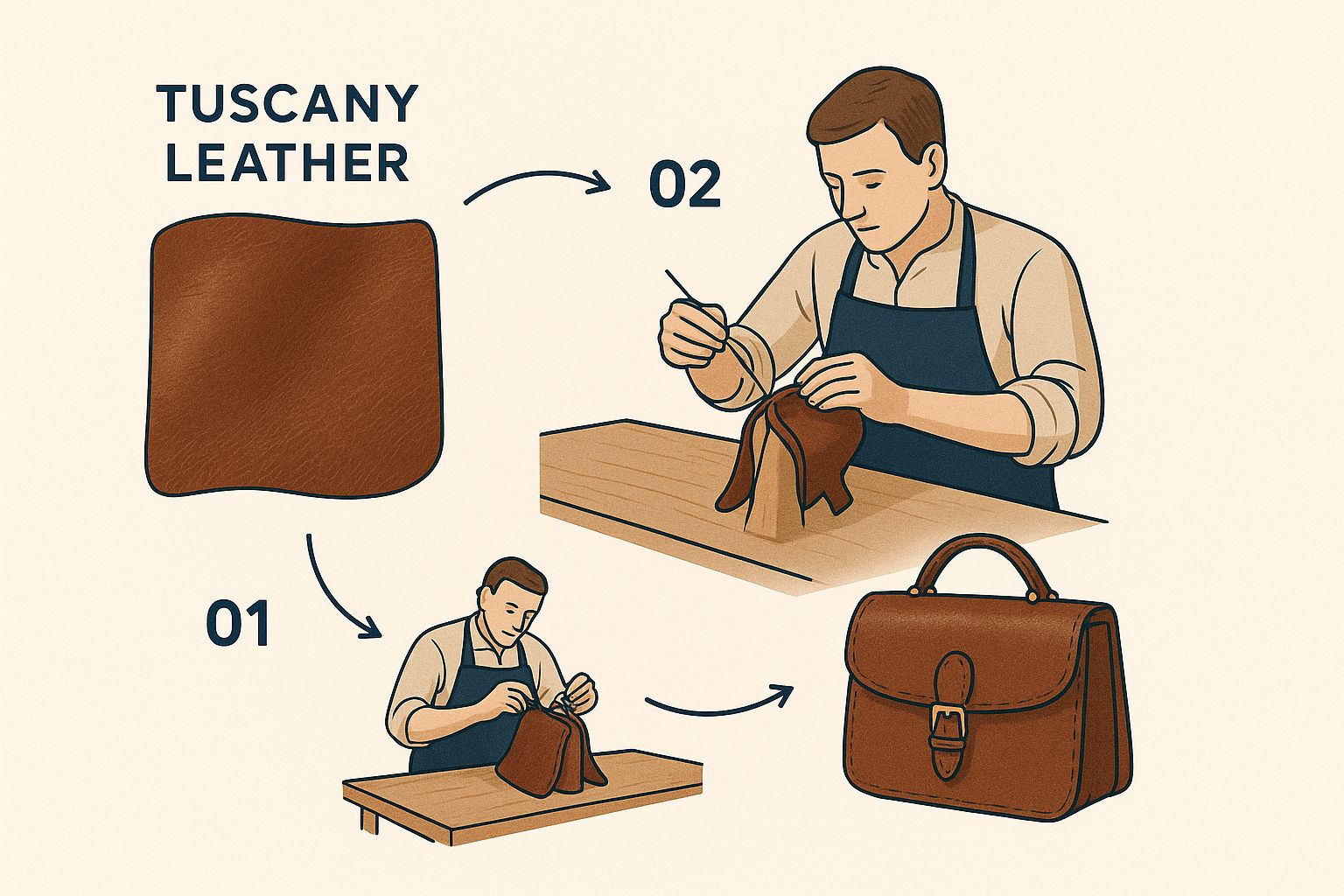
The image really drives home that the value of the final product comes from a meticulous, multi-stage journey—not some quick, automated assembly line.
The Slow Immersion Method
What truly defines the vegetable tanning process is its unhurried pace. It all starts with raw hides being submerged in a series of wooden drums or pits filled with a carefully measured mix of tannins and water. This isn't just a quick dip; the hides soak for weeks, sometimes even months.
During this long soak, the tannins slowly work their way deep into the hide's fibrous structure. They bond with the collagen proteins, pushing out water and basically preserving the material from decay. This gradual immersion strengthens the leather from the inside out, resulting in a dense, durable material that can stand up to years of use.
This slow absorption is everything. Rushing the process would only tan the surface, leaving the core weak and brittle. The patience of the Tuscan artisan ensures the leather is fortified through and through, creating the foundation for a product that is truly meant to last a lifetime.
Why This Method Matters
Choosing vegetable-tanned Tuscany leather over its chrome-tanned cousin is a conscious decision. It impacts everything from sustainability to the product's final look and feel. The contrast really highlights the value of this traditional craft.
Vegetable Tanning vs. Chrome Tanning
|
Feature |
Vegetable Tanning |
Chrome Tanning |
|---|---|---|
|
Tanning Agents |
Natural extracts (wood, bark) |
Chromium salts and chemicals |
|
Process Time |
Several weeks to months |
Typically 24-48 hours |
|
Environmental Impact |
Biodegradable, less pollution |
Creates hazardous wastewater |
|
Final Product |
Firm, durable, develops patina |
Soft, pliable, color is static |
|
Aroma |
Rich, earthy, and natural |
Often has a chemical smell |
|
Artisanal Skill |
Requires deep knowledge |
Largely automated process |
Ultimately, the art of vegetable tanning is what allows Tuscany leather to tell a story. Because the tannins are natural, the leather remains "alive" in a sense, reacting to its environment. Sunlight, the oils from your hands, and daily wear all contribute to a beautiful patina—a gradual darkening and sheening that is unique to each owner. This is something that chemically-sealed, chrome-tanned leather can never, ever replicate.
This commitment to an ancient, sustainable method is what you’re investing in. It's a choice for unparalleled durability, a unique aesthetic that evolves with you, and a piece of Italian heritage that rejects the fast-fashion mindset in favor of something truly timeless.
How to Spot Authentic Tuscany Leather
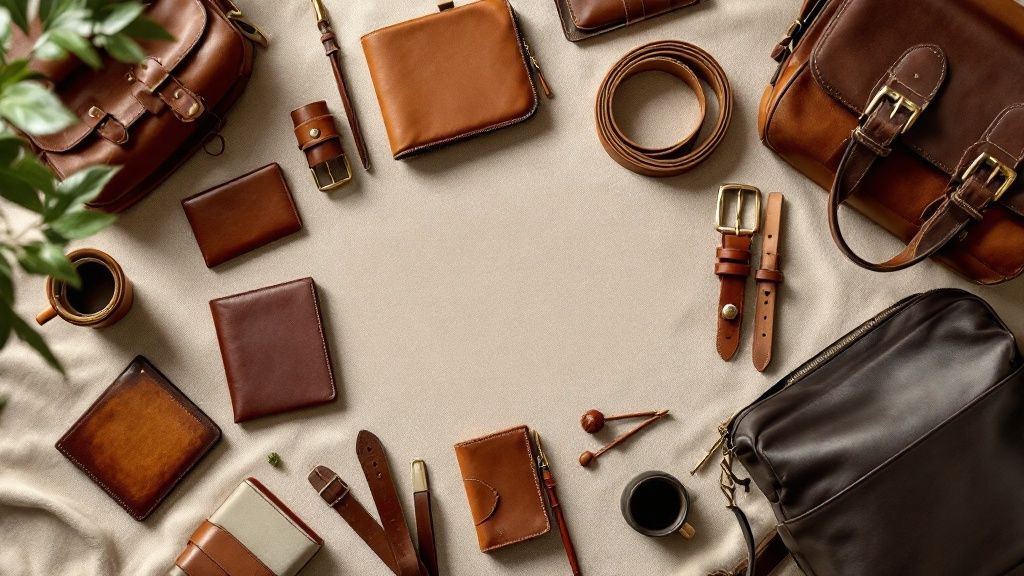
In a market flooded with imitations, telling the difference between true artisanal quality and a clever fake can feel overwhelming. But authentic Tuscany leather has a few tell-tale signs that are almost impossible to replicate. Once you know what to look for, you can invest with confidence, knowing you’re getting the timeless quality you paid for.
Think of it as becoming a detective for luxury goods. Your best tools? Your own senses—smell, touch, and sight. A genuine vegetable-tanned product doesn't try to hide its natural origins; it celebrates them. This is especially true in the Tuscan tanning industry, which is a powerhouse in Italian leather production. In fact, Tuscany accounts for roughly 28% of Italy’s entire tanning sector, with a huge concentration of workshops that still use traditional vegetable tanning methods. If you're curious, you can dig deeper into the data on the Italian leathergoods sector to see just how big its impact is.
Trust Your Senses
The first test for real Tuscany leather is usually the simplest. Just bring the item close and take a deep breath. Real vegetable-tanned leather has a rich, earthy, and almost sweet smell that comes from the natural tannins in wood and bark. It’s an organic and pleasant aroma, a world away from the sharp, chemical odor you get from mass-produced, chrome-tanned leather.
Next, it’s all about the feel. Genuine Tuscany leather is firm and has a substantial weight to it. Run your fingers across the surface—you should notice subtle imperfections and a unique grain pattern. These aren’t flaws; they're the marks of a natural hide. A synthetic or lower-quality leather will often feel unnaturally smooth, flimsy, or even a bit like plastic.
Finally, look closely at the details. This is where true craftsmanship really shines.
-
Examine the Stitching: Stitches should be even, tight, and consistent. Artisans who work with premium materials don't cut corners on the finishing touches.
-
Check the Hardware: Zippers, buckles, and clasps should feel solid and heavy, not light and cheap. Reputable makers use high-quality metals that won't easily chip or tarnish.
-
Inspect the Edges: The edges of the leather should be cleanly finished—often burnished or painted to seal them. Messy or frayed edges are a definite red flag.
When you're ready to invest in a piece, knowing these details makes all the difference. For more guidance, be sure to check out our article on how to choose your first luxury leather bag.
The Ultimate Guarantee of Authenticity
While your senses are your best friend, there's one definitive mark that offers absolute peace of mind: the consortium trademark. The most respected tanneries in Tuscany are members of the Pelle Conciata al Vegetale in Toscana (Vegetable Tanned Leather in Tuscany) Consortium.
This consortium acts as a guardian of tradition, certifying that the leather was produced in Tuscany using only time-honored vegetable tanning methods. Products made from this certified leather come with a special hangtag that is your ultimate proof of authenticity.
This numbered warranty card isn't just a label. It’s a passport that traces the leather’s origin right back to the source and guarantees its quality. Each tag has a unique serial number, which lets you trace the product’s supply chain online. This kind of transparency is your best defense against fakes, ensuring your Tuscany leather item is a genuine piece of Italian heritage.
Caring For Your Leather Goods
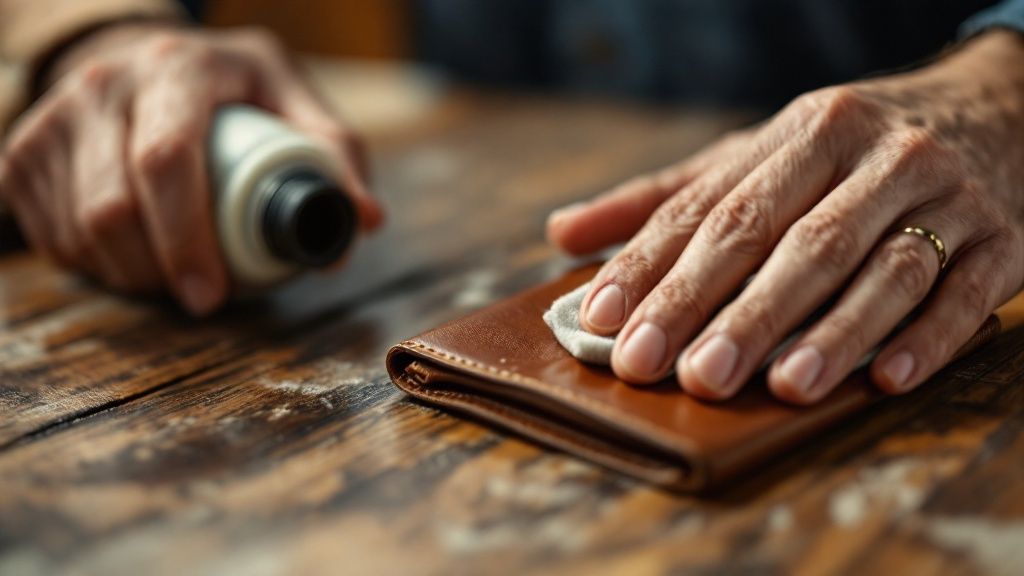
When you own a piece of genuine Tuscany leather, you're not just buying a bag—you're getting an heirloom in the making. It’s an investment that’s meant to age with you, and with a little bit of care, it will develop a gorgeous, rich patina that tells the story of its journey. Don’t worry, proper maintenance is simple. It's really just about building a few gentle habits.
Think of your leather bag the way you think of your own skin. It needs cleaning, moisturizing, and protection from harsh elements to stay healthy. If you neglect it, you risk dryness and cracking. But with the right care, it will stay soft and supple, growing more beautiful with every passing year.
And remember, the goal isn't to keep it looking pristine forever. The real magic of vegetable-tanned leather is in how it ages, taking on a character that is 100% yours.
Routine Cleaning and Conditioning
Consistent upkeep is the secret to making your leather last a lifetime. Dust and grit can act like fine sandpaper on the finish, so give your bag a gentle wipe with a soft, dry cloth every week or so. It’s a tiny step that prevents the kind of buildup that can dull the leather over time.
For a slightly deeper clean, you can use a cloth that’s just barely damp with water. Make sure you wipe the entire surface evenly to avoid water spots. Then, always let it air dry naturally—and keep it far away from radiators or direct sunlight, which can cause the leather to dry out and even warp.
Think of conditioning like moisturizing your skin. Every three to six months, you need to replenish the natural oils inside the hide. This is what keeps the leather flexible, protects it from the elements, and prevents it from becoming brittle.
Grab a high-quality, natural leather balm or conditioner. Put a small dab on a clean cloth and work it into the leather using small, circular motions. Let it soak in for about an hour, then come back with another clean cloth to buff off any excess. Simple as that.
Handling Common Issues
Even if you’re careful, life happens. Water spots, spills, and scuffs are part of the story, but they don’t have to ruin your bag.
-
Water Spots: Got caught in the rain? Don’t just dab the wet spots. Instead, take a lightly damp cloth and blend the moisture across the entire panel of the bag. This helps it dry evenly and prevents those tell-tale water lines.
-
Minor Scuffs: For light scratches, sometimes all you need are your own fingertips. The natural oils on your skin, combined with the gentle friction of rubbing, can often help the mark blend right back into the leather.
-
Proper Storage: When you're not using your bag, store it in the dust bag it came with. To help it keep its shape and absorb any moisture in the air, stuff it with some acid-free paper.
Taking proper care of your bag ensures it doesn’t just last, but becomes a piece you’ll treasure for years. For some inspiration on timeless styles built to go the distance, check out our guide to the must-have leather bags for women.
Common Questions About Tuscany Leather
Diving into the world of fine leather often sparks a few questions. To help you feel completely confident in your choice, we’ve put together answers to the most common queries we hear about Tuscany leather.
Think of this as your quick-reference guide. Whether you're curious about what makes this leather special or how it will wear over time, these answers will give you the clarity you need.
Is Tuscany Leather a Brand or a Type of Leather?
This is a great question, and the answer is a bit of both. At its heart, "Tuscany leather" refers to a specific type of high-quality, vegetable-tanned leather made in the Tuscany region of Italy. The tradition is so respected that its methods and quality are protected by an official consortium.
At the same time, Tuscany Leather is a well-known brand that creates its beautiful products using this very material. The brand has become so synonymous with the leather's quality that it perfectly captures the region’s dedication to artisanal skill and timeless design.
How Does It Differ From Other Leathers?
The main difference is all in the tanning process. The vast majority of leather—over 90% of it—is chrome-tanned. This is a fast, industrial method that uses chromium salts and other chemicals. It produces a soft leather, but the color stays flat and it often carries a faint chemical smell.
Vegetable-tanned Tuscany leather, on the other hand, uses only natural tannins from plant sources, like chestnut wood.
-
It’s a Slow Process: This traditional method can take weeks, which strengthens the leather's fibers and gives it incredible durability.
-
It's Eco-Friendly: The process relies on natural, biodegradable ingredients, making it much gentler on the planet.
-
It Ages Beautifully: Unlike chrome-tanned leather, it develops a unique patina over time, becoming richer and more personal with every use.
This patient, natural method is exactly why Tuscany leather is worth the investment for anyone who appreciates character and things built to last.
Will My Bag Look the Same Forever?
Absolutely not—and that’s its best feature. Because it's a vegetable-tanned product, your Tuscany leather item is meant to evolve. It will develop a beautiful and completely unique patina, which is a lovely sheen and a deepening of its color that reflects your personal journey.
This natural aging process comes from exposure to sunlight, daily handling, and the oils from your hands. Every small mark and subtle shift in color helps tell a story that is entirely yours, making your bag truly one-of-a-kind.
Are Tuscany Leather Products Waterproof?
They are naturally water-resistant, but not waterproof. You'll want to avoid getting caught in a heavy downpour if you can. If your bag does get wet, the key is to act quickly but gently.
Just pat the surface with a soft, dry cloth to soak up the extra moisture. Then, let it air dry completely, but keep it away from direct heat sources like a radiator or a hairdryer, as that can make the leather dry out and turn stiff. Regular conditioning can boost its resistance a bit, but keeping it out of the rain is always the best bet.
Ready to experience the timeless elegance of Italian craftsmanship for yourself? Explore the curated collection of authentic bags at Databazaar.com and find a piece that will tell your story for years to come.