Skip to content


Are Lab Grown Diamonds Cheaper Than Mined? 2026 Prices
Table of Contents
- Price Gap in 2026: How Much Cheaper Are Lab Grown Diamonds?
- Cost of 1 Carat Lab Grown Diamond: Real 2026 Numbers
- Why Lab Grown Diamonds Cost Less to Produce
- Lab Grown Diamond Resale Value: What You Get Back
- GIA vs IGI Lab Grown Diamond Grading: Which Report Matters
- Are Lab Grown Diamonds Real Diamonds? Properties Compared
- Choosing Between Lab and Mined: What Actually Matters
- Frequently Asked Questions
Last Updated: September 29, 2026
Price Gap in 2026: How Much Cheaper Are Lab Grown Diamonds?
Are lab grown diamonds cheaper than mined? Yes, dramatically so. Lab-grown diamonds currently sell at an 80% to 90% discount compared to mined equivalents, according to Mavilo's 2026 lab-grown value analysis. That gap has widened far beyond the 20% to 30% discount buyers saw just a few years ago. At Databazaar, we've watched this shift reshape how engagement ring shoppers think about value.

The numbers are stark. Lab-grown diamond price per carat fell to $2,057, a 55% decrease year over year, per the BriteCo Jewelry, Diamond, & Watch Price Index. Mined stones held near $8,428 per carat for engagement rings in the same period.
Key Takeaway
Lab-grown diamonds are 80% to 90% cheaper than mined diamonds in 2026. The discount grows with carat weight, making larger lab-grown stones the biggest relative bargain.
Cost of 1 Carat Lab Grown Diamond: Real 2026 Numbers
A one-carat lab-grown diamond typically costs $800 to $900, with lower-grade stones dropping to $200 to $250 per carat, based on Edahn Golan Diamond Research & Data. By May 2026, the StoneAlgo average for lab-grown stones settled at $564.
What $235 to $572 Buys You Right Now
This is where the cost of 1 carat lab grown diamond gets concrete. At Databazaar, current inventory shows exactly what your money secures:
| Diamond | Carat | Color | Clarity | Cut | Certificate | Price |
|---|---|---|---|---|---|---|
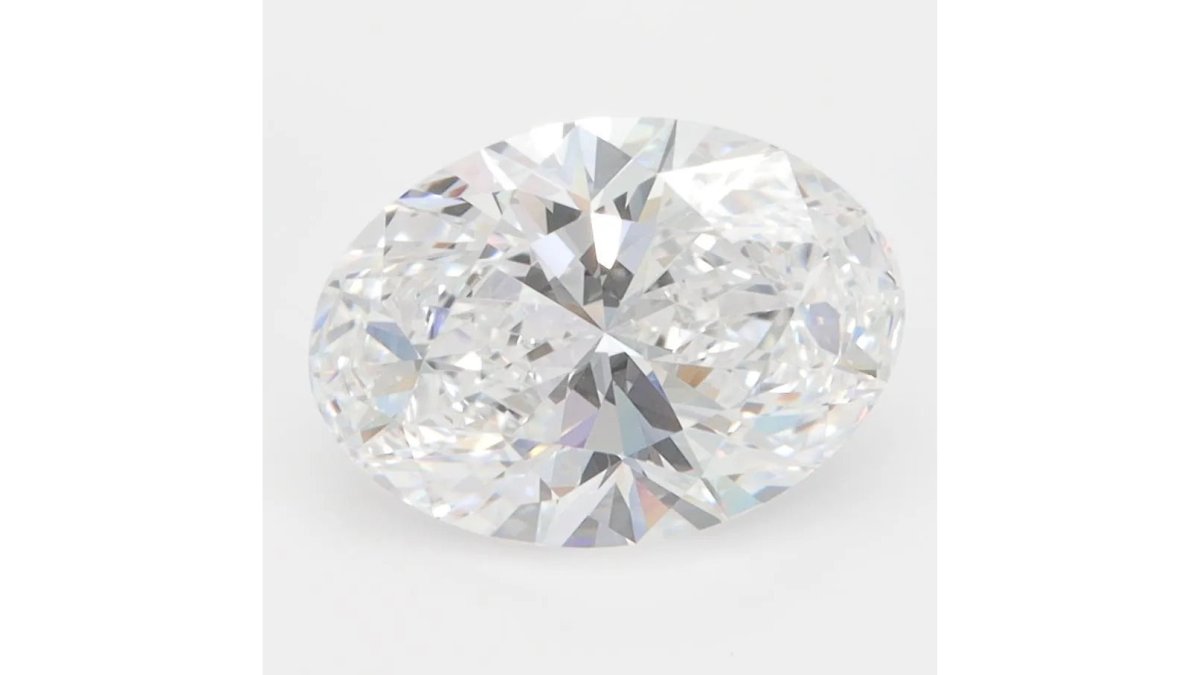
| Round Lab Grown | 0.51ct | D | VS1 | Very Good | IGI | $235.00 |
| Round Lab Grown | 0.52ct | D | VVS2 | Ideal | IGI | $235.00 |
| Round Lab Grown | 1.02ct | F | VVS2 | Very Good | IGI | $368.00 |
| Round Lab Grown | 1.22ct | D | VS1 | Excellent | IGI | $572.00 |
| Oval Lab Grown | 2.52ct | D | VVS1 | N/A | GIA | $3,109.00 |
Pro Tip
Color D is the top grade on the GIA scale. At $235 for a 0.51ct D-color stone, you're buying a colorless diamond for less than most jewelers charge for a setting alone.
Why Lab Grown Diamonds Cost Less to Produce
Production economics explain the gap. Lab-grown diamonds made through HPHT and CVD methods require higher capital expenditure per annualized carat than mining operations, according to NCBI's comparative CapEx analysis. Yet the per-carat output cost still lands far below extraction.

Lab Grown Diamond Resale Value: What You Get Back
Lab grown diamond resale value is the weakest part of the value story. Expect to recover a small fraction of your purchase price; the 80% to 90% discount against mined stones leaves the secondary market almost no floor.
The Depreciation Curve Most Guides Skip
Here's the angle almost no competitor covers: it isn't just that lab-grown stones resell for less, it's that the gap has been widening over time. When lab-grown prices fall 55% year over year, as the BriteCo Jewelry, Diamond, & Watch Price Index shows, a stone you bought last year is worth less this year even before you try to sell it. That's a moving floor, not a fixed discount.
A common pattern buyers report:
- Year 0: Purchase at retail.
- Year 1-2: Resale offers land at roughly 10% to 30% of retail for lab-grown, versus roughly 30% to 50% for comparable mined stones.
- Year 3-5: If lab-grown wholesale prices keep sliding, the resale percentage can compress further, because a dealer can buy new stock cheaper than your used stone.
Key Takeaway
Treat a lab-grown diamond purchase as a consumption expense, not an asset. The same is true for most mined diamonds bought at retail. Neither is an investment.
Insurance and Appraisal Differences
Insurance and appraisal nuances trip up more buyers than price does. Most standard jewelry policies reimburse replacement cost, not purchase price. If lab-grown prices keep falling, your replacement cost drops with them, which cuts both ways.
A few practical steps:
- Appraise at purchase. Get a written appraisal that names the lab-grown origin, carat, color, clarity, cut, and certificate number.
- Re-appraise every 2-3 years. Falling prices mean your scheduled coverage may be higher than it needs to be, or lower than current replacement cost if you bought during a price spike.
- Keep the certificate with the policy. IGI and GIA reports carry the certificate number your insurer will want on file.
- Ask about agreed-value vs. replacement-cost policies. Agreed-value locks a payout amount; replacement-cost floats with the market. For lab-grown, replacement-cost is usually cheaper to insure but pays less over time.
Watch Out
If you list a lab-grown diamond on a standard rider without noting it's lab-grown, a claim could be disputed. Always disclose the origin and keep your IGI or GIA certificate with the policy.
What This Means for Your Decision
If resale value drives your purchase, neither lab-grown nor mined is a strong choice, both lose money at retail. If you want the largest, best-graded stone for your budget and plan to keep it, lab-grown's resale weakness is largely irrelevant. The insurance and appraisal steps above protect you either way.
0.51ct Round Lab Grown Diamond (Colour →
GIA vs IGI Lab Grown Diamond Grading: Which Report Matters
Both GIA and IGI grade lab-grown diamonds to the same 4Cs framework used for mined stones. The practical difference is market recognition, growth-method disclosure, and how the report affects what you pay and can resell for.
| Factor | GIA | IGI |
|---|---|---|
| Market recognition | Highest | Strong |
| Lab-grown volume | Growing | Largest share |
| Report turnaround | Slower | Faster |
| Growth method noted | Yes | Yes |
| Typical price premium on resale | Slightly higher | Standard |
Why Grading Consistency Matters More for Lab-Grown
Lab-grown stones are grown in batches, and a single CVD reactor can produce multiple stones with very similar properties. That consistency means the certificate does more work than it would for a mined stone: with mined diamonds, no two are alike, so the stone's own character partly speaks for itself, while with lab-grown the certificate is often the only thing distinguishing one 1.02ct F VVS2 from the next.

How the Report Affects Price and Resale
Two stones with identical 4Cs can carry different prices depending on the grading lab. GIA-graded lab-grown stones often command a small retail premium over IGI equivalents because U.S. buyers recognize the GIA name, but on resale that premium shrinks, dealers care more about specs than the logo on the report.
Pro Tip
When comparing two lab-grown stones, pull both certificates and compare the actual 4Cs grades side by side. The lab name is a tiebreaker, not the main event.
What to Check on Any Lab-Grown Report
- Origin disclosure. The report should state the stone is lab-grown. If it doesn't, walk away.
- Growth method. Some reports note HPHT or CVD. This isn't a quality grade, but it's useful for resale transparency.
- Certificate number. Verify it on the lab's website before you buy.
- Grading scales. Both GIA and IGI use the same color and clarity scales, so grades are comparable across labs.
- Treatment notes. Lab-grown stones may receive post-growth treatments. The report should disclose them.
For most buyers, either lab's report is sufficient. The certificate number and the 4Cs grades matter more than the brand on the paper.
Are Lab Grown Diamonds Real Diamonds? Properties Compared
Yes. A lab-grown diamond is a real diamond, chemically, physically, and optically identical to a mined one. Both are pure carbon arranged in the same crystal lattice. The only difference is origin.
Key Takeaway
Lab-grown diamonds are chemically and optically identical to mined diamonds. They are not simulants. The only difference is where they formed.
Choosing Between Lab and Mined: What Actually Matters
The right choice depends on what you value. For maximum size and quality on a budget, lab-grown wins without question. If resale or long-term value retention drives your decision, mined stones hold more of their price, though neither is a strong investment.
A few questions to run through before you buy:
- Do you care about resale value? If yes, go mined or treat the purchase as a sunk cost.
- Do you want the biggest, best-graded stone for your budget? Lab-grown delivers.
- Does the "natural origin" story matter to you or your partner? That's a personal call, not a financial one.
- Will you insure it? Disclose the origin and keep your certificate.
Frequently Asked Questions
How much does a 1 carat lab grown diamond typically cost compared to a mined one?
Lab grown diamonds sell at an 80% to 90% discount versus mined equivalents according to 2026 market data. The median lab grown price per carat was $2,057, while mined engagement ring diamonds averaged $8,428 per carat, roughly 75% higher. At Databazaar, a 1.02ct round lab grown diamond with F color and VVS2 clarity and IGI certification costs $368, and a 1.22ct D-color VS1 stone costs $572.
Do lab grown diamonds hold their resale value over time?
Lab grown diamond resale value is weak and getting weaker. Per-carat prices fell 55% year over year to $2,057, and average stone prices dropped to $564 by May 2026. Because production keeps expanding and supply keeps rising, resale offers typically come in far below what you paid. Treat a lab grown diamond as a purchase you enjoy wearing, not as a store of value you can cash out later.
Are lab grown diamonds chemically identical to natural diamonds?
Yes. Lab grown diamonds have the same carbon atom structure, chemical composition, and optical properties as earth-mined stones. They are created using CVD or HPHT methods rather than geological pressure over billions of years. A gemologist using standard tools cannot tell them apart; only specialized equipment and the certificate distinguish them. That is why grading reports from IGI or GIA matter so much when you buy.
What is the downside of a lab grown diamond?
The main downside is depreciation. Lab grown diamonds are now 80% to 90% cheaper than mined stones, and prices keep falling as production capacity grows. If you resell, expect a fraction of your purchase price back. Some jewelers also resist them because margins are thinner. The upside is you get a larger, higher-clarity stone for the same budget, and Databazaar offers 15-day returns if the piece is not right.