Skip to content


Buying Engagement Rings Online Safely: A 2026 Guide
Table of Contents
- Why Online Engagement Ring Shopping Has Become the Safer Choice
- How to Verify Diamond Quality and GIA Diamond Certification Verification
- Evaluating Online Jewelry Return Policies and Warranties
- Secure Payment Methods and Buyer Protection
- Understanding Engagement Ring Insurance Requirements
- Virtual Try-On Tools and 360-Degree Imagery
- Red Flags: What to Avoid When Shopping Online
- Lab-Grown vs. Natural Diamonds: What You Should Know
- Frequently Asked Questions
Last Updated: October 2, 2026
Why Online Engagement Ring Shopping Has Become the Safer Choice
Pro Tip
Online retailers are evaluated by three critical factors: the quality of 360-degree imagery, virtual try-on tools, and the availability of detailed diamond performance reports. These tools give you transparency that's impossible to achieve in a showroom.
The data tells a compelling story. According to Edahn Golan Diamond Research & Data's 2026 consumer preference analysis, 39% of couples have chosen to buy a diamond engagement ring set with a lab-grown diamond, and 79% of ring wearers are actively involved in the design process. This collaborative, data-driven approach to ring selection is fundamentally different from the high-pressure sales environment of traditional jewelry stores.
How to Verify Diamond Quality and GIA Diamond Certification Verification
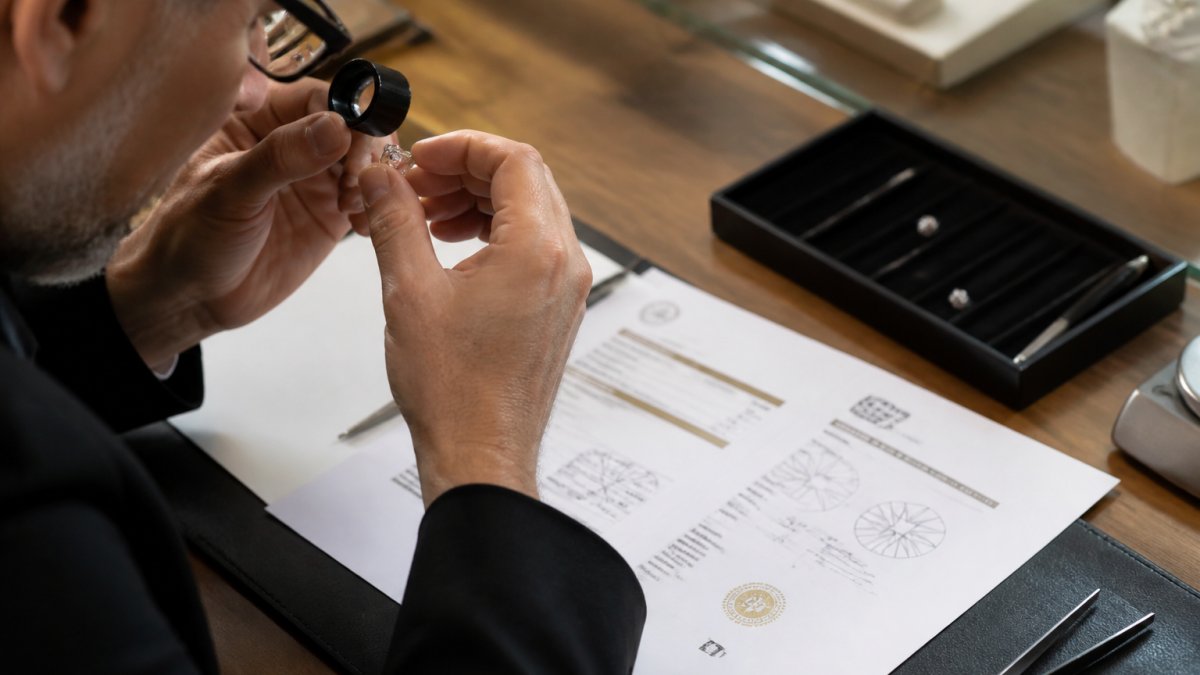
The foundation of buying engagement rings online safely rests on understanding how to read and verify diamond certifications. A diamond grading report is an independent assessment of a stone's quality, issued by laboratories like GIA (Gemological Institute of America) or AGI (American Gem Institute). This certification is your proof of authenticity and quality, far more reliable than a jeweler's verbal assurance.
Understanding Grading Reports and Lab Certificates
A grading report documents five critical elements: carat weight, color grade, clarity grade, cut quality, and fluorescence. Each element affects the diamond's appearance and value. The report also includes a unique report number, which you can verify directly on the lab's website to confirm authenticity.
Reading the Four Cs on Your Certification
The Four Cs framework (carat, color, clarity, cut) allows you to compare diamonds across retailers with precision. A 1.5-carat diamond with D color, VS1 clarity, and Excellent cut will perform identically whether you buy it from a local jeweler or an online retailer, provided both diamonds carry the same lab certification.
Evaluating Online Jewelry Return Policies and Warranties
Watch Out
Some online retailers offer returns only within 14 days but charge restocking fees of 10-15%. This is a red flag. Reputable retailers absorb return costs as part of their customer commitment.
Warranties typically cover manufacturing defects and setting repairs but not damage from wear or accidents. Understand what your warranty covers before purchasing. A lifetime warranty on setting repairs is valuable; a lifetime warranty on diamond replacement is rare and often limited to very small stones.
Secure Payment Methods and Buyer Protection
Payment method selection is your first line of defense when buying an engagement ring online. Different payment methods offer vastly different levels of buyer protection, and understanding these differences is critical before you commit to a purchase.
Credit Cards: Maximum Buyer Protection
Credit cards provide the strongest buyer protection through chargeback mechanisms. If you dispute a charge, your credit card company investigates and can reverse it within 60-120 days, even if the retailer refuses your return.
Debit Cards: Minimal Protection
Debit cards offer far less recourse. The burden of proof is on you, and you lose access to your money during the dispute period (30-60 days). Avoid debit cards for high-value jewelry.
Wire Transfers and ACH Payments: No Protection
Wire transfers and ACH payments are irreversible. If the retailer fails to deliver or the diamond doesn't match its certification, you have no recourse. Wire transfers are the payment method of choice for scammers.
Escrow and Third-Party Payment Verification
Escrow services hold payment until both buyer and seller confirm satisfaction. For custom or high-ticket purchases, you deposit with the escrow service, the retailer ships, you inspect, and the escrow service releases payment only after your approval. If the ring doesn't match its description, you can dispute the release and get your money back.
Financing and Payment Plans: Verify the Lender
Many online jewelry retailers offer financing through third-party lenders (e.g., Affirm, Klarna, or store-branded credit lines). Financing can make premium jewelry more accessible, but verify the lender's terms before committing.
When using a financing plan:
- Confirm the interest rate and total cost (some plans advertise "0% APR" but charge origination fees)
- Verify that the lender offers buyer protection (most do not, the protection comes from the retailer's return policy, not the lender)
- Understand the consequences of late payments (missed payments can trigger repossession or credit score damage)
- Confirm the retailer's return policy applies even if you're financing (some retailers restrict returns for financed purchases)
Verification Steps Before Payment
Before entering your payment information, verify the retailer's security:
4 CT Pear Lab Diamond Stud Earrings in 14K Yellow Gold →
- Check for HTTPS encryption: The retailer's website URL should begin with "https://" (not "http://"). This encrypts your payment information in transit.
- Look for security badges: Reputable retailers display third-party security certifications (e.g., Norton Secured, McAfee Secure, or Trustwave) on their checkout page.
- Verify the retailer's contact information: Legitimate retailers provide a physical address, phone number, and email support. If contact information is missing or vague, this is a red flag.
- Check for a privacy policy: The retailer should clearly state how they handle your personal and payment information.
- Review the return policy before payment: Confirm the return window, shipping costs, and refund method (full refund vs. store credit) before you complete the transaction.
Watch Out
Never save your credit card information on a retailer's website unless you plan to make multiple purchases. This reduces your fraud protection if the retailer's database is compromised. For a one-time engagement ring purchase, enter your card information manually each time.
Pro Tip
If a retailer's website feels slow, has broken links, or displays unprofessional design, these are warning signs of a poorly maintained or fraudulent operation. Reputable jewelry retailers invest in professional website infrastructure because it builds customer trust.
Understanding Engagement Ring Insurance Requirements
Engagement ring insurance protects against loss, theft, or damage. Most homeowner's or renter's insurance covers jewelry only up to $1,500-$2,500 without a rider. For rings exceeding this threshold, purchase dedicated jewelry insurance.
The Independent Appraisal as Your Post-Purchase Verification Checkpoint
When your engagement ring arrives, your first step should be scheduling an independent appraisal with a certified gemologist (look for credentials from the American Society of Appraisers or the National Association of Jewelry Appraisers). This appraisal serves three purposes: it documents the ring's specifications for insurance, it provides a professional verification that the diamond matches its lab certification, and it creates a paper trail that protects you if any dispute arises with the retailer.
Creating Your Post-Purchase Inspection Checklist
Before scheduling an appraisal: (1) Unbox and photograph the ring immediately with multiple angles under natural light. (2) Verify the lab certificate number on the issuing lab's website and confirm the Four Cs grades match. (3) Examine the diamond under magnification and verify the laser inscription matches the lab report number. (4) Check the setting's metal stamp for purity markings. (5) Inspect the prongs for tightness and damage. (6) Test the ring's fit. (7) Document any concerns in writing with photos before contacting the retailer.
Insurance and Appraisal Timing
Once your appraisal is complete, use it to obtain jewelry insurance. Schedule your next appraisal every 3-5 years to account for market fluctuations.
Key Takeaway
The independent appraisal is not just an insurance requirement, it is your post-purchase verification mechanism. Schedule it within 2 weeks of receiving your ring, before your return window closes. This single step transforms an online purchase from a leap of faith into a verified, documented transaction.
Virtual Try-On Tools and 360-Degree Imagery
360-degree imagery allows you to rotate diamonds and settings in three dimensions. Virtual try-on technology uses augmented reality to overlay rings on your hand, helping you visualize scale and proportion before purchase.
Red Flags: What to Avoid When Shopping Online
Avoid retailers that don't provide lab certificates, offer prices significantly below market rates without explanation, or lack customer reviews. Prices that seem too good to be true often are.
Lab-Grown vs. Natural Diamonds: What You Should Know
Lab-grown diamonds are chemically, physically, and optically identical to mined diamonds, created using high-pressure, high-temperature (HPHT) or chemical vapor deposition (CVD) processes. The only difference is origin.
Key Takeaway
Lab-grown diamonds are real diamonds with identical properties to mined stones. The 30-40% price advantage reflects lower production costs, not lower quality. For value-conscious buyers prioritizing sustainability, lab-grown diamonds are the superior choice.
| Factor | Lab-Grown Diamond | Mined Diamond |
|---|---|---|
| Chemical composition | Identical | Identical |
| Durability (Mohs hardness) | 10 | 10 |
| Price (comparable quality) | $2,500-$4,000 per carat | $4,000-$7,000 per carat |
| Environmental impact | Minimal | Significant mining footprint |
| Certification | GIA, IGI | GIA, IGI |
| Resale value | 50-70% of purchase price | 50-70% of purchase price |
Frequently Asked Questions
Is it risky to buy an engagement ring online?
Buying an engagement ring online is safe when you follow key verification steps. The risk drops significantly when the seller provides an independent lab certificate from GIA or IGI, offers 360-degree imagery, and has a clear return policy. Online retailers often provide more transparent pricing and detailed diamond performance reports than brick-and-mortar stores. The average engagement ring costs $4,600, and many buyers find online options deliver better value with documented authenticity.
What should I look for in a GIA diamond certification report?
A GIA grading report includes the Four Cs: carat weight, cut quality, color grade, and clarity grade. Verify the report number matches your diamond, check that the certification date is recent, and confirm the diamond's dimensions. GIA certificates also detail any fluorescence or special characteristics. Always request a full report rather than a brief summary, and cross-reference the certificate number on GIA's official website to confirm authenticity.
What happens if my engagement ring doesn't fit or I want to return it?
Most reputable online jewelry retailers offer 15-day return windows. Before purchasing, review the specific return policy for your retailer, including shipping costs, restocking fees, and whether returns are free or charged. Lab-grown diamonds and natural diamonds have identical resizing processes. Keep all documentation, certificates, and original packaging to facilitate returns or warranty claims if needed.
Do I need insurance for an engagement ring purchased online?
Yes, engagement ring insurance is highly recommended regardless of where you purchase. Most homeowner's or renter's insurance policies do not automatically cover jewelry loss or damage. Specialized jewelry insurance covers theft, loss, and damage, typically costing 1-2% of the ring's appraised value annually. Obtain an independent appraisal from a certified gemologist after purchase, then use that appraisal to secure coverage. Keep your GIA or IGI certificate and appraisal together for claims.
How do I know if an online jewelry retailer is legitimate?
Verify legitimacy by checking how long the retailer has been in business, reviewing third-party certifications, and reading customer reviews on independent platforms. Established retailers often hold memberships in industry organizations and provide transparent contact information and physical addresses. Look for clear return policies, secure checkout indicators (HTTPS and padlock icons), and customer support availability. Cross-reference any claims about certifications or awards, and avoid retailers that cannot provide GIA or IGI certificates for diamonds.
Are lab-grown diamonds cheaper than natural diamonds?
Yes, lab-grown diamonds typically cost 30-40% less than natural diamonds of comparable quality. In 2026, 39% of couples chose lab-grown diamonds during the holiday season. Lab-grown diamonds are chemically and optically identical to mined diamonds but are created in laboratories rather than extracted from the earth. Both types receive the same GIA and IGI certifications and grading. The price difference reflects production method, not quality, making lab-grown diamonds an excellent value for budget-conscious buyers.