

Discover the Best Perfumes for Your Signature Scent
When someone asks, "what are the best perfumes?" they’re usually looking for a list. But the real answer is much simpler: the best perfume is the one that feels like you. It’s less about a top-rated bottle and more about finding a personal scent story that clicks with your style, chemistry, and personality.
Finding The Best Perfume For You
Stepping into the world of fragrance can feel overwhelming. With thousands of options on the shelves and new ones launching all the time, where do you even start? The global perfume market is huge—projected to hit around USD 62.11 billion in revenue by 2025—which shows just how much we all love the power of a great scent. But it also highlights the challenge of finding "the one."
The secret isn’t to smell every single bottle. Instead, it’s about understanding what makes a fragrance tick. Think of it like learning about wine or coffee; once you know whether you prefer something bold and earthy or light and fruity, you can confidently pick out scents you’re likely to love.
The Core Elements Of A Great Scent
A truly great perfume is a perfect blend of science and art. It’s designed to evolve on your skin, telling a story through different layers of scent that unfold over time. To find your perfect match, you just need to get familiar with a few key factors that define its character and performance.
These elements are what create the entire experience:
- Fragrance Family: This is your starting point. It’s the broadest category, describing the overall vibe—like Floral, Woody, or Fresh. Knowing which family you lean toward makes everything easier.
- Concentration Level: This is all about intensity and how long the scent will last. You’ll see terms like Eau de Parfum (EDP) and Eau de Toilette (EDT), which simply refer to the percentage of pure perfume oil in the mix.
- Longevity and Sillage: Longevity is how long the fragrance sticks around on your skin. Sillage (pronounced see-yazh) is that lovely scent trail you leave behind when you walk past someone.
But the most personal—and unpredictable—factor is your own skin chemistry. Your skin's pH balance, temperature, and natural oils can completely change how a perfume smells. This is why a scent can be magical on your friend but fall flat on you.
This summary table breaks down the essentials to keep in mind when you're on the hunt for a new fragrance.
Key Factors in Choosing Your Perfume
| Factor | What It Means for You | Why It Matters |
|---|---|---|
| Fragrance Family | The overall scent profile (e.g., Floral, Fresh, Woody). | This is your roadmap. Starting here helps you quickly narrow down a world of options to what you naturally enjoy. |
| Concentration | The strength of the perfume oil (e.g., EDT, EDP). | Determines how bold the scent is and how long it will last. An EDP is stronger and lasts longer than an EDT. |
| Longevity | How many hours the scent lasts on your skin. | You want a fragrance that sticks with you through your day, whether it’s a quick coffee run or a long evening out. |
| Sillage | The scent trail the perfume leaves in the air. | Do you want a subtle scent for just you, or a head-turner that announces your arrival? This is the difference. |
| Season & Occasion | When and where you'll wear the fragrance. | Light, fresh scents are perfect for summer days, while warm, spicy ones feel right for a cozy winter night. |
| Skin Chemistry | How the fragrance interacts with your unique body oils. | This is the final, personal touch. A perfume isn't truly yours until you see how it smells on you. |
Once you get a feel for these concepts, the whole process stops being a guessing game and turns into a fun journey of self-discovery.
As you start out, it’s a great idea to explore various fragrance options to see which categories you’re drawn to. For some expert-picked inspiration, check out our guide to the best perfumes for women for a timeless choice. It’s the perfect way to build a framework for choosing fragrances that make you feel amazing.
Decoding the Language of Fragrance Notes
Every perfume tells a story. It doesn't use words, though. Instead, it speaks through a sequence of scents called fragrance notes. Learning to understand these notes is the key to figuring out how a perfume will smell from the moment you spray it until it fades hours later. It’s the difference between buying a perfume you simply like and finding one you truly, deeply love.
Think of it like a piece of music. It has a bright opening, a main theme, and a lingering finish. This structure is known as the fragrance pyramid, and it’s made of three distinct layers that unfold over time.
This diagram shows the key elements that will shape your hunt for the perfect scent.
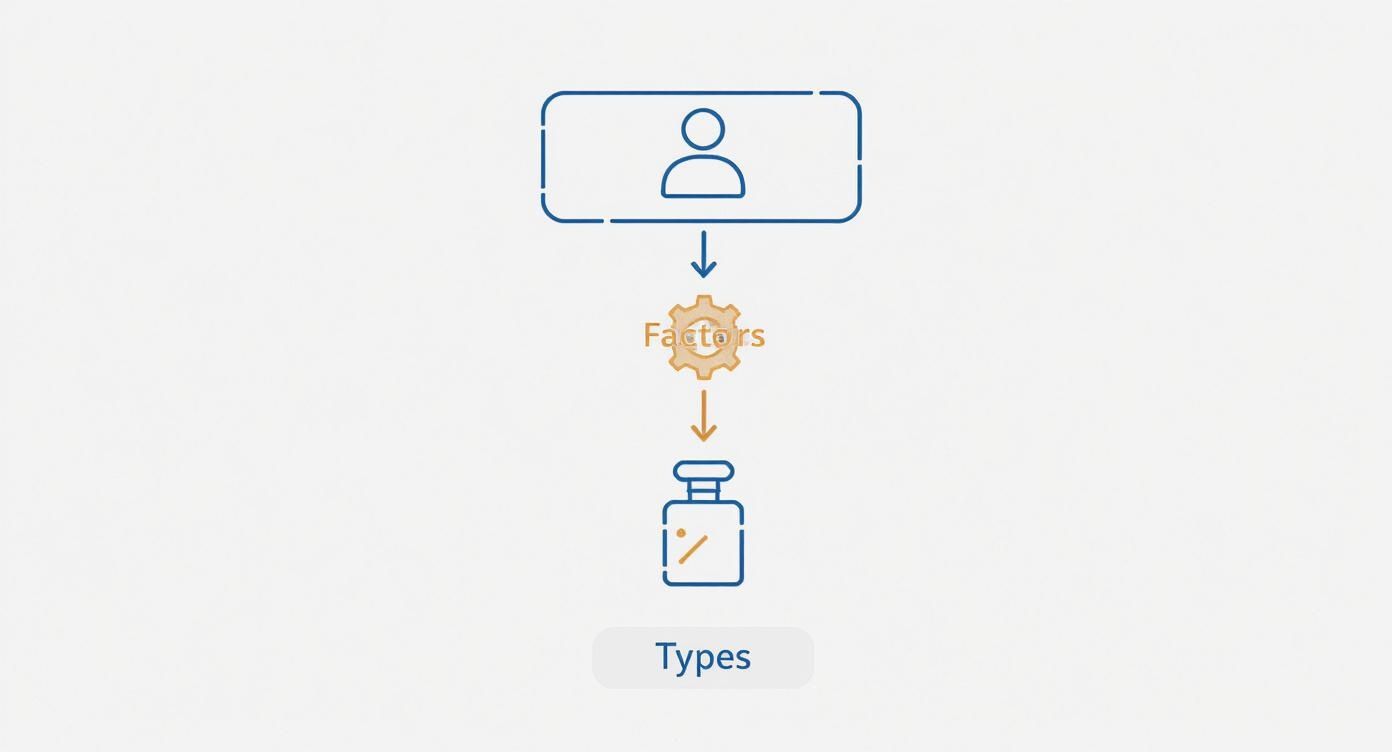
As you can see, your personal preferences are at the very top—the starting point for everything that follows before you even dive into the different fragrance types.
The Fragrance Pyramid Explained
A perfume’s journey on your skin is a dynamic one. The different notes are categorized by their volatility—or, more simply, how quickly they evaporate.
-
Top Notes: This is the first impression. The bright, sparkling scents you smell the second you spray. Made of the lightest molecules, they’re designed to grab your attention and last for about 5 to 15 minutes. Common top notes are things like citrus (lemon, bergamot), light fruits (grapefruit), and fresh herbs (mint).
-
Middle Notes (or Heart Notes): As the top notes fade, the heart of the fragrance comes forward. This is the main character of the perfume—usually more rounded, complex, and full-bodied. They stick around for 20 to 60 minutes and often include florals like jasmine and rose or spices like cinnamon and cardamom.
-
Base Notes: Finally, the base notes make their entrance, giving the perfume its depth and staying power. Composed of the heaviest molecules, these are the notes that linger on your skin for 6 hours or more. Think of rich, grounding scents like vanilla, musk, sandalwood, and patchouli—the ones you’ll remember long after the initial spray.
To really get the full picture, it helps to know the difference between fragrance oil vs. essential oil, as this distinction shapes how these notes are created and how they perform on the skin.
The real magic of a well-made perfume is how these three layers blend together. The heart notes soften the initial burst of the top notes, and the base notes provide a solid foundation for everything else, creating a complete and harmonious experience.
Exploring the Major Fragrance Families
Just like musical genres help you find new artists you’ll love, fragrance families help you pinpoint scents that fit your personal style. While there are countless sub-families, most perfumes fall into one of four main categories. Knowing which one you gravitate toward makes finding the best perfumes for you so much easier.
Floral
This is the most traditional and beloved fragrance family, built around the scents of flowers. They can range from the smell of a single flower (a "soliflore") to a complex bouquet.
- The Vibe: Romantic, feminine, and classic.
- Common Notes: Rose, jasmine, lily, gardenia, tuberose.
- Think Of: A slow walk through a garden in full bloom.
Fresh
Bright, clean, and energizing, Fresh scents are all about zesty citrus, airy notes, and aquatic vibes. They’re perfect for daytime, warm weather, and anyone who wants to smell effortlessly clean. For a gorgeous example of a fresh unisex scent, look at Guerlain's Aqua Allegoria Nerolia Vetiver, which mixes bright citrus with earthy tones.
- The Vibe: Energetic, clean, and uplifting.
- Common Notes: Lemon, bergamot, orange, sea salt, green leaves.
- Think Of: A cool ocean breeze or a glass of freshly squeezed lemonade.
Amber (Oriental)
Warm, rich, and often spicy, Amber fragrances (historically known as Oriental) are deeply sensual and opulent. They’re built on notes like exotic resins, sweet vanilla, and aromatic spices.
- The Vibe: Mysterious, luxurious, and captivating.
- Common Notes: Vanilla, myrrh, anise, musk.
- Think Of: A cozy fireside on a cold night or a bustling spice market.
Woody
Earthy, warm, and comforting, Woody fragrances are centered on scents from woods and mosses. They can be creamy and smooth or dry and smoky, but they always feel grounding.
- The Vibe: Elegant, sophisticated, and serene.
- Common Notes: Sandalwood, cedarwood, vetiver, oakmoss.
- Think Of: A quiet walk through a damp forest just after it rains.
Once you understand both the fragrance pyramid and these core families, you’re no longer just smelling a perfume—you’re reading its story. This is how you move beyond the bottle and find a scent that truly speaks to you.
Understanding Perfume Strength and Performance
Have you ever wondered why one perfume lasts from your morning coffee through dinner, while another seems to pull a disappearing act by lunchtime? It’s not magic—it’s all about concentration. Getting a handle on this one concept unlocks the mystery behind a perfume's power and performance, helping you choose the right scent for absolutely any moment.
The terms you see on the bottle—Parfum, Eau de Parfum, Eau de Toilette—aren’t just fancy French words for marketing. They're specific classifications that tell you exactly how much pure fragrance oil is dissolved in the alcohol base. It’s simple: the higher the oil concentration, the more potent and long-lasting the scent will be.
Decoding Perfume Concentrations
Think of perfume concentration like making a cup of coffee. A shot of espresso is intensely concentrated and powerful, while a regular drip coffee is more diluted. Both are undeniably coffee, but they deliver two very different experiences. The same idea applies to fragrance.
Each concentration level is designed for a different purpose, offering a unique balance between intensity and staying power.
-
Parfum (or Extrait de Parfum): This is the richest, most luxurious form of fragrance you can buy, containing a whopping 20-30% perfume oil. A single application can last all day long, making it perfect for truly special occasions. Because of its incredible potency, it’s also the most expensive.
-
Eau de Parfum (EDP): This is the sweet spot and the most common concentration you'll find on the market. An EDP contains 15-20% perfume oil and strikes that perfect balance between strength and longevity, typically lasting a solid six to eight hours. It's ideal for everyday wear when you want your scent to be noticed but not overwhelming.
-
Eau de Toilette (EDT): Lighter and more refreshing, an EDT has a concentration of 5-15% perfume oil. It's a fantastic choice for warmer weather or office environments where you want something more subtle. You can expect it to last for about three to four hours before you might want to spritz again.
-
Eau de Cologne (EDC): Traditionally the most diluted of the bunch, an EDC contains just 2-4% perfume oil. It provides a light, fleeting burst of freshness that lasts a couple of hours at most. EDCs are often built around citrusy, invigorating notes—perfect for a quick pick-me-up.
For example, a modern classic like Giorgio Armani's Acqua Di Gio Eau de Parfum gives you the lasting power of an EDP, making its fresh, aquatic notes stick around all day long.
Longevity Versus Sillage
Beyond just concentration, two other key terms describe how a perfume performs: longevity and sillage. They’re related, but they measure two very different things.
Longevity is pretty straightforward—it’s simply how long the fragrance lasts on your skin. A high-quality Parfum can easily last over 10 hours, while an EDC might fade in two. The base notes in a fragrance play a huge role here; ingredients like musk, amber, and sandalwood have larger molecules that evaporate slowly, anchoring the scent for hours.
Sillage (pronounced see-yazh), on the other hand, is the scent trail a perfume leaves in the air behind you. It’s that beautiful, invisible cloud of fragrance that follows you as you move.
It's a common myth that a long-lasting perfume automatically has a huge sillage. But a scent can have amazing longevity while staying very close to the skin (low sillage), just as another can announce your arrival from across the room (high sillage) but fade away quickly.
Choosing The Right Strength For The Occasion
Once you get these concepts, you can start building a versatile fragrance wardrobe. You wouldn’t wear a heavy winter coat in July, right? The same logic applies to your perfume.
-
For the Office: An Eau de Toilette is often the perfect call. It's present enough to make you feel polished and put-together but subtle enough not to overwhelm your colleagues in a shared space.
-
For a Date Night: Go for an Eau de Parfum. It provides the ideal combination of presence and longevity, ensuring your scent will last through dinner and beyond without being too aggressive.
-
For a Special Event: This is the time to break out a Parfum. Its richness and depth create a memorable, luxurious impression, and you won’t have to worry about it fading halfway through the night.
-
For a Casual Weekend: An Eau de Cologne or a light EDT is perfect for running errands or just relaxing at home. It offers a quick, easy burst of freshness that’s completely carefree.
Ultimately, finding the best perfume for you comes down to matching the right performance to your needs. By paying attention to concentration, longevity, and sillage, you can confidently pick a fragrance that fits every single part of your life.
How to Properly Test and Select Your Perfume
Finding your next signature scent is a personal journey, not just a quick read of online reviews. It’s an experience, something that shouldn’t be rushed while standing at a busy counter. This guide will walk you through how to test fragrances like a pro, so you can find a perfume you’ll absolutely love for years to come.
The most important rule is also the simplest, yet it's the one people forget most often: always test on your skin. A paper blotter is just an introduction; it tells you what the perfumer intended. The real magic happens when the fragrance meets the warmth and unique chemistry of your skin, creating a scent that is 100% yours.
The Art of the Skin Test
Your body chemistry is the final, secret ingredient in any perfume. It’s the reason a scent that smells heavenly on your friend might fall flat on you. To do it right, spray the fragrance directly onto your pulse points—the inner wrists or elbows are perfect spots.
Now, resist the urge to immediately bring your wrist to your nose! That initial blast is mostly alcohol and the fleeting top notes. Let it air dry for at least 30 seconds before taking a gentle sniff. And whatever you do, don't rub your wrists together. That old habit actually creates friction that crushes the delicate scent molecules, messing up the way the fragrance is meant to unfold.
Experience the Full Fragrance Journey
A great perfume is like a story that reveals itself over several hours. To truly get to know it, you have to stick around for the whole narrative—from the bright opening credits to the lingering finale.
The scent you smell in the first 10 minutes is only the beginning. The heart of the fragrance will reveal itself after about an hour, and the deep base notes, which form the lasting impression, may not fully emerge for two to three hours.
This is what we call the fragrance journey. Wear the scent for a full day. Pay attention to how it changes while you're working, running errands, or relaxing at home. Does it still feel like you hours later? Taking this patient approach is the best way to avoid buyer’s remorse and land on a perfume that genuinely feels like an extension of yourself.
Tips for Effective Perfume Testing
Walking into a store filled with hundreds of aromas can quickly lead to olfactory fatigue. That's the point where your nose gets overwhelmed and can't really distinguish one scent from another. To keep your testing session productive and fun, follow these tips.
-
Limit Your Options: Don't try to smell everything on the shelf. Stick to testing a maximum of three to four perfumes in a single visit. Spray each one on a different spot, far enough apart that they don’t mix.
-
Cleanse Your Palate: Just like sorbet cleanses your palate between courses at a fancy dinner, you can reset your sense of smell. Most perfume counters have little jars of coffee beans for exactly this reason. A quick sniff of the neutral coffee aroma helps clear your olfactory receptors so you can approach the next fragrance with a fresh nose.
-
Stay Hydrated and Unscented: Show up to your testing session ready to go. That means clean, unmoisturized, and unscented skin. Skip the scented lotions or body sprays, as they’ll interfere with how the new perfume develops. Drinking water helps, too—it keeps all your senses, including smell, sharp.
By following these simple steps, you can turn a potentially confusing task into a deliberate and rewarding ritual. For more expert advice, especially when buying online, our ultimate guide to buying luxury perfumes has you covered.
Exploring Niche and Luxury Perfumes
Step away from the department store counter, and you’ll discover an entirely different world of fragrance—the captivating realm of niche and luxury perfumes. While mainstream designer scents are made to please the masses, these fragrances are born from a different philosophy. They aren’t about following trends; they’re about telling a unique, often daring, story.
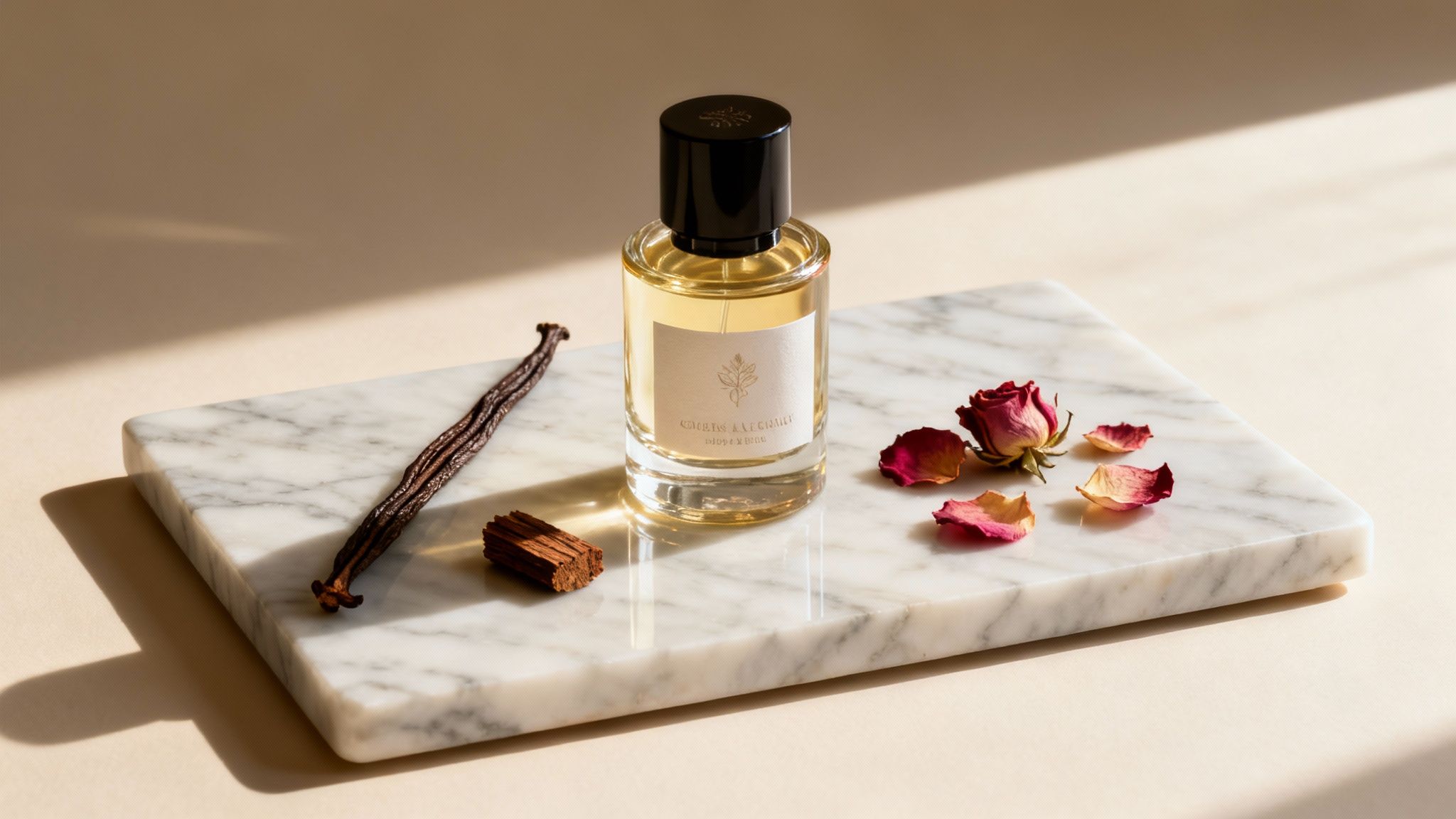
Niche perfumery is art, plain and simple. It’s driven by a creative vision, not market research. Here, perfumers act like artists, using rare, high-quality ingredients and unexpected combinations to craft something truly personal. The result is a scent that doesn’t just smell good—it evokes a mood, a memory, or a feeling, making the experience deeply individual.
What Sets Niche and Luxury Apart
The real difference boils down to three things: exclusivity, ingredients, and artistic freedom. Niche brands often create their fragrances in smaller batches, selling them through specialized boutiques or directly to scent lovers. This keeps them exclusive.
This focused approach allows for a total commitment to quality.
- Superior Ingredients: Niche perfumers hunt for rare and precious materials, from ethically sourced oud to hand-picked Grasse jasmine.
- Creative Compositions: Without pressure to appeal to everyone, creators take risks. Think smoky leather paired with sweet raspberry or earthy vetiver with salty sea spray.
- Artisanal Craftsmanship: The focus is on the art of perfumery itself. The perfumer's vision comes first—not celebrity endorsements or massive ad campaigns.
This dedication to artistry is exactly why these fragrances often have a higher price tag. You're not just paying for a scent; you're investing in the craftsmanship, the quality of the ingredients, and the originality of the idea. It's a market that's booming, too. The luxury perfume sector is projected to hit USD 24.3 billion in 2024 and is expected to soar to USD 45.8 billion by 2033, largely thanks to the growing love for niche perfumes.
To help clarify the distinction, here’s a quick comparison of the two worlds:
Mainstream vs. Niche Perfumes Compared
| Characteristic | Mainstream Perfumes | Niche Perfumes |
|---|---|---|
| Philosophy | Broad appeal, trend-driven | Artistic vision, unique story |
| Availability | Widely available in department stores | Sold in boutiques, online, limited distribution |
| Ingredients | Often synthetic, cost-effective | High-quality, rare, natural ingredients |
| Marketing | Large-scale campaigns, celebrity-endorsed | Word-of-mouth, storytelling, perfumer's reputation |
| Scent Profile | Safe, pleasant, familiar | Complex, daring, unconventional |
| Price Point | More accessible | Premium, reflecting quality and exclusivity |
Ultimately, choosing between mainstream and niche comes down to personal preference. One offers comfort and familiarity, while the other offers a journey of discovery.
Finding Your Unique Scent Story
Diving into niche perfumes opens up a whole new way to find your signature scent. It’s an invitation to find something that doesn’t just complement your style but shouts your individuality in a way a mass-market fragrance never could.
Choosing a niche perfume is like selecting a piece of art. It’s a personal statement that reflects your taste and tells a story that is uniquely yours. It is the ultimate form of self-expression through fragrance.
The journey into this world is incredibly rewarding. Instead of smelling like many, you can finally smell like you. For anyone ready to start this adventure, our list of the 10 best luxury fragrances for women is a fantastic starting point for discovering some of the most celebrated and captivating scents out there.
A Few Final Questions on Finding Your Scent
Diving into the world of perfume can feel a little overwhelming, but it doesn't have to be. We've gathered answers to some of the most common questions we hear, giving you the confidence to choose, wear, and love your fragrances.
How Can I Make My Perfume Last Longer?
The secret to a long-lasting scent starts with your skin. Apply your fragrance right after a shower to well-moisturized skin; a good unscented lotion gives the perfume oils something to cling to. Target your pulse points—the wrists, neck, and behind the ears—where your natural body heat will gently diffuse the scent all day long.
Here’s a pro tip: resist the urge to rub your wrists together after you spray. That friction actually crushes the delicate top notes, changing how the fragrance was designed to unfold. And remember to store your bottles in a cool, dark place away from heat and humidity to keep the juice inside perfect.
Should I Have a Signature Scent or a Fragrance Wardrobe?
A signature scent is that one perfume you wear so often it becomes part of your identity—the scent people instantly associate with you. Think of it as your olfactive calling card. A fragrance wardrobe, on the other hand, is a curated collection of different perfumes for various moods, seasons, and occasions.
You might have a light, zesty citrus for bright summer days, a romantic floral for spring evenings, and a warm, spicy amber for cozy winter nights. There’s no right or wrong answer here; it’s all about your personal style. Do you want to be known for one iconic scent, or do you love having options?
Ever wonder why a perfume smells amazing on your friend but just… different on you? It's all down to your unique body chemistry. Your skin's pH, your diet, and even your hormones interact with the fragrance oils, creating a version of the scent that is 100% yours.
Is It Safe to Buy Perfume Online?
Absolutely, as long as you know where to shop. Stick to authorized retailers like a brand’s official site, trusted department stores, or reputable online fragrance sellers. These places guarantee you’re getting the real deal and that the perfume has been stored properly to maintain its quality.
Before you click "buy," do a quick check for recent customer reviews and a clear, fair return policy. It’s a simple step that ensures you can shop confidently while exploring the best perfumes online.
At Databazaar.com, we’ve built our reputation on offering a curated selection of authentic luxury fragrances from the world's top brands. With over 25 years of experience and more than 3 million happy customers, you can trust that every bottle we sell is genuine. We take the guesswork out of online shopping so you can focus on finding a scent you'll love.
Explore our collection of premium men's and women's perfumes at Databazaar.com