Skip to content


How to Care for Leather Bags: A Complete Guide
Learning how to care for a leather bag is pretty straightforward. It all comes down to a simple rhythm: routine cleaning, occasional conditioning, and smart storage. Master these three things, and you’ll do more than just protect your bag—you’ll help it develop that rich, beautiful patina that only comes with time.
Your Guide to Lifelong Leather Bag Care
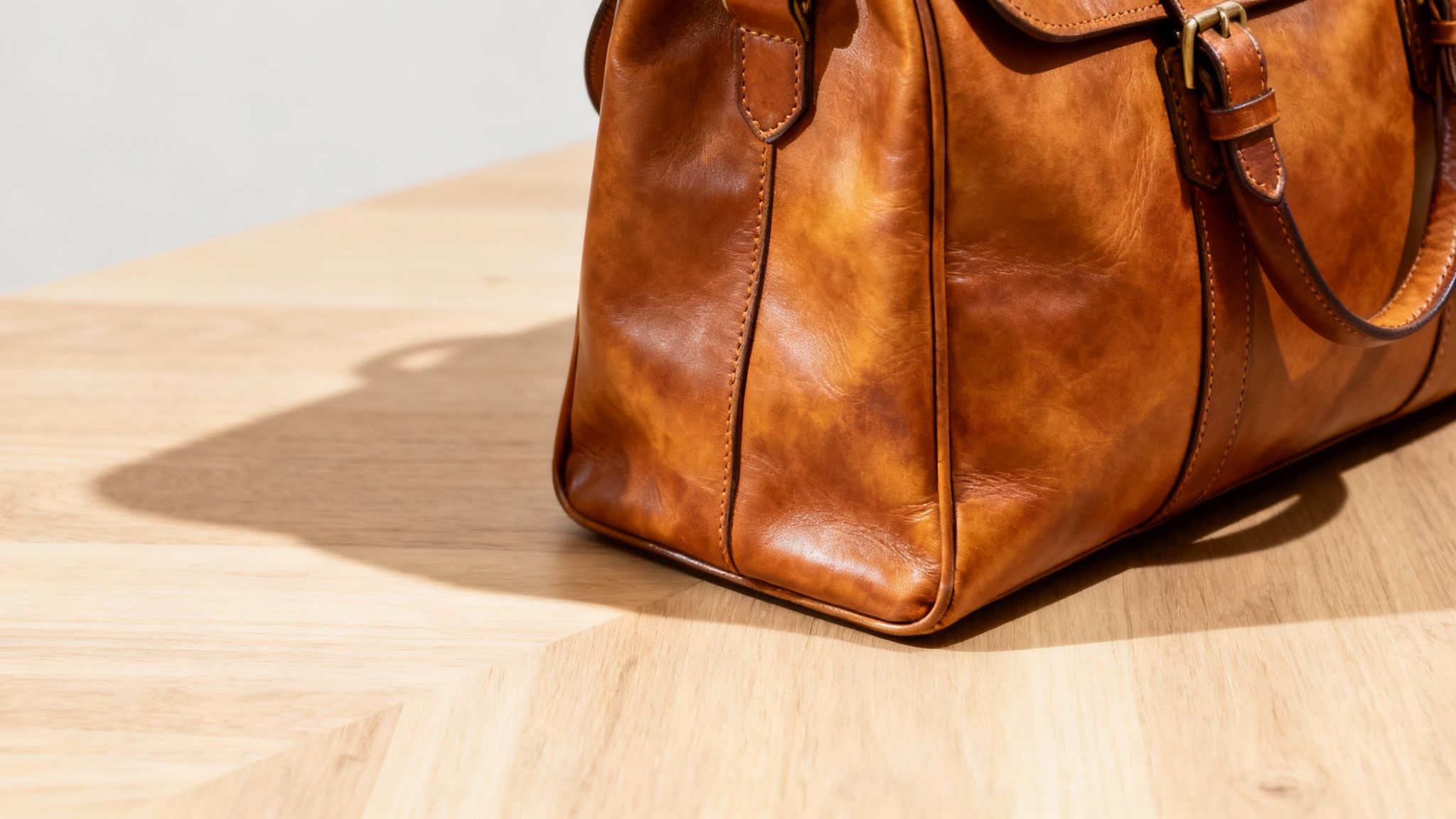
A great leather bag is so much more than an accessory. It's an investment that can literally last a lifetime, telling a story with every mark and scuff it picks up along the way. The real goal isn't to keep it looking brand new forever; it's to help it age with grace, developing that deep, buttery patina that's the hallmark of truly high-quality leather.
To get there, you need to think beyond just wiping up the occasional spill. A proactive maintenance routine is what preserves the leather's natural strength and flexibility. If you neglect it, the hide can dry out, crack, or stain, losing all the qualities that made you fall in love with it in the first place.
The Foundation of Proper Leather Care
The core ideas behind great leather care are simple and fall into three key areas. Get these right, and you'll have the foundation to look after any leather piece, from a rugged messenger bag to a delicate clutch.
-
Gentle Cleaning: This is your first line of defense. Regularly wiping away dust and surface grime prevents tiny particles from scratching the finish. It also means tackling minor spills right away before they have a chance to set.
-
Deep Conditioning: Think of leather as skin—it needs moisture to stay supple. Conditioning is all about replenishing the natural oils within the hide, which stops it from becoming brittle and cracking over time.
-
Smart Storage: What you do with your bag when you're not using it is just as important as cleaning it. Proper storage protects it from sunlight, humidity, and getting crushed or misshapen.
For owners of Tuscany Leather bags, these principles are non-negotiable. The full-grain, vegetable-tanned leathers used in these pieces are specifically chosen for their ability to develop a stunning, personalized patina. If you're just starting your collection, our guide on how to choose your first luxury leather bag is a great place to begin.
A well-cared-for leather bag doesn’t just last longer—it becomes a unique reflection of your personal journey. Each mark and subtle change in color adds to its character, creating a piece that is truly one-of-a-kind.
This guide will walk you through the practical steps to build a solid care routine. Once you understand these fundamentals, you can feel confident that you’re protecting your investment and setting it up for decades of timeless style.
Decoding Your Leather Type and Its Unique Needs
Before you start cleaning or conditioning, you have to know exactly what you’re working with. Using the wrong product on a leather bag is a fast way to cause damage—think stripping essential oils from a beautiful full-grain hide or completely flattening the delicate texture of suede. It’s a lot like skincare; you wouldn’t use a harsh scrub on sensitive skin, and the same rule applies here.
Figuring out your leather type is easily the most critical step. Every hide has its own personality, shaped by the cut of the leather, the tanning process, and how it was finished. Once you know what you have, you can choose the right tools for the job and keep your bag looking incredible for years.
Full-Grain and Top-Grain: The Durable Classics
Full-grain leather is the real deal—the best you can get. It’s made from the very top layer of the hide, and all its natural character is left intact. You'll see the grain, the pores, even little scars. This is what gives it that rich, authentic feel. Over time, it develops a stunning patina, which is that soft sheen that comes from years of use and absorbing oils from your hands.
Top-grain leather is a very close second. It’s similar to full-grain, but the surface has been lightly sanded or buffed to smooth out any major imperfections. This gives it a more uniform look. It's still incredibly durable, but that light sanding means it won't develop quite the same deep patina as its full-grain cousin.
Caring for these robust leathers is pretty straightforward:
-
Feel the Difference: Full-grain usually has a more organic, slightly textured feel. Top-grain will feel smoother to the touch.
-
Conditioning is Everything: Both these types need a good conditioning balm or cream. This puts back the natural fats and oils, keeping the leather flexible and preventing it from drying out and cracking.
-
Work with Minor Scratches: Got a small scuff on your full-grain bag? Try rubbing it gently with your fingertips. The warmth from your hand can often redistribute the oils in the leather and make the mark disappear.
For those who own a bag from our curated selection, understanding the nuances of fine Italian leather can greatly enhance its lifespan and beauty. You can discover more about the exceptional materials we use in our guide to Tuscany Leather bags.
Suede and Nubuck: The Delicate Textures
People often mix up suede and nubuck, but they're not the same. They both have that soft, velvety feel, but they’re made differently. Suede comes from the inner, split side of the hide, which is why it’s so soft and pliable.
Nubuck, on the other hand, is crafted from the outer side of the hide—the same part used for full-grain leather. It's carefully sanded to create a short, fine nap of protein fibers. Because it starts as top-grain, nubuck is typically a bit more durable and water-resistant than suede.
When it comes to suede and nubuck, care is less about conditioning and more about constant protection and cleaning. Their fuzzy, porous surfaces are magnets for dirt and stains, so you need a totally different toolkit.
Here's a quick guide to their special needs:
-
Protect It Immediately: The very first thing to do with a new suede or nubuck bag is treat it with a high-quality protective spray. This creates an invisible shield against water spots and stains.
-
Get the Right Tools: A suede brush and an erasing block are non-negotiable. The brush is for lifting the nap and getting rid of loose dirt, while the eraser is fantastic for tackling small scuffs and marks.
-
No Creams or Balms: Whatever you do, never use a traditional leather conditioner on suede or nubuck. It will instantly mat down the nap, ruin the texture, and leave ugly, dark oil spots that you can't get out.
To make things even clearer, here’s a quick cheat sheet to help you identify and care for the most common leathers you'll find in a quality handbag.
Leather Type Care Cheat Sheet
| Leather Type | Key Characteristics | Recommended Care Routine | Products to Avoid |
|---|---|---|---|
| Full-Grain | Visible natural grain, pores, and markings. Develops a rich patina over time. | Wipe with a damp cloth; condition with a leather balm or cream every 3-6 months. | Harsh chemical cleaners, silicone-based products. |
| Top-Grain | Smooth, uniform surface after light sanding. Durable and more stain-resistant than full-grain. | Similar to full-grain; regular conditioning to maintain suppleness. | Abrasive scrubs, excessive water. |
| Suede | Soft, fuzzy texture made from the inner hide. Very porous and absorbent. | Use a suede brush to clean and a protective spray for prevention. Tackle stains with a suede eraser. | Water, oils, leather creams, wax-based conditioners. |
| Nubuck | Velvety texture, more durable than suede. Made from sanded top-grain leather. | Regular brushing with a nubuck brush; use a protectant spray. Clean gently. | All liquid cleaners (unless specified for nubuck), heavy creams. |
Ultimately, knowing your leather is the foundation of great bag care. A few minutes of identification can save you from a costly mistake and ensure your bag stays beautiful for the long haul.
Your Routine Cleaning and Conditioning Ritual
If there's one thing that will preserve the beauty and strength of your leather bag, it's a consistent cleaning and conditioning ritual. This isn't about spending hours on intensive work; it’s about building simple, effective habits. Think of it as the core practice for leather care, ensuring your investment doesn't just last but develops the rich character it was meant to.
I like to break this ritual into two parts: the frequent, gentle wipe-down and the less frequent, deeper conditioning treatment. The first handles daily grime, while the second is like a vital spa day for the leather, replenishing its essential oils.
This simple decision tree can help you quickly identify the most common leather types to ensure you start your care routine on the right foot.
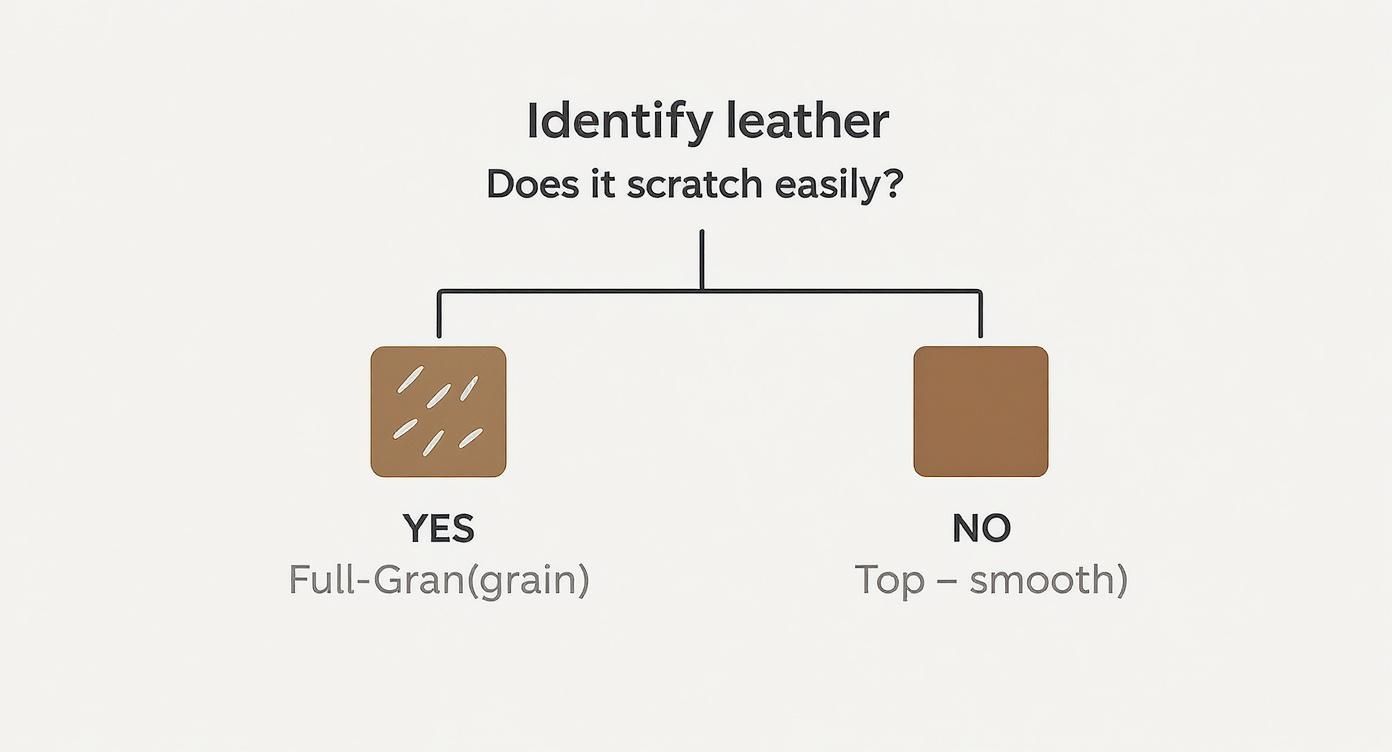
The key takeaway here is that a quick scratch test can often be the best indicator. It helps distinguish between the easily marked, character-rich full-grain and the smoother, more finished top-grain leather.
The Gentle Wipe-Down for Daily Care
Your bag comes into contact with more than you might think—dust, oils from your hands, and residue from countless surfaces. A weekly wipe-down is a quick, five-minute task that stops this buildup from working its way into the leather’s pores.
Just grab a soft, dry, lint-free cloth (microfiber is perfect) and gently go over the entire surface. Pay a little extra attention to high-contact areas like the handles, straps, and bottom corners. This simple action lifts away surface dust before it can become abrasive.
For minor spots or smudges, slightly dampen the cloth with clean, lukewarm water. Wring it out until it’s barely moist, then gently blot the affected area. Whatever you do, don't rub vigorously—that can push the dirt deeper into the grain.
The Deep Conditioning Process
Conditioning is where the real magic happens. This is how you reintroduce moisture and oils back into the hide, keeping it flexible, lustrous, and resistant to cracking. For most bags, this is a ritual you'll perform every three to six months, depending on the climate you live in and how often you use it.
Pro Tip: Always perform a spot test before applying any new cleaner or conditioner. Choose a hidden area, like the inside of a strap or a bottom corner. Apply a tiny amount, let it dry for 24 hours, and check to ensure it doesn't cause any discoloration.
Once your spot test is clear, you're ready to go. Follow these simple guidelines for a flawless application.
-
Start with a Clean Surface: Always give your bag a thorough wipe-down with a dry cloth first to remove any surface dust.
-
Apply Conditioner to the Cloth, Not the Bag: Squeeze a small, pea-sized amount of a quality leather conditioner onto a clean, soft cloth. Applying it directly to the bag can create an uneven finish or dark spots.
-
Use Gentle, Circular Motions: Work the conditioner into the leather using broad, circular strokes. This technique ensures even coverage and helps the conditioner penetrate the pores without leaving a greasy residue.
-
Buff to a Natural Sheen: Let the conditioner sit for about 15-30 minutes (always check the product instructions). Then, take a second clean, dry cloth and gently buff the entire surface. This removes any excess product and restores the leather’s natural, subtle glow.
The result is leather that feels nourished and supple, not sticky or oily. This process is especially vital for premium materials, as it reinforces why Tuscany Leather is worth the investment by preserving its inherent quality.
Choosing the Right Products for the Job
The products you use are just as important as your technique. The market is flooded with options, but the best choices are always those formulated specifically for high-quality leather.
Look for products that are pH-balanced and made with natural ingredients like seed oils or beeswax. These formulas are designed to nourish the leather without messing with its natural chemistry. On the flip side, you should always avoid harsh chemicals, household cleaners, and anything with silicone.
Here’s a quick list of what to steer clear of:
-
Ammonia or Alcohol-Based Cleaners: These will strip the leather's natural oils, leaving it dry and prone to cracking.
-
Silicone Sprays: While they might offer a quick shine, silicone products seal the leather's pores and prevent it from breathing. Over time, this traps dirt and can make the finish look cloudy.
-
Waxes and Petroleum Jellies: These just create a sticky buildup that attracts more dirt and is a nightmare to remove.
Investing in a quality cleaner and conditioner is a small price to pay for protecting your bag. And proper care isn't just about looks; it has a real financial impact. Industry data shows that regular maintenance can extend a leather bag's lifespan by up to 40%. Even better, well-cared-for bags can retain up to 80% of their resale value after five years—a stark contrast to the 40-50% retained by neglected ones.
Handling Stains, Spills, and Unexpected Damage
No matter how careful you are, accidents happen. A sudden downpour, a leaky pen, or an accidental coffee spill doesn't have to spell disaster for your beautiful leather bag. The real key to damage control is acting quickly—and correctly.
The worst thing you can do when a spill happens is panic and start rubbing. That just pushes the stain deeper into the leather’s pores, making it almost impossible to remove. Your first move should always be to gently blot the spot with a clean, dry cloth. This simple action soaks up most of the liquid before it has a chance to set.
This guide will give you the confidence to tackle common mishaps head-on, so you can minimize damage and keep your bag looking its best.
Tackling Water Spots and Rain Damage
Getting caught in the rain can leave ugly spots on your bag as the leather dries unevenly. Whatever you do, resist the urge to use a hairdryer or stick it next to a radiator. Intense heat will cause the leather to shrink, warp, and crack for good.
Instead, a little patience goes a long way. Here’s how to handle it:
-
First, gently blot the entire bag with a soft cloth to remove excess water. Try to dampen the whole surface evenly to avoid those distinct water lines from forming.
-
Empty the bag completely. Leaving items inside can warp its shape as it dries.
-
Stuff the bag loosely with acid-free tissue paper or even old newspaper. This helps it hold its form and pulls moisture out from the inside.
-
Let it air dry naturally in a well-ventilated room, far away from direct sunlight or heat sources.
-
Once it’s totally dry (this could take 24-48 hours), the leather will probably feel a bit stiff. Now’s the time to apply a quality leather conditioner to bring back its softness and flexibility.
A Guide to Common Stain Removal
Different stains call for different tactics. While acting fast is always your best bet, using the right method is just as critical. I always recommend keeping a small emergency kit with a soft cloth and some cornstarch handy—it can be a real lifesaver.
The way you care for your leather bag directly impacts how long it lasts and how much you enjoy it. Surveys show that 70% of leather bag owners who follow recommended care routines report higher satisfaction. On the flip side, using the wrong cleaners can damage up to 25% of leather bags, causing problems that can't be fixed.
For greasy or oily stains, immediately sprinkle a generous amount of cornstarch or talcum powder on the spot. Don't be shy with it. Let it sit for several hours (or even overnight) to absorb the oil, then gently brush it off with a soft-bristled brush.
Ink stains are notoriously tough. If it’s a fresh stain, your best option is a specialized ink-removing stick made for leather. Stay away from alcohol or household cleaners; they’ll strip the leather’s color and finish, leaving you with a much bigger problem than the original ink mark.
Addressing Scuffs and Minor Scratches
Minor scratches are just part of a leather bag's story, adding to its unique character—especially with full-grain leather. For these little imperfections, you often don’t need to do much.
Start by gently rubbing the scratch with your clean fingertips. The warmth and natural oils from your skin are sometimes all it takes to redistribute the waxes in the leather and buff out the mark. This simple trick works surprisingly well and highlights the secret behind the lasting appeal of Tuscany Leather bags, which are crafted to age beautifully.
If the scratch is still visible, dab a tiny amount of leather balm onto a soft cloth and work it into the area using a circular motion. This nourishes the leather and helps the scratch blend right back in. If a more serious stain occurs, knowing some effective methods for removing furniture stains, including from leather, can be incredibly helpful.
Knowing When to Call a Professional
While DIY fixes are great for small issues, some things are best left to an expert. Deeply set stains, significant color loss, or damage from harsh chemicals are situations that call for a professional leather repair specialist. Trying to tackle major damage yourself can easily make things worse.
Think of a leather pro as a doctor for your bag. They have the right tools, products, and expertise to handle serious repairs without ruining the leather's integrity. When in doubt, getting a professional opinion is always the safest move.
Proper Storage and Travel Protection for Your Bag
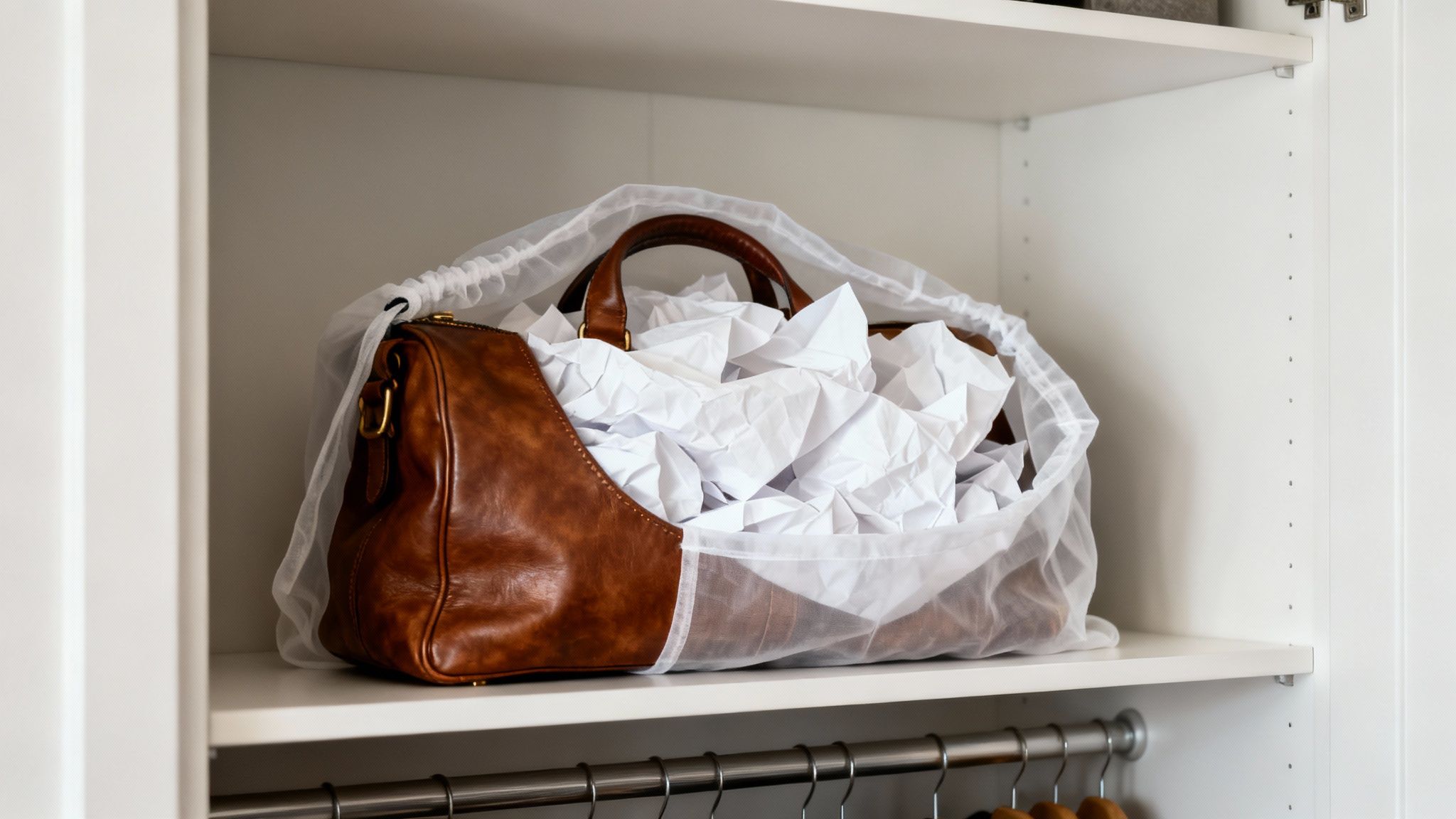
So you’ve cleaned and conditioned your bag, and it looks fantastic. But the job isn't done yet. How you put your bag away between uses—and how you protect it on the go—is just as crucial for keeping it in prime condition.
Think of it this way: neglecting proper storage is like undoing all your hard work. It can lead to ugly creases, faded color, and even mildew, which is the last thing you want for your beautiful leather investment. Proper storage is its downtime, a chance for the leather to breathe and hold its shape so it’s ready for your next adventure.
Creating the Ideal Storage Environment
The golden rule for storing any leather bag is simple: keep it somewhere cool, dry, and dark. Direct sunlight is one of leather's biggest enemies; its UV rays will fade the color and dry out the hide until it becomes brittle. High humidity is just as bad, creating a breeding ground for mold and mildew that can permanently stain and ruin the leather.
To help your bag keep its gorgeous silhouette, you'll want to stuff it before putting it away.
-
Use acid-free tissue paper or even an old, clean cotton t-shirt. This gives it support without any risk of color or chemical transfer.
-
Whatever you do, don't use newspaper. The ink can easily smudge and stain the interior lining.
-
Make sure the stuffing is firm enough to hold the bag’s shape, but don't overdo it. You want to support it, not stretch it out.
Finally, always slip it into a breathable dust bag—like the one it came in. This protects it from dust and scratches while letting the air circulate. If you can’t find the original, a simple cotton pillowcase works wonders. Just never use a plastic bag or container. That’s a one-way ticket to trapping moisture and suffocating the leather.
Proper storage is preventative medicine for your leather bag. A few simple habits can prevent common issues like sagging, creasing, and color fading, extending the life of your investment significantly.
Traveling Smart with Your Leather Bag
Travel can be tough on our accessories, but a little bit of planning goes a long way in keeping your leather bag safe. Whether it’s a quick weekend trip or a long-haul flight, a few smart moves will ensure it arrives looking as good as when you left.
When you're packing your leather bag into a larger suitcase, always put it in its dust bag first. This simple step creates a barrier against scuffs from zippers, buckles, or anything else rattling around in your luggage. Try to nestle it in the center of your suitcase, cushioned by soft clothes, to shield it from bumps and drops.
A little proactive care really pays off. Studies show that bags treated with a quality leather protector are 50% less likely to suffer from water damage or stains. And those conditioned every 3-6 months hold their suppleness and color for up to 70% longer than bags that are left untreated. It’s a powerful reminder of how a consistent routine makes all the difference.
Navigating Airports and Unpredictable Weather
The airport security line can feel like a gauntlet for a nice bag. When you place your bag in the bin for the X-ray scanner, lay it down flat so it doesn't get snagged or crushed by the conveyor belt's machinery. If you can, place it upside down to protect the feet and hardware from getting scratched up.
And always, always be ready for a surprise rain shower. A sudden downpour can happen anywhere. I like to keep a lightweight, foldable tote or a rain cover tucked into an outer pocket. It takes up almost no space and allows you to quickly shield your bag from water spots and damage. This kind of forward-thinking is what makes a bag truly suitable for everyday use, which is a big reason so many people choose Tuscany Leather handbags.
At the end of the day, whether it’s your favorite leather bag or other treasured items, knowing how to effectively pack and protect valuables for travel gives you peace of mind and ensures your investments last.
Common Leather Care Questions Answered
Even with the best routine, you’re going to have questions. We get it. Over the years, we've heard just about every "what if" scenario from our customers, so we’ve put together the answers to the most common ones right here. Think of this as your go-to for those moments of doubt, so you can handle any leather care challenge with total confidence.
How Often Should I Clean and Condition My Bag?
This really comes down to how you use your bag. For a daily workhorse, a quick wipe-down with a dry, soft cloth once a week is a fantastic habit. It takes seconds but stops the everyday grime and oils from your hands from building up.
For a deeper clean and condition, aim for every three to six months. If you live in a dry climate, your leather will lose moisture faster, so stick closer to the three-month mark. In more humid places, you can stretch it to six months to avoid making the leather too soft.
Your bag will tell you when it’s thirsty. If it starts to feel a bit stiff or looks dull, it’s asking for a conditioning treatment. For bags you only bring out on special occasions, once a year is usually plenty to keep the leather nourished.
Can I Use Household Products Like Vinegar or Baby Wipes?
We hear this question all the time, and the answer is a hard no. It might seem like a clever, budget-friendly hack, but using household products is one of the fastest ways to ruin a beautiful leather bag. It's probably the most common mistake we see people make.
Vinegar is incredibly acidic and will strip the leather of its natural oils and protective finish. The result? Dry, brittle leather that’s headed for a future of cracking. Baby wipes are just as bad—they're often loaded with alcohol and other chemicals that dissolve the leather’s surface, leaving behind a sticky residue or causing permanent discoloration.
Do yourself a favor and stick to products made specifically for leather. A pH-neutral cleaner and a quality conditioner are the only tools you need.
What Do I Do If My Leather Bag Gets Soaked in Rain?
Getting caught in a downpour feels like a disaster, but don't panic. The key is to act fast.
First, gently blot—don't rub!—the excess water off the surface with a clean, absorbent cloth. A microfiber towel works perfectly. Once the outside is taken care of, empty the bag completely.
Next, stuff the bag loosely with newspaper or acid-free paper. This is a crucial step because it helps the bag keep its shape while drawing moisture out from the lining. Now, just let it air dry naturally in a well-ventilated room. Keep it far away from radiators, hair dryers, or direct sunlight. Heat will cause the leather to shrink and turn brittle.
The drying process can take a day or two, so be patient. Once it’s fully dry, the leather will probably feel stiff. That’s your cue to apply a good leather conditioner, working it in gently to restore its soft, flexible feel.
Is a Leather Protector or Waterproofing Spray Necessary?
While not mandatory, using a protective spray is a smart, proactive move we highly recommend. Think of it as insurance for your bag, especially if it’s brand new or made from a delicate material like suede or nubuck.
A good spray creates an invisible shield that repels water and prevents stains from sinking deep into the leather's pores. It’s particularly useful for an everyday bag that’s constantly exposed to the elements.
Just remember to test it on a small, hidden spot first—like the inside of a strap—to make sure it doesn't affect the color. For the best results, reapply the spray every few months, particularly after you’ve given the bag a deep clean. It’s a small step that offers huge peace of mind.
At Databazaar, we believe a fine leather bag is an investment in timeless style. Explore our curated collection of authentic Tuscany Leather bags and discover the perfect piece to accompany you on your journey.