 Skip to content


From Tuscany, with Tradition: The Story of Authentic Italian Leather Products
Step into the world of Tuscan leather. This isn't just another material—it's a symbol of luxury, deep-rooted tradition, and the kind of impeccable Italian craftsmanship that feels almost impossible to find these days. When you hold a piece of Tuscany Leather, you're not just holding a bag or a wallet; you're holding a story built to last a lifetime. For many, it's an investment in a style that never fades.
The Enduring Legacy of Tuscan Leather
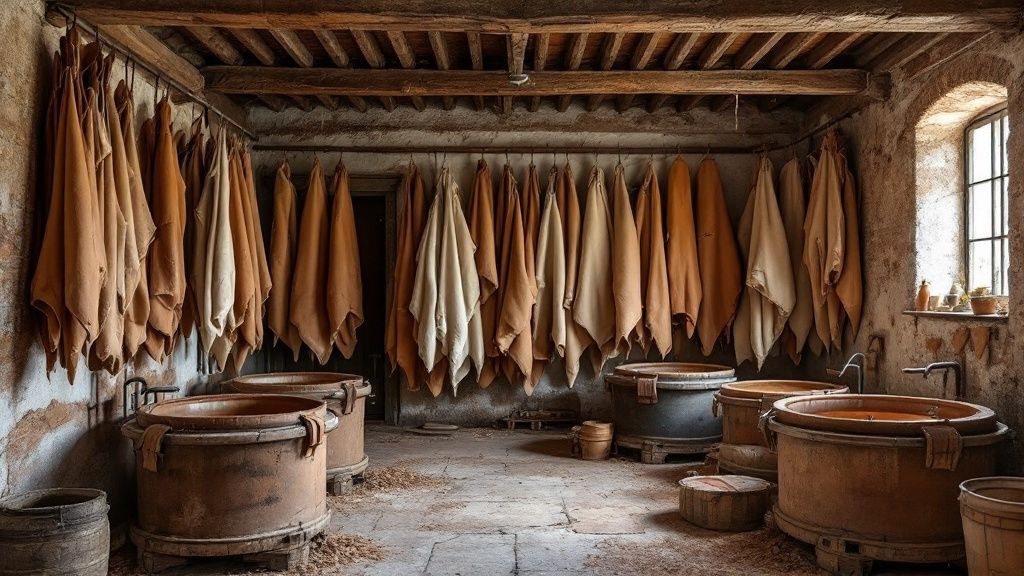
Tuscan leather is so much more than its name suggests. It represents a profound connection to history and a commitment to quality that feels increasingly rare in our fast-paced world. Think of it less like a factory-made commodity and more like a piece of art, where every single hide tells a story of meticulous care and attention. This legacy is woven into the very fabric of Tuscany itself—a region synonymous with beauty and skill.
The craft’s heritage runs deep, stretching back centuries. Seriously. The art of leather tanning in Tuscany dates all the way back to the Etruscan civilization, with the craft truly taking off during the Middle Ages. When Pisa became part of the Florentine Republic in the early 1400s, the industry flourished, with artisans perfecting their techniques right along the River Arno.
What Sets It Apart
The real magic of Tuscan leather is something you have to experience with your senses. It’s about so much more than just how it looks; it’s a complete sensory encounter that immediately sets it apart from mass-produced alternatives.
-
The Aroma: Real Tuscan leather has a distinct, earthy, and completely natural scent. That smell comes from the tannins of wood, bark, and leaves used to create it—not harsh chemicals.
-
The Feel: It has this incredible combination of softness and strength. It feels supple to the touch yet reassuringly durable, like it was made to be used and loved.
-
The Look: Over time, it develops a gorgeous patina—a soft, beautiful sheen that deepens its color and character, making each piece uniquely and beautifully yours.
To invest in Tuscan leather is to own a piece of living history. It’s an acknowledgment that the finest things are not made quickly but are cultivated with patience, skill, and a profound respect for tradition.
This is just the beginning of understanding why this material is so revered. To dig a little deeper, check out our guide on the 7 reasons why you should invest in Tuscany leather goods.
Hallmarks of Authentic Tuscan Leather Quality
How do you spot genuine Tuscan leather in a market flooded with fakes? It’s easier than you think, once you know what to look for. True leather tuscany products aren't just made; they're born from a slow, deliberate craft that values nature over chemicals and time over speed.
Look for the Official Seal
The single most important signifier is the 'Pelle Conciata al Vegetale in Toscana' trademark. This isn't just a fancy Italian phrase—it's a legally protected guarantee.
This seal certifies that the leather was tanned exclusively in Tuscany using only natural tannins from tree bark, leaves, and plants. It’s a meticulous, old-world method that’s far more sustainable than the fast, cheap alternative: chrome tanning, which relies on heavy metals.
Understanding the Art of Vegetable Tanning
Think of the vegetable tanning process like aging a fine wine. Just as grapes need time to ferment and develop deep, complex flavors, raw hides are soaked in wooden drums with natural tannins for weeks on end. This slow absorption is what gives the leather its signature strength, flexibility, and unmistakable character.
This time-honored technique is the soul of authentic Tuscan leather. It ensures that each piece is not only durable but also develops a rich, personal patina over time, becoming more beautiful with every use.
This is where the magic really happens. The durability, the way it ages, and the rich, nuanced colors are all direct results of this traditional tanning method.
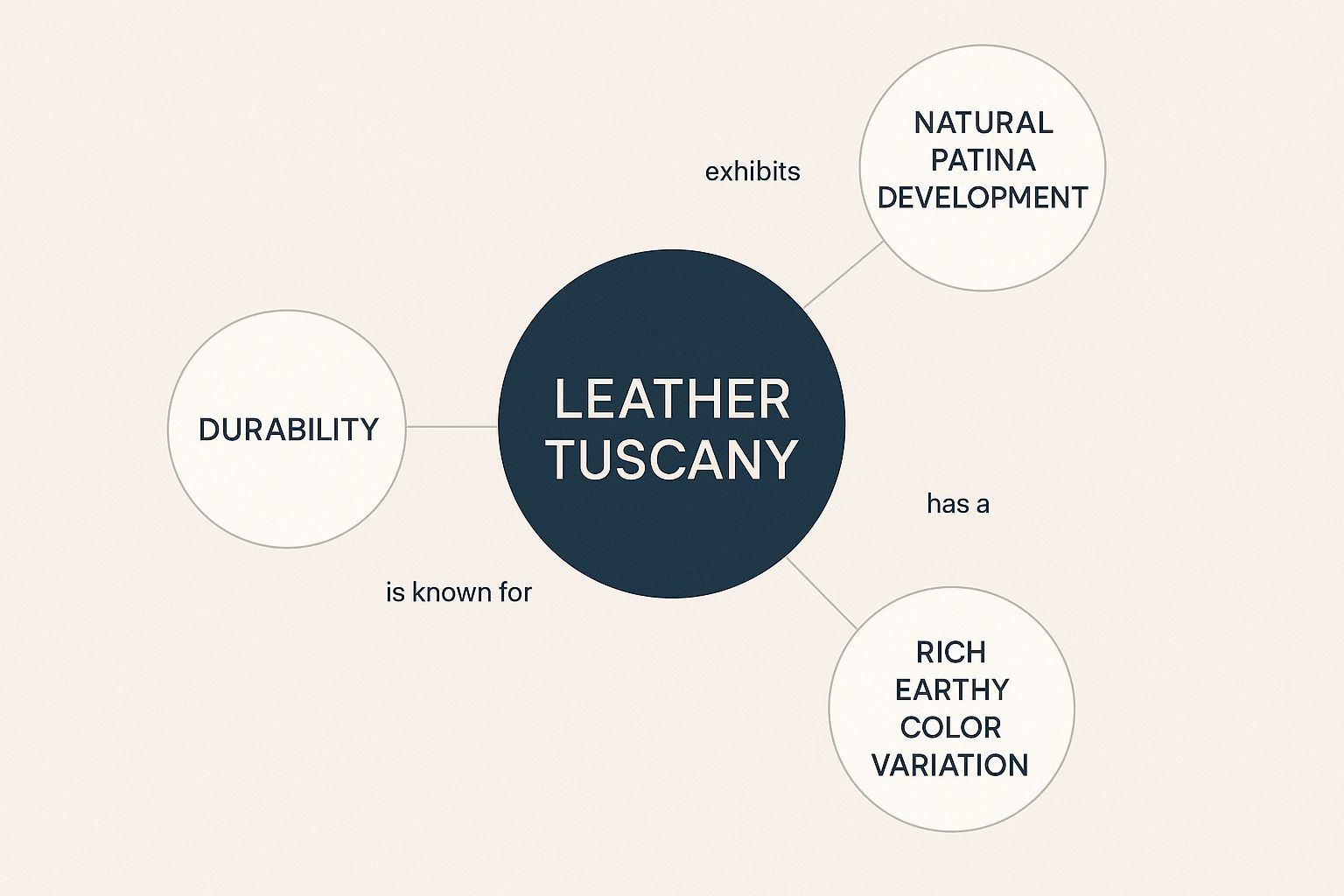
As you can see, these qualities are all interconnected. Mass-produced leather, with its chemical shortcuts, simply can't replicate this beautiful, organic evolution.
Engage Your Senses to Verify Quality
Beyond the official seal, your senses are your best allies. Once you know what to look for, the difference between real Tuscan leather and an imitation is striking. Genuine leather tuscany tells its story through feel, smell, and sight, setting it apart from inferior products. If you want to dive deeper, it's worth comparing Tuscany leather vs other Italian leather brands to see just how unique it is.
Not sure how to tell the real deal from a convincing fake? This quick comparison chart breaks down the key differences.
Authentic Tuscan Leather vs Mass-Produced Leather
|
Characteristic |
Authentic Tuscan Leather |
Mass-Produced Leather |
|---|---|---|
|
Scent |
Rich, earthy, and slightly sweet, like wood or almonds. |
A sharp chemical or plastic-like odor. |
|
Feel |
Firm yet supple, with a natural, warm-to-the-touch texture. |
Often feels cold, stiff, or unnaturally smooth like plastic. |
|
Appearance |
Deep, varied color with visible pores and natural grain. |
Flat, uniform color that looks painted on. Lacks depth. |
|
Aging |
Develops a beautiful, unique patina over time. |
Cracks, peels, or fades with use. Does not improve with age. |
|
Imperfections |
May show subtle variations, which are marks of a genuine hide. |
Flawless, uniform surface, which often indicates a synthetic coating. |
By training your senses and looking for the 'Pelle Conciata al Vegetale in Toscana' trademark, you can confidently spot true artisanal quality. You're not just buying a bag; you're making an investment that will literally last a lifetime.
How Tuscany Powers the Global Leather Market
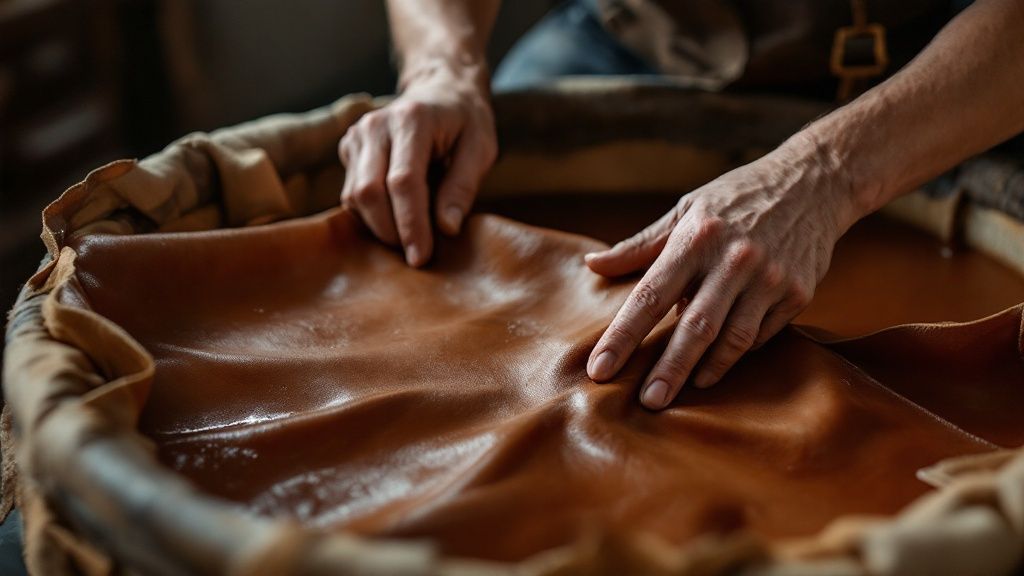
Tuscan leather isn't just a nod to tradition; it’s the driving force behind a global economic engine. While we all know the region for its breathtaking art and landscapes, it’s also a manufacturing giant that has cemented Italy's reputation as the world's undisputed leader in premium leather goods. The industry's reach is massive, creating thousands of jobs and fueling a huge portion of Italy's luxury exports.
This isn’t by chance. The Italian leather industry, with Tuscany as its beating heart, holds an almost unbelievable grip on the global market. The region produces roughly 15% of the world's leather and a staggering 60% of all finished leather products in Europe. Back in 2018, the Italian tanning industry's annual production value hovered around €5 billion, with an incredible 75% of its leather heading straight to international markets.
The Cluster Model: A Recipe for Success
The secret to Tuscany’s dominance lies in its unique "cluster model" of production. Forget the idea of a single, giant factory churning out products. Instead, picture a vibrant network of hundreds of small, often family-run businesses, each mastering a specific step in the leather-making journey.
Think of it like an orchestra. One workshop is a virtuoso at tanning, another excels at precision cutting, a third is a master of stitching, and a fourth perfects the finishing touches on hardware. They all work in harmony, creating a final piece that’s far more beautiful and refined than the sum of its parts.
This system creates some serious advantages:
-
Specialized Expertise: Each business becomes a master of its craft, pushing the standards of quality sky-high at every stage.
-
Flexibility and Innovation: Smaller workshops can pivot quickly, adopting new techniques and adapting to trends, which keeps the leather tuscany industry agile and fresh.
-
Shared Knowledge: Being so close to one another encourages a constant flow of ideas and skills, preserving time-honored methods while still making room for new ones.
More Than a Craft, It's an Economic Pillar
This collaborative spirit ensures that the world-class quality tied to the Tuscan leather name remains unshakable. It's a system that has been fine-tuned over generations, building a resilient economic foundation for the entire region. The industry's success is living proof that traditional craftsmanship and modern economic power can absolutely go hand in hand.
The Tuscan leather cluster is a testament to the power of community. It demonstrates how specialized, collaborative artisanship can outperform mass production, creating products of exceptional value and enduring appeal.
This economic backbone is a major reason why Tuscany leather is worth the investment, as it supports an entire ecosystem dedicated to nothing less than perfection. When you buy a genuine Tuscan leather good, you’re not just getting a product; you’re supporting a legacy of skill, community, and economic strength that has defined this incredible Italian region for centuries.
Choosing Your Perfect Tuscan Leather Piece
Ready to bring home a piece of Italian craftsmanship that will last a lifetime? Choosing the right Tuscan leather bag isn't just a purchase; it’s a personal decision, a lot like picking out a piece of art. The goal is to find something that not only catches your eye but also fits perfectly into the rhythm of your daily life.
The first thing to get a handle on is the different types of leather finishes, since this choice directly affects how your piece looks, feels, and wears over time. Think of it like choosing between reclaimed, rustic wood and a smooth, polished maple for a table—each has its own distinct character.
Decoding Leather Finishes
The two terms you’ll hear most often are full-grain and top-grain. They sound almost the same, but the difference between them is everything when it comes to quality and longevity.
-
Full-Grain Leather: This is the best of the best—the highest quality leather you can get. It’s made from the very top layer of the hide, keeping all the natural grain, unique marks, and imperfections intact. Because it hasn't been sanded down, it's incredibly strong and develops that gorgeous, rich patina everyone loves as it ages.
-
Top-Grain Leather: This is the second-highest grade available. The surface is lightly buffed or sanded to smooth out any imperfections, giving it a more uniform and consistent look from the start. It's still a fantastic, durable leather, but it’s just a touch less resilient than full-grain and won't develop quite the same deep, story-telling patina over the years.
Choosing between them really comes down to personal style. Full-grain is for those who love rugged character and want a piece that tells a story with every scuff and mark. Top-grain offers a sleeker, more polished look right out of the box.
Inspecting the Details
Once you've got your eye on a potential piece, it's time to put on your detective hat. The real quality of a leather tuscany product is hiding in the details. The small things are what truly separate a well-made bag from a mediocre one, revealing the level of care and skill that went into its creation.
Start with the stitching. It should be straight, even, and tight, with no loose threads in sight. Wobbly or frayed stitching is an immediate red flag. Next, check the hardware—zippers, buckles, and clasps should feel solid and heavy in your hand, not like flimsy plastic with a metallic coating.
Finally, feel the lining. A quality bag will have a durable, well-fitted lining made from a sturdy fabric that feels smooth, not cheap and crinkly. For more great advice, our guide on how to choose your first luxury leather bag is packed with helpful tips.
Matching the Piece to Your Lifestyle
Last but not least, think honestly about your day-to-day life. Are you heading into a corporate office needing a structured briefcase, or are you looking for a soft, slouchy tote for weekend farmers' market runs? A stunning bag that doesn’t fit your lifestyle will just end up gathering dust in the closet.
Be realistic about how you'll use it. When you find the piece that truly matches your needs, it won't just be a bag—it will become a cherished companion for years to come.
Preserving the Beauty of Your Leather
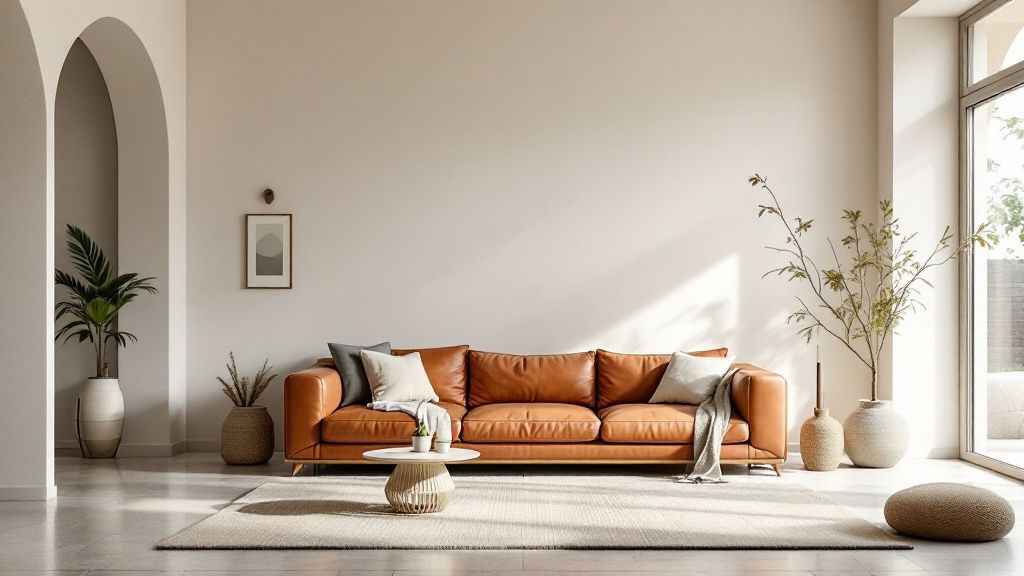
A genuine Tuscan leather piece is meant to get better with age, developing a rich, beautiful patina that tells a story. But this graceful evolution isn't magic—it comes from consistent, gentle care. Think of your bag not as a delicate object, but as a living material that needs a little nourishment now and then to look its best.
Proper care is what protects your investment and ensures its stunning good looks for decades. This includes protecting it from the elements; for some great foundational knowledge, you can explore general essential care and waterproofing advice to grasp the principles behind protecting high-quality materials. Get the right routine down, and your piece will truly last a lifetime.
The Essentials of Routine Maintenance
The foundation of great leather care is built on a few simple habits. Your first line of defense against the daily grind? Routine cleaning.
Just take a soft, dry microfiber cloth and give your item a gentle wipe-down once a week or so. It’s a two-minute task that lifts away the dust and surface grime that can become abrasive over time, stopping tiny scratches before they even start.
Next up is conditioning, which is basically moisturizer for your leather. Every 3-6 months, work a small amount of a high-quality leather conditioner—one made for vegetable-tanned goods—into the hide. This restores the natural oils, keeping the leather supple and preventing it from drying out or cracking.
A common mistake is over-conditioning. With leather, a little goes a long way. Slathering on too much can clog the pores and leave behind a sticky residue. Always test a new product on a hidden spot first.
Tackling Common Issues at Home
Even with the best care, life happens. Water spots and minor scuffs are bound to appear, but they’re often easy to handle if you act fast.
For a fresh water spot, blot the area immediately with a dry cloth. Don't rub! Let it air dry on its own, far away from any direct heat source like a radiator. You can often buff out minor scratches on your leather tuscany piece by simply rubbing the mark in a circular motion with your fingertips; the natural oils from your skin are sometimes all it takes to help it blend back into the patina.
The final piece of the puzzle is proper storage. When you’re not using your leather goods, keep them in a breathable dust bag. Stuff them with acid-free paper to help them hold their shape. Steer clear of plastic bags—they trap moisture and can lead to mildew—and always store them out of direct sunlight to keep the color from fading.
Styling Tuscan Leather in a Modern Wardrobe
A genuine Tuscan leather piece isn't just an accessory; it's a cornerstone. Think of it as the foundation of a smart, sophisticated wardrobe. Bringing these timeless items into your daily style is all about embracing "investment dressing"—the art of building an elegant, sustainable look around high-quality essentials that last.
The real beauty of Tuscan leather is its incredible versatility. A classic brown leather jacket, for example, can instantly elevate a simple pair of jeans and a white t-shirt, adding a layer of effortless cool. In the same way, a structured Tuscan leather handbag brings a dose of polish to a professional outfit, helping you feel confident and put-together for any meeting.
Making It Your Own
Creating a truly modern look is all about balance. The rich, organic texture of vegetable-tanned leather pairs beautifully with contemporary fabrics and silhouettes.
-
Casual Chic: Drape a Tuscan leather crossbody bag over a cashmere sweater for a weekend brunch.
-
Office Elegance: Pair a sleek leather portfolio or briefcase with a tailored blazer to command the room.
-
Evening Edge: A leather belt with a striking buckle can cinch a simple dress, creating a defined and stylish silhouette for a night out.
The goal is to let the leather be the focal point. Its natural character and quality will anchor your outfit, allowing you to build a personal style that feels both classic and completely current.
A Mark of Timeless Quality
The enduring appeal of Tuscan leather has only grown, making it a cornerstone of the global luxury market. The industry’s resilience is remarkable; in 2019 alone, Tuscan leather exports surged from €6 billion to €8 billion. That's a 33% increase in turnover, proving its ability to adapt to modern tastes while staying true to its heritage of quality. If you're curious, you can dive deeper into the origins of Florentine leatherworking to see just how deep these roots go.
When you choose these pieces, you’re not just buying an item; you’re investing in craftsmanship that actually gets better with age. As you curate your collection, you might be interested in our guide on the must-have leather bags for women in 2025.
Your Top Questions About Tuscan Leather, Answered
Jumping into the world of artisanal leather can feel a bit overwhelming. You've got questions, and we've got answers. Let's clear up some of the most common queries so you can feel totally confident about your next leather tuscany purchase.
Is All Leather From Italy Considered Tuscan Leather?
Not at all, and this is probably the most important thing to know. "Tuscan leather" isn't just a geographic label; it's a mark of a specific, time-honored craft. It refers to leather made in the Tuscany region using traditional vegetable-tanning methods.
This slow, natural process is what gives the leather its famous durability, rich earthy smell, and unique character. To be sure you're getting the real deal, look for the official 'Pelle Conciata al Vegetale in Toscana' seal. It's a guarantee that the leather was tanned in Tuscany using only natural tannins from plants and trees.
Why Does Vegetable-Tanned Leather Cost More?
Simply put, you're paying for time, skill, and better ingredients. Think of it like the difference between a slow-simmered sauce made from scratch and one from a jar. The extra cost of vegetable-tanned leather breaks down like this:
-
It’s a Slow Process: Vegetable tanning is an art that can take weeks to complete. In contrast, modern chrome tanning uses harsh chemicals to get the job done in about a day.
-
It Requires Real Expertise: This isn't an automated process. It relies on the skills of master tanners who have likely passed their craft down through generations.
-
The Materials Are Superior: It all starts with high-quality raw hides and natural tannins extracted from things like tree bark and leaves.
You're not just buying a piece of leather; you're investing in a more durable, eco-friendly product that will develop a gorgeous, one-of-a-kind patina as it ages.
How Can I Tell if a Leather Product Is Authentic?
Trust your senses—they're your best guide. First, smell it. Genuine Tuscan leather has a rich, earthy, slightly sweet aroma. It should never smell like chemicals or plastic.
Next, touch it. It should feel warm and supple, not cold or stiff. You should also be able to see and feel subtle, natural imperfections in the grain, which confirms it came from a real animal hide. Finally, look at the details. Clean, heavy-duty stitching, solid metal hardware, and a high-quality lining are all signs of true craftsmanship.
Does Tuscan Leather Scratch Easily?
Yes, and that’s part of its charm! High-quality, full-grain vegetable-tanned leather is meant to show the marks of its journey with you. These aren't flaws; they're the start of its story.
Don't think of scratches as damage. They are the first brushstrokes in a unique patina that tells the story of your life. Over time, those little scuffs will soften and blend into the surface, creating a finish that is deeply personal and truly yours.
And here’s a little secret: many minor scuffs can be buffed away with just the warmth and natural oils from your fingertips. It’s a material that truly lives and ages alongside you.
Ready to experience the timeless elegance of authentic Tuscan leather for yourself? Explore the curated collection of handcrafted bags and accessories at Databazaar.com. Shop now and discover your perfect piece of Italian craftsmanship.