 Skip to content


The Buyer’s Guide to Tuscany Leather Handbags
When you think of Italy, what comes to mind? Rolling hills, ancient art, and exquisite craftsmanship, right? At the very heart of that legacy lies Tuscany leather, a material celebrated not just for its quality, but for the story it tells. It's a tradition of excellence, turning everyday items into lifelong treasures that only get better with age.
The Timeless Symbol of Italian Craftsmanship
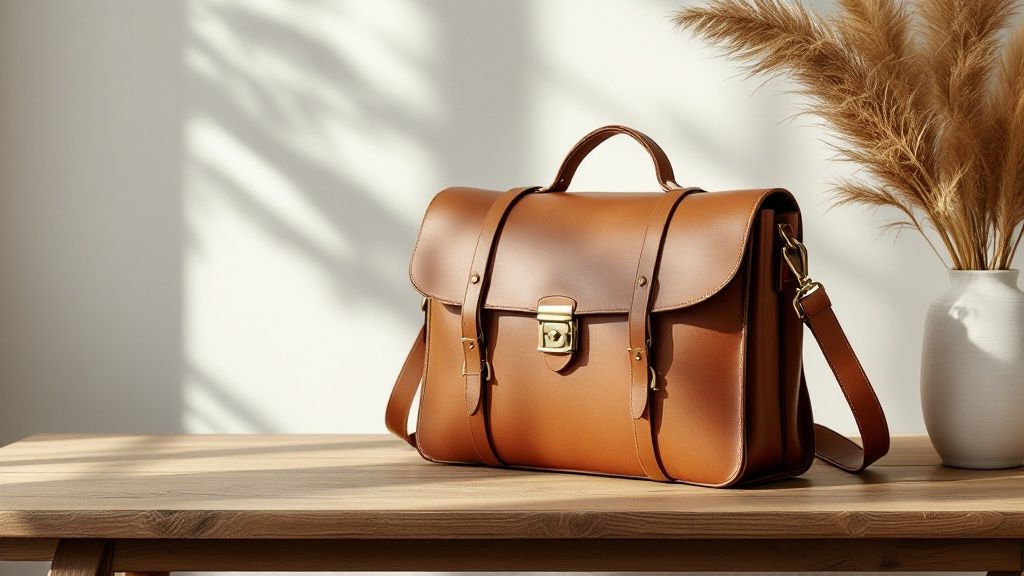
Tuscany leather is so much more than a simple material; it’s the embodiment of a cultural heritage perfected over centuries. Hailing from the picturesque region of Tuscany, its reputation is built on artisanal skill, sustainable practices, and an unwavering commitment to quality. This isn't just any leather—it's a testament to the art of slow fashion.
Unlike the mass-produced alternatives, every single piece of Tuscany leather has a story. It starts with carefully selected, high-grade hides and continues through a meticulous vegetable tanning process. This ancient technique uses natural tannins from tree bark and plants, which gives the leather its signature warm hues, rich aroma, and remarkable durability.
What Makes This Leather Legendary
The real magic of this material is in its unique character. It isn't designed to stay sterile and pristine; it's meant to live, breathe, and evolve right alongside you. Its most celebrated feature is the ability to develop a beautiful patina—a soft sheen that deepens in color and character over time. This means your leather bag or wallet becomes a unique reflection of your personal journey.
This aging process is the hallmark of true quality, ensuring no two pieces are ever identical. Plus, the traditional tanning methods give the leather a strength and resilience that modern, chemical-based processes just can't match. The result? Products that are not only stylish but are built to last for decades, becoming cherished heirlooms rather than fleeting trends. Many people wonder how it compares to other regional specialties, and you can learn more about what makes Tuscany leather stand out from other Italian leather brands in our detailed comparison.
A Connection to Heritage and Place
Choosing Tuscany leather is about more than just buying an accessory; it's about investing in a piece of history. The craft is deeply connected to the region itself, from the Arno River that once powered the tanneries to the artisan families who have passed down their secrets through generations.
This connection between material, place, and people is what gives the leather its soul. It’s a tangible piece of Italian culture, carrying with it the passion and dedication of its makers.
Understanding this background is the first step to truly appreciating what makes these items so special. As we continue, we’ll dive deeper into this heritage, uncover the secrets behind its creation, and show you how to identify and care for your own piece of this timeless tradition.
A Legacy Tanned in Time
To really get why Tuscany leather is so special, you have to look back. Way back. This isn't some new-fangled invention; it’s a craft born from centuries of tradition, woven right into the soul of central Italy. The story starts with the land itself, where generations of artisans perfected a process that’s still the gold standard for quality leather worldwide.
The whole thing kicked off along the banks of the Arno River, the lifeblood of Florence and the entire region. For centuries, that river provided the endless supply of water needed for tanning, turning raw animal hides into the strong, beautiful material we know today. It was right there that the ancient guilds of leatherworkers, the Arte dei Cuoiai, set up their first workshops, laying the groundwork for an industry that would define Tuscany forever.
The Art of Vegetable Tanning
What truly made Tuscan artisans legendary was their mastery of vegetable tanning. This is the slow, old-school, eco-friendly way of doing things—a world away from the fast, chemical-heavy methods used today. Instead of harsh chemicals, it relies on natural tannins, which are organic compounds pulled from the bark, leaves, and roots of trees like chestnut, quebracho, and mimosa.
It’s a patient process. Hides are soaked in a series of tanning liquors for weeks, sometimes even months. Each bath slowly infuses the leather with tannins, creating a material that’s not just tough and resilient, but has a rich, warm, and completely natural look. This technique is what gives Tuscany leather its signature earthy smell and its unique ability to develop a gorgeous patina over time.
Florence: The Epicenter of Luxury Leather
As the Renaissance boomed, Florence became the undisputed capital of art, culture, and all things luxury. The city's leather artisans were rockstars, known for their incredible skill in making everything from sturdy satchels and belts to intricately detailed book covers. Even the powerful Medici family, famous patrons of the arts, were huge fans of fine leather goods, which only boosted the craft's prestige.
This history cemented Tuscany’s reputation as the heart of luxury leather. These weren't skills learned from a textbook; they were passed down from master to apprentice, father to son, and mother to daughter. This unbroken chain of knowledge means the techniques used today are deeply rooted in centuries of hands-on experience. The heritage of leather craftsmanship extends beyond fashion accessories. You can appreciate the versatility of leather in other cherished items like photo albums, which capture memories with the same timeless quality.
"The true secret of Tuscany leather lies not just in the materials, but in the hands that shape it. It is a legacy of human touch, patience, and a deep respect for a time-honored process."
A Thriving Tradition in the Modern Era
This legacy is anything but a relic. It’s a dynamic, thriving industry that’s a major player on the world stage. In 2019 alone, the Tuscan leather industry saw its exports jump from 6 billion to 8 billion euros—a massive 33% growth in turnover. That kind of growth tells you one thing: the world still craves authentic, high-quality craftsmanship.
It’s a tradition kept alive by the steady flow of the Arno River and the skilled hands of its artisans. Every handbag, wallet, or belt made from Tuscany leather is more than just an accessory. It's a piece of living history, literally tanned in time.
From Raw Hide to Cherished Handbag
The journey from a simple hide to a luxurious Tuscany leather handbag is a story of patience, natural alchemy, and generations of human skill. This isn't a high-speed, automated process. It’s a tradition that values time and technique, resulting in a material that's not only beautiful but built to last a lifetime. At the heart of it all is the ancient art of vegetable tanning, the very thing that sets this leather apart from its mass-produced cousins.
The whole thing starts with top-quality hides, which are submerged in massive wooden vats filled with water and natural tannins. These aren't harsh chemicals; they're organic compounds pulled from the bark and wood of trees like chestnut and quebracho. For several weeks, the hides slowly soak up these tannins, which stabilize the proteins and transform the raw material into strong, supple leather with those signature warm, rich tones.
The Magic of Vegetable Tanning
Think of vegetable tanning like aging a fine wine or a good whiskey. It’s a slow, deliberate method that simply can’t be rushed. The tannins gradually infuse the hide, giving it a unique character and that unmistakable earthy aroma. This stands in stark contrast to modern industrial processes, which often rely on heavy metals and harsh chemicals to get the job done in a fraction of the time.
This is where the transformation begins—in traditional tanning vats that are central to true Italian craftsmanship.
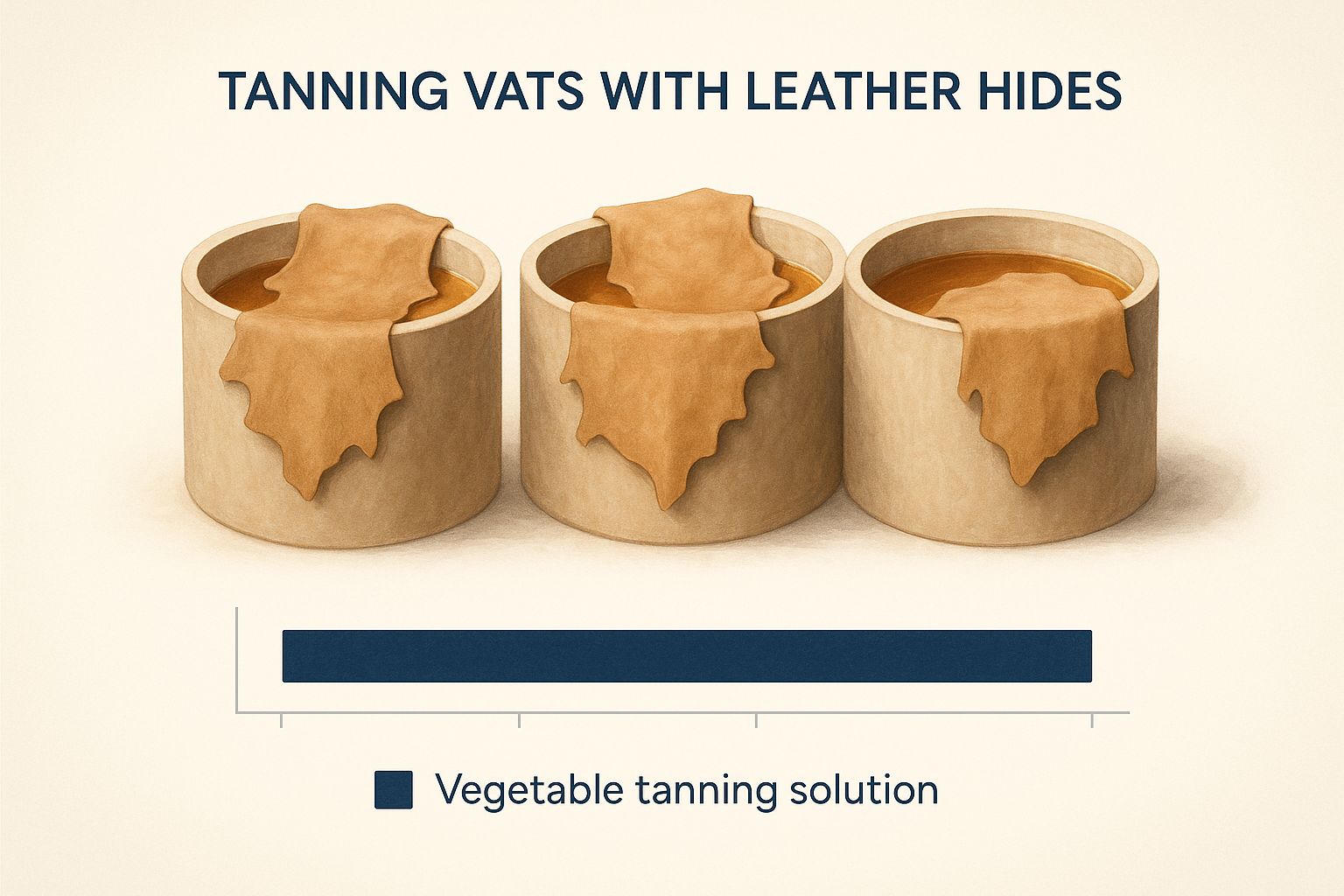
You can almost see how these natural materials are the key to creating the rich, amber tones that make authentic Tuscany leather so recognizable. The difference is something you can see and feel. Leather made this way isn't just stronger; it develops a beautiful patina over time, becoming more uniquely yours with every use.
To really appreciate what makes the Tuscan method so special, it helps to see it side-by-side with the more common industrial alternative, chrome tanning.
Tuscan Vegetable Tanning vs Chrome Tanning
|
Feature |
Vegetable Tanning (Tuscany Method) |
Chrome Tanning (Industrial Method) |
|---|---|---|
|
Tanning Agents |
Natural tannins from tree bark (chestnut, quebracho) |
Chromium salts and other heavy metals |
|
Process Time |
30-60 days |
1-2 days |
|
Environmental Impact |
Biodegradable and eco-friendly |
Creates toxic wastewater with heavy metals |
|
Look & Feel |
Rich, warm tones; firm but supple feel |
Often has a blueish-grey tint before dyeing; can feel artificial |
|
Aging |
Develops a beautiful, unique patina over time |
Tends to crack or peel; does not age gracefully |
|
Scent |
Natural, earthy, and sweet |
Chemical or odorless |
|
Artisan Skill |
Requires deep knowledge and hands-on skill |
Largely automated and machine-driven |
The table makes it clear: while chrome tanning is faster and cheaper, the vegetable tanning process results in a superior, more sustainable, and far more personal product.
From Tannery to Artisan Workshop
Once the tanning is complete, the leather’s journey continues into the hands of skilled artisans. This is where the magic really happens. The tanned hides are meticulously inspected, and then each piece is cut by hand—a skill that requires a sharp eye and a steady hand to minimize waste and perfectly align the grain.
The assembly is just as detailed. Instead of assembly lines, many pieces are stitched by hand using the traditional saddle stitch. This technique uses two needles on a single thread to create a lockstitch that is far stronger and more durable than anything a machine can produce. It’s time-consuming, yes, but it’s an essential step that guarantees the bag will hold up for years.
Finally, the finishing touches are applied with the same level of care. Edges are burnished and polished, hardware is securely attached, and the leather gets one last conditioning to protect it and bring out its natural luster. Every step is a testament to the human element poured into each creation.
"The true value of a Tuscany leather bag lies in the hours of skilled labor and focused dedication. It's not just made; it's crafted by hands that understand and respect the material."
This commitment to craftsmanship is the backbone of the Italian leather industry. In 2018, Italy was home to over 1,200 leather tanning companies, with a large number concentrated in Tuscany and Veneto, employing around 18,000 workers. The industry's production was valued at approximately €5 billion, with about 75% of its output exported to serve the world's high-end fashion and accessories markets.
From the patient soak in a tannin bath to the final, careful stitch, creating a Tuscany leather handbag is a celebration of heritage. It’s a process that ensures every piece is not just an accessory, but a durable, unique work of art designed to last a lifetime.
How to Spot Authentic Tuscany Leather
When you invest in a genuine Tuscany leather bag, you’re not just buying an accessory—you’re bringing home a piece of heritage meant to last a lifetime. But with so many lookalikes flooding the market, how do you separate the real deal from a fast-fashion knockoff?
It’s easier than you think. The good news is that authentic Tuscan leather has unique traits you can spot just by trusting your own senses. Forget the marketing jargon for a second; real, vegetable-tanned leather engages your touch, sight, and even smell in a way synthetic materials just can't fake.
Trust Your Senses
The most intuitive way to tell if a leather product is authentic is to simply engage with it.
-
The Smell: Real vegetable-tanned leather has an unmistakable aroma. It's rich, earthy, and a little sweet—a natural scent that comes from the tree barks used in the tanning process. If it smells like chemicals or plastic (or has no scent at all), it’s likely a synthetic or chrome-tanned imitation.
-
The Touch: Run your hand across the surface. Authentic Tuscany leather feels warm, supple, and has a subtle grain to it. It shouldn't feel cold and slick like plastic. Go ahead, press your finger into it. The leather should wrinkle and react like skin, not just create a perfect dimple.
-
The Look: Here’s a secret: true quality lies in the imperfections. Because it's a natural material, genuine leather will have tiny variations in its grain, maybe a small scar here or a subtle color difference there. These aren't flaws—they're hallmarks of authenticity, telling the story of the hide. A perfectly uniform, flawless surface is often a red flag for a synthetic or heavily processed material.
Examine the Craftsmanship
Beyond the leather itself, the way a bag is put together says everything about its origin and quality. An artisan who respects beautiful materials isn't going to skimp on the finishing touches.
Take a close look at the stitching. It should be straight, tight, and even, with no loose threads popping out. Many high-end Tuscan leather goods are hand-stitched with a saddle stitch, creating an incredibly tough seam that’s far stronger than anything a machine can do.
Don't forget the hardware—the buckles, zippers, and clasps should feel solid and substantial in your hand. Quality makers use heavy, durable metals like brass that won't chip or break after a few uses. Flip over the zipper pull; you’ll often see a stamp from a reputable supplier like YKK.
Look for the Official Trademark
To give buyers total confidence, the Genuine Italian Vegetable-Tanned Leather Consortium offers an official trademark of quality. This seal is your guarantee that the leather was tanned exclusively in Tuscany using traditional, all-natural methods.
The trademark, known as 'Pelle Conciata al Vegetale in Toscana,' usually comes with a numbered certificate of authenticity. This little card is your ultimate peace of mind, guaranteeing the product’s origin and its adherence to the consortium's strict production standards.
When you're shopping, always ask the seller if the product includes this certification. It’s the clearest proof you can get. While not every genuine artisan is a member of the consortium, its presence is a powerful sign of quality and tradition.
By combining this knowledge with your own sensory checks, you can confidently spot a true piece of Italian artistry that will only get more beautiful with age.
Caring for Your Leather Investment
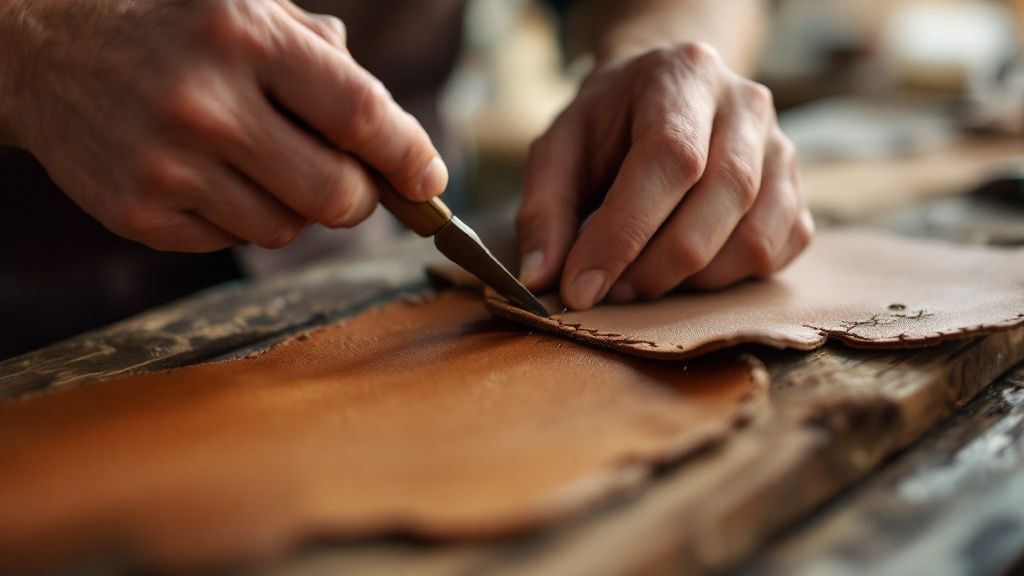
A genuine Tuscany leather bag isn't just another accessory; think of it as a lifelong companion that evolves right alongside you. The key to making sure it ages gracefully—developing that rich character and beautiful patina that makes it uniquely yours—is proper care. It’s less of a chore and more of a simple ritual to protect your investment.
Thankfully, you don't need complicated procedures or a shelf full of expensive products. A little consistent attention is all it takes to keep your leather soft, hydrated, and ready for whatever comes next.
Routine Cleaning and Conditioning
The cornerstone of great leather care is gentle, regular cleaning. Over time, dust and dirt build up on the surface and act like fine sandpaper, slowly wearing down the finish. A quick weekly wipe-down is a fantastic habit to get into.
Just take a soft, dry microfiber cloth and gently brush away any surface debris. If you spot minor smudges, you can slightly dampen the cloth with clean water, but be careful never to saturate the leather.
Conditioning is to leather what moisturizing is to your skin. It replenishes the natural oils, keeping the material supple and preventing it from getting dry or brittle.
-
Frequency: Condition your bag every 3-6 months. If you live in a particularly dry climate, you might want to do it a bit more often.
-
Application: Put a small amount of a high-quality leather conditioner (one made for vegetable-tanned leather is best) onto a clean cloth.
-
Technique: Work the conditioner into the leather using gentle, circular motions. Let it soak in for about an hour, then buff off any excess with a fresh, dry cloth.
Proper conditioning is the single most important step in preserving the life and beauty of your Tuscany leather. It prevents cracking and nurtures the development of its signature patina.
Proper Storage Solutions
Where you keep your bag when you're not using it is just as important as how you clean it. The wrong storage spot can lead to misshaping, creasing, and other damage.
Always store your bag in a cool, dry place away from direct sunlight, which can cause the color to fade. Most high-quality bags come with a breathable dust bag for a reason—use it! It shields the leather from dust while still allowing it to breathe. Avoid plastic bags at all costs, as they trap moisture and can lead to mildew.
To help your bag keep its shape, lightly stuff it with acid-free tissue paper or even an old, clean T-shirt. Just don't overstuff it, or you risk stretching the leather.
Handling Minor Mishaps
Life happens, but a quick response can prevent a minor accident from becoming a permanent problem. If you get caught in a downpour, gently pat the water spots with a soft, dry cloth and let the bag air dry on its own. Never, ever use a hairdryer or direct heat; this can make the leather shrink and crack.
For small scratches, you can often just buff them out with your fingers. The natural oils from your skin can help the mark blend right in. For deeper scuffs, a tiny amount of leather conditioner applied directly to the scratch can help it meld with the surrounding patina. This is a perfect example of why Tuscany leather is worth the investment—its natural resilience makes it remarkably easy to care for over the long haul.
Styling Your Timeless Leather Bag
One of the best things about a genuine Tuscany leather bag is just how incredibly versatile it is. This isn't some trendy accessory that will end up in the back of your closet next season. It's a cornerstone piece, a reliable companion that adapts to your life. Its classic design and rich, textured feel can elevate any outfit, taking you from a packed workday to a relaxed weekend getaway without missing a beat.
The real magic happens when you realize how this one high-quality item can tie your entire wardrobe together. Think of it like a chameleon. It can look perfectly at home with polished, professional clothes or your most comfortable, casual weekend wear. When you pair it right, your leather bag stops being just a thing to carry your stuff—it becomes a true statement of your personal style.
For the Professional Setting
A structured leather briefcase or a sharp, sophisticated tote is your best ally in the corporate world. It instantly projects competence and an eye for detail. When paired with a tailored suit or a smart blazer, the deep tones of the leather add a touch of warmth and elegance, creating a look that’s both balanced and commanding.
To get it just right, understanding the nuances of the business casual dress code is a huge help. A classic dark brown or black leather bag is a foolproof choice that works beautifully with navy, grey, and charcoal suits. For a more modern office vibe, a rich tan or cognac bag adds a stylish pop of contrast.
For Casual Weekends and Everyday Errands
This is where the flexibility of a Tuscany leather bag really shines. A chic crossbody is perfect when you need to be hands-free, whether you’re exploring the city or just running errands. It looks just as good with a simple white t-shirt and jeans as it does with a flowy sundress, adding a touch of polish to even the most laid-back outfit.
And for those spontaneous getaways, a larger leather duffle or weekender bag is the perfect partner. Its rugged durability means it can handle the journey, while its sophisticated look ensures you always travel in style. Whether you’re heading for the countryside or checking into a boutique hotel, it's a practical and fashionable choice for any adventure.
"A great leather bag isn't just an accessory; it's the anchor of an outfit. It has the power to pull together different elements and create a cohesive, polished look, regardless of the occasion."
Choosing the right bag is the first step, and it can set the tone for your entire accessory collection. For more tips on making that first big purchase, check out our guide on how to choose your first luxury leather bag. This single key piece will prove its worth again and again, adapting to your style as it evolves and becoming a truly cherished part of your everyday life.
Your Top Tuscany Leather Questions, Answered
Even after falling in love with its history and timeless style, you might have a few practical questions about Tuscany leather. It's smart to be curious! To help you feel completely confident in your choice, I’ve pulled together answers to the most common queries I hear.
Think of this as your personal guide to the finer details. From its legendary toughness to the eco-friendly methods behind its creation, understanding these points really highlights the value of true Italian craftsmanship. Let's clear up any lingering doubts.
How Durable Is Tuscany Leather, Really?
This is where Tuscany leather truly shines. One of the biggest perks of its vegetable-tanned nature is its incredible strength and longevity. Unlike chrome-tanned leather, which can turn brittle and crack over the years, this natural tanning process creates a resilient material that’s built to handle daily life for decades. Its fibers are both strong and supple, so it resists stretching and tearing.
This means your bag isn't just going to last; it's actually going to get better. Minor scuffs and scratches often just blend into the patina, adding to your bag's unique story instead of taking away from its beauty. With just a little basic care, a Tuscany leather piece can easily be passed down through generations.
Is Vegetable Tanning an Ethical and Sustainable Choice?
Absolutely. The traditional vegetable tanning at the heart of Tuscany leather is a far kinder choice for the environment compared to modern industrial methods. It relies entirely on natural tannins found in renewable sources like tree bark, completely avoiding heavy metals like chromium.
The wastewater from vegetable tanning is biodegradable and much easier to treat, minimizing the ecological footprint. This commitment to sustainable practices is a core principle of the Genuine Italian Vegetable-Tanned Leather Consortium, making sure the craft respects both tradition and the planet.
For anyone looking to make more conscious buying decisions, choosing vegetable-tanned leather is a huge step. You can dive deeper into 7 reasons why you should invest in Tuscany leather goods to learn more about its lasting value.
Why Is It a Superior Investment Compared to Other Leathers?
Choosing Tuscany leather is really about choosing quality over quantity and timeless style over a fleeting trend. Yes, the initial cost might be higher than a mass-produced bag, but its true value becomes obvious as the years go by.
-
Longevity: It’s designed to last for decades, not just a season. That saves you money in the long run by cutting out the need for constant replacements.
-
Unique Aging: The way it develops a personal patina means your bag becomes a one-of-a-kind piece that tells your story.
-
Artisanal Value: You’re not just buying a product; you’re supporting a legacy of skilled craftsmanship and helping preserve a time-honored tradition.
Ultimately, it’s an investment in a piece that gives you unmatched durability, sustainable production, and a classic look that simply never goes out of style.
Ready to experience the unmatched quality of Italian craftsmanship? Explore the curated collection of authentic Tuscany leather bags at Databazaar.com and find a timeless piece to accompany you on your journey.