Skip to content


How to Return High-End Jewelry: A Complete Guide
Table of Contents
- Understanding Your Fine Jewelry Return Policy
- Step 1: Check Return Eligibility and Conditions
- Step 2: Request a Jewelry Return Authorization
- Step 3: Prepare Your Item and Documentation
- Step 4: How to Ship Jewelry Safely for a Return
- Special Considerations for Returning Custom Jewelry
- What to Do If Your Return Is Delayed or Denied
- Frequently Asked Questions
Last Updated: October 12, 2026
Understanding Your Fine Jewelry Return Policy
The process to return high-end jewelry requires more care than typical retail returns. Your fine jewelry return policy outlines what you can send back, when to act, and what condition items must be in.
The stakes are higher with precious metals and certified stones, where a damaged setting or scratched surface affects resale value. Most jewelers distinguish returns from exchanges or store credit, so know the rules upfront.
Return policies vary significantly across retailers, one seller might offer a 15-day return window with a 30-day exchange period, another a 14-day refund deadline. The policy you agree to at checkout governs your return rights.
Pro TipRead the return policy before you buy, not after. Policies differ by seller, item type, and purchase method. Bookmark the policy page so you can reference it later if needed.
Step 1: Check Return Eligibility and Conditions
Not every piece of jewelry qualifies for a return. Eligibility depends on several factors.
Item condition is the first gate. The piece must be unworn and unused, no scratches on the metal, no scuffs on gemstones.
Original packaging matters too. Keep the box, wrapping, and protective materials, missing packaging can trigger a denial or restocking fee.
Custom or personalized pieces rarely qualify. Custom-engraved rings and bespoke designs are made specifically for you and can't be resold, so most sellers won't accept returns.
Certified stones require documentation. Keep any certificate of authenticity or appraisal safe, you may need it to process a return.
Eligibility Factor |
What Qualifies |
What Doesn't |
|---|---|---|
Item Condition |
Unworn, unused, no scratches |
Worn, tried on multiple times, damaged |
Packaging |
Original box, wrapping, materials |
Missing box, damaged packaging |
Proof of Purchase |
Receipt, order confirmation, invoice |
No documentation, unclear seller |
Customization |
Standard designs, stock pieces |
Engraved, custom-made, personalized |
Certificates |
Original appraisal, authenticity docs |
Missing or undated certificates |
Step 2: Request a Jewelry Return Authorization
Before shipping anything back, request a return authorization from your seller. This protects both you and the retailer.
Contact your seller directly. Use the phone number or email on your receipt or the retailer's website.
Get return shipping instructions in writing. Confirm where to send the item and whether the seller covers shipping, some offer prepaid labels, others expect you to pay.
Clarify the refund timeline. Ask how long refunds take after receipt, most sellers need 5 to 10 business days to inspect the item.
Watch OutShipping without authorization can result in a denied return. The seller won't know to expect your package. It might get lost in receiving, or they might refuse it as unsolicited. Always get authorization first.
Step 3: Prepare Your Item and Documentation
Proper preparation prevents disputes and speeds up the process.
Clean the piece gently. Use a soft, lint-free cloth to remove dust and fingerprints, no harsh chemicals or abrasives.
Include your return authorization number. Write it clearly on paper inside the package, without it, the seller might not process your return correctly.
Document the item's condition. Photograph the piece from multiple angles, front, back, sides, and any hallmarks, before packing.
Keep copies of everything. File your receipt, return authorization, and seller emails, you might need them if there's a dispute.
Key TakeawayDocumentation is your safety net. Photos, authorization numbers, and copies of correspondence protect you if something goes wrong with your return.
Step 4: How to Ship Jewelry Safely for a Return
When you return high-end jewelry, high-value items demand secure shipping, a lost or damaged package can turn a simple return into a costly problem.
Understand declared value before you buy the label
Declared value is the amount you tell the carrier the shipment is worth, the ceiling they'll pay if it's lost or damaged. Declare less than the piece is worth and the carrier's liability is capped at that amount.
Sellers commonly require you to insure the return for the full purchase price and use a signature-required service. Confirm this in writing before shipping; if the instructions conflict with what's available at the counter, get the seller to confirm an alternative by email.
Know the carrier limits
Each major carrier publishes a maximum declared value for jewelry, and limits differ by service level and domestic versus international shipment. Two rules apply:
- Do not assume the counter clerk knows the jewelry rules. Ask specifically for the declared-value limit for jewelry on the service you are buying.
- Some services exclude jewelry entirely. Certain expedited and international services will not pay claims on jewelry, watches, or precious stones even if you buy insurance.
If the piece exceeds a single carrier's limit, split the shipment across two carriers or services, each with its own tracking number and declared value.
Use signature-required delivery
Signature confirmation is the most important add-on for a jewelry return. It does three things:
- It creates a record that a specific person at the seller's address accepted the package.
- It blocks the "we never received it" defense.
- It gives you a name and timestamp if the seller later claims the box arrived empty or damaged.
Ask for adult signature required if offered. For very high-value pieces, some sellers accept restricted delivery, limiting who can sign to a named recipient.
Build a chain of custody
Chain of custody is the documented trail showing who held the package and when. Build it like this:
- Photograph the packed box before sealing, showing the item, the return authorization paperwork, and the packing materials.
- Photograph the sealed box with the shipping label visible.
- Keep the carrier receipt showing the declared value, the service level, and the tracking number.
- Save the tracking page as a PDF or screenshot on the day it shows delivered.
- Save the signature image if the carrier provides one.
This file is what you hand a payment processor if the seller disputes receipt.
Pack so the piece cannot move
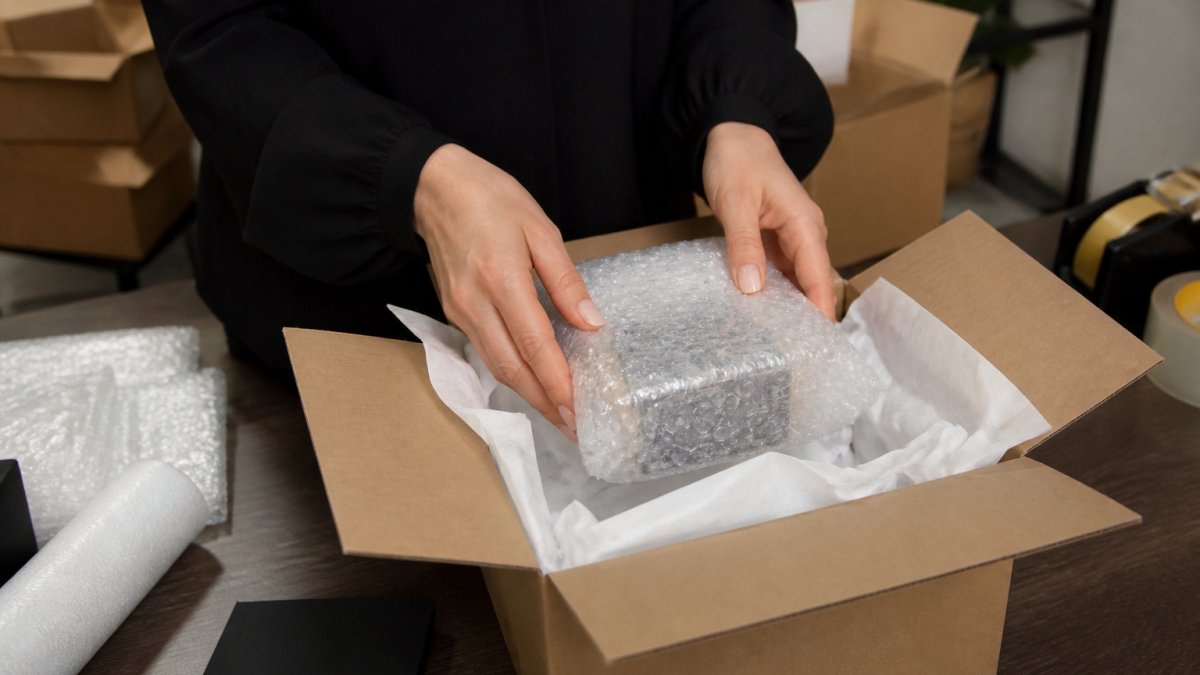
Use a rigid box, not a padded envelope, a crushed or bent setting can be grounds for denial. Wrap the jewelry box in several layers of bubble wrap, place it in a shipping box only slightly larger, and fill every void with peanuts, paper, or tissue. The goal is zero movement when you shake it.
Do not write "jewelry," "diamond," or the brand name on the outside of the box. Use the seller's return address label and nothing else.
Keep the tracking number with the return authorization number
Write both numbers in one place, a phone note, spreadsheet, or paper file. If the seller's receiving department loses the package, the tracking number proves delivery and the authorization number proves they expected it.
Key TakeawayFor a high-value return, the shipping label is a legal document. Declared value, signature confirmation, and a saved tracking record are what protect you if the package disappears or the seller disputes what was inside.
Special Considerations for Returning Custom Jewelry
Custom jewelry rarely qualifies for standard returns, but exceptions exist.
Custom pieces are made to order. Once created, a custom design is yours, the jeweler can't resell it, which is why most retailers won't accept custom returns.
Check the policy before ordering. Some sellers allow returns within 48 hours if the piece isn't completed; others refuse all custom returns. Get the answer in writing before you order.
Resizing is often free or low-cost. If a custom ring doesn't fit, ask about resizing.
What to Do If Your Return Is Delayed or Denied
Sometimes returns don't go smoothly. The difference between a resolved return and a lost one is escalating in the right order, with the right records, to the right party.
First, separate policy from law
A store's return policy is a voluntary promise, not the same as your legal rights. Two categories matter:
- Voluntary returns, you changed your mind, the piece isn't to your taste, or it doesn't fit. Here, the store's written policy governs, and the store can deny the return if you missed the window or violated a condition.
- Defective or misrepresented goods, the stone is not the grade stated, the metal is not the karat marked, the piece is counterfeit, or it arrived damaged. These fall under consumer-protection law and, for interstate purchases, the Federal Trade Commission's rules against deceptive practices. A store cannot use its return policy to override a legal remedy for a misrepresented item.
If your situation is the second category, say so in writing and cite the specific misrepresentation. That changes the conversation from "please make an exception" to "this is a legal claim."
The escalation ladder
Work through these steps in order, each creates the record the next needs.
Step 1, Written request to the seller. Email, not phone.
Step 4, Payment-provider dispute. This is the most effective lever for most buyers.
Step 5, Consumer-protection channels. For misrepresentation or fraud, file a complaint with the FTC and your state attorney general's consumer protection division.
Step 6, Small claims court. For amounts within your state's small-claims limit, this is often the fastest path and needs no lawyer.
What to send with every escalation
- The seller's written return policy as it existed on your purchase date (screenshot it, policies change).
- Your order confirmation and receipt.
- The return authorization number and the email granting it.
- The carrier receipt showing declared value and service level.
- The tracking record showing delivery and the signature image.
- Your pre-shipment photos of the item and the packed box.
- A dated log of every call, email, and chat, with names and outcomes.
Common reasons a return is denied, and what to do
Denial reason |
What the seller is claiming |
Your move |
|---|---|---|
"Item shows wear" |
Condition violated |
Produce your pre-shipment photos and the delivery signature |
"Missing packaging" |
Incomplete return |
Check the policy language, many policies require "original packaging" but do not define it |
"Past the window" |
Deadline missed |
Check the postmark date, not the delivery date, if the policy is silent |
"Custom order" |
Non-returnable category |
If the piece is defective or misrepresented, the custom exclusion does not apply |
"Certificate missing" |
Documentation gap |
Ask whether the certificate is required for a refund or only for a full-value refund |
If the refund is delayed but not denied
A delayed refund is usually a processing problem, not a dispute. Follow up in writing, reference the seller's stated timeline, and ask for a specific date. If it passes, move to Step 4, payment-provider deadlines run from the transaction date, not from the day you gave up.
Watch OutRefund delays happen. If your refund doesn't arrive within the stated timeline, follow up in writing. A polite reminder often speeds things up, but if it doesn't, escalate on schedule, not on hope.
Key TakeawayA denied return is not the end of the process. It is the start of the dispute process. The buyer who kept the policy screenshot, the tracking record, and the pre-shipment photos is the buyer who gets paid.
Frequently Asked Questions
What is typically included in a fine jewelry return policy?
A fine jewelry return policy usually specifies the return window (often 14–30 days), the condition your item must be in (unused, unworn, original packaging), what proof of purchase you need, and whether you receive a full refund, store credit, or exchange. Return policies for jewelry are not uniform across retailers—some offer 15-day returns with 30-day exchanges, while others have 14-day refund periods. Always check your specific retailer's policy before attempting to return an item, as terms vary significantly.
Can custom jewelry be returned?
Most retailers do not accept returns on custom or personalized jewelry because it is made specifically for you. However, if your custom piece arrives damaged, defective, or significantly different from what was ordered, you may have grounds for a return or exchange. Contact your retailer immediately with photos and documentation if you believe your custom jewelry has a defect. Some retailers may offer repairs or replacements instead of refunds for custom items.
Do I need insurance when shipping jewelry back?
Yes, insured shipping is strongly recommended for high-value jewelry returns. Use a carrier that offers signature confirmation and tracking so you have proof of delivery and chain of custody. Insured shipping protects you if the package is lost or damaged in transit. Keep your tracking number and receipt until the retailer confirms receipt and processes your refund or exchange.
What documents should I include with my jewelry return?
Include your sales receipt or proof of purchase, the return authorization number (if issued), any certificates of authenticity or appraisals, and a brief note explaining the reason for return. For high-value pieces, photograph the item in its original condition before packing. These documents create a clear record and help the retailer process your return faster and reduce disputes over item condition or refund eligibility.