 Skip to content


Certified Loose Diamonds for Sale: A Buyer's Guide
Table of Contents
- What Certified Loose Diamonds Are and Why Certification Matters
- Understanding Diamond Grading Reports
- GIA Certified Diamonds: What to Expect
- Natural Loose Diamonds vs. Lab-Grown: Side-by-Side Comparison
- Buying Natural Loose Diamonds: What You Need to Know
- Lab-Grown Loose Diamonds: Value and Sustainability
- The Real Cost of Certified Loose Diamonds
- Common Mistakes to Avoid When Buying Certified Loose Diamonds
- Frequently Asked Questions
Last Updated: October 12, 2026
What Certified Loose Diamonds Are and Why Certification Matters
Certified loose diamonds are individual stones independently graded and authenticated by a reputable laboratory. Each comes with a grading report documenting its quality characteristics, origin, and specifications, third-party verification rather than the seller's word.
Certification removes guesswork from a major purchase, giving you objective information about color, clarity, cut, and carat weight so you don't overpay for stones that don't match their claimed quality.
At Databazaar, we help buyers understand what certification means and how to use it.
Understanding Diamond Grading Reports
A diamond grading report is a document created by a gemological laboratory describing a stone's characteristics, including measurements, quality grades, and sometimes fluorescence and polish quality, the diamond's official identity card.
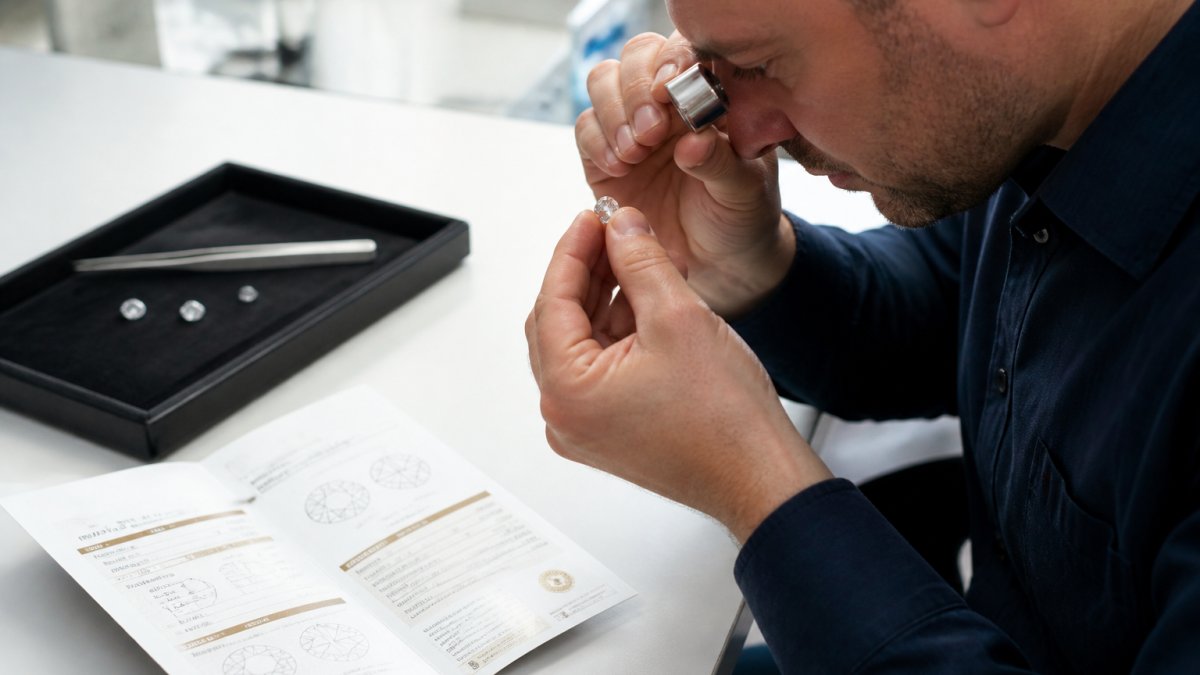
The report typically contains the diamond's dimensions, carat weight, color grade (D to Z), clarity grade (Flawless to Included), cut quality, shape, and whether it's natural or lab-grown.
GIA, IGI, and Other Laboratories Explained
The Gemological Institute of America (GIA) is the most widely recognized diamond certification authority. Its rigorous, consistent grading standards are considered the industry standard, which is why many buyers specifically request GIA-certified stones.
The International Gemological Institute (IGI) is another major certification body. Its reports are respected and widely accepted, though some buyers perceive GIA as slightly more stringent; subtle differences in assessment can affect a stone's grade.
Other certification bodies include the European Gemological Laboratory (EGL) and the Hoge Raad voor Diamanthandel (HRD), which provide legitimate reports but are less commonly requested in the U.S. market. When shopping for certified loose diamonds, understanding which laboratory issued the report matters.
How to Verify Your Diamond's Certificate
Verification starts with checking the laboratory's website directly. Most major labs let you enter the certificate number and view the original report online, confirming it's genuine and unaltered.
Look for details on the report that match the stone you're examining.
Ask your seller whether the diamond has been re-graded by another laboratory. Stones submitted to multiple labs can have conflicting reports, and a transparent seller will explain any discrepancies.
GIA Certified Diamonds: What to Expect
GIA certification represents the most consistent standard in the industry.
The GIA report details the diamond's characteristics and often notes features like fluorescence, which can affect appearance under certain lighting. Understanding these details helps you decide whether a stone suits your needs.
GIA-certified stones typically command higher prices than uncertified or less-recognized-lab-certified diamonds, reflecting the market's confidence in GIA's standards and the reduced risk of buying a misrepresented stone.
Natural Loose Diamonds vs. Lab-Grown: Side-by-Side Comparison
The choice between natural and lab-grown certified loose diamonds comes down to four practical dimensions: origin, visual performance, price behavior, and resale expectations.
| Dimension | Natural Diamonds | Lab-Grown Diamonds |
|---|---|---|
| Origin | Formed 1-3 billion years ago in the earth's mantle; brought to the surface by volcanic activity | Grown in weeks using HPHT (high-pressure, high-temperature) or CVD (chemical vapor deposition) |
| Chemical and optical properties | Pure carbon, cubic crystal structure, Mohs hardness 10 | Pure carbon, cubic crystal structure, Mohs hardness 10 |
| Typical certification | GIA, IGI, EGL, HRD | GIA, IGI, and other major labs; reports are typically annotated as lab-grown |
| Visual performance | Identical brilliance and fire when cut quality is equal | Identical brilliance and fire when cut quality is equal |
| Price behavior | Higher per-carat cost; pricing has historically been more stable | Lower per-carat cost; wholesale prices have declined as production scaled |
| Resale expectations | Established secondary market, though buy-back offers are typically a fraction of retail | Secondary market is still developing; resale values are less predictable |
| Traceability | Varies by source; documented origin requires specific provenance paperwork | Generally traceable to the growing facility |
What actually differs
At the atomic level, there is no difference. Both are pure carbon in a cubic lattice. A gemologist using standard magnification cannot tell them apart; identification requires specialized equipment such as a DiamondView or similar spectrometer that detects growth patterns and trace elements.
The meaningful differences are economic and perceptual:
- Price. Lab-grown stones typically sell for a fraction of the price of a natural stone with the same grades. That gap has widened as lab-grown production has scaled, which means a lab-grown stone bought today may face further price declines.
- Resale. Natural diamonds have a longer-established resale channel, but buy-back offers usually reflect wholesale, not retail, pricing. Lab-grown resale is thinner and less predictable. If resale matters to you, treat both as consumer purchases rather than investments.
- Certification language. A lab-grown report will state the growth method (HPHT or CVD) and may include a notation that the stone is lab-grown. Always confirm this on the report itself, not just the listing.
How to decide
- Choose natural if you want a long-established market, traditional provenance, and a more predictable (though not guaranteed) resale channel.
- Choose lab-grown if you want maximum size and quality for a given budget, prefer a lower environmental footprint from avoided mining, and are comfortable with a less mature resale market.
Key Takeaway
When comparing a natural and a lab-grown stone with identical grades, the visual difference in a finished ring is negligible. The decision is primarily about budget, resale expectations, and how you feel about origin, not about which stone looks better.
Buying Natural Loose Diamonds: What You Need to Know
When shopping for natural certified loose diamonds, focus on the four Cs: carat weight, color, clarity, and cut.
Carat weight measures size, but heavier doesn't always mean better.
Color grades range from D (completely colorless) to Z (light color).
Clarity measures inclusions (internal characteristics) or blemishes (surface marks).
Cut quality is where many buyers make mistakes. A diamond's cut determines how well it reflects light.
Lab-Grown Loose Diamonds: Value and Sustainability
Lab-grown certified loose diamonds require significantly less mining and have a smaller environmental footprint than natural diamonds, making them a compelling alternative for buyers concerned about ethical sourcing and sustainability.
The primary advantage of lab-grown diamonds is cost.
Lab-grown diamonds are chemically and physically identical to natural diamonds, receive the same certifications from major laboratories, and perform identically in jewelry.
The challenge with lab-grown diamonds is resale value.
The Real Cost of Certified Loose Diamonds
Most listings advertise a per-carat price or a starting price for the stone alone, that number is not what you pay. The real cost of certified loose diamonds is the sum of several line items, and comparing sellers on stone price alone can lead you to the wrong conclusion.
The line items that make up your total
- The stone itself. Priced per carat and driven by the four Cs, plus fluorescence, polish, and symmetry. Two stones with the same carat weight and grades can differ in price if one has strong fluorescence or a lower cut grade.
- The setting. A simple solitaire band and a pavé halo are not the same purchase. Setting cost varies widely by metal (platinum vs. 14k gold), design complexity, and whether it is custom or stock.
- Sales tax. Collected based on your shipping address and the seller's tax obligations. This can be a meaningful percentage of the total and is often omitted from advertised prices.
- Shipping. Some sellers include it, some charge flat rate, some charge by value or speed. Insured shipping is standard for high-value stones.
- Insurance. If you insure the finished piece, expect an annual premium based on appraised value. This is an ongoing cost, not a one-time one.
- Appraisal or independent verification. If you want a second opinion beyond the grading report, an independent appraiser charges a fee.
Why the sticker price misleads
A stone advertised at one price and a finished ring quoted at another are not comparable. When you compare sellers, compare the delivered, tax-inclusive price of the finished piece, stone, setting, tax, and shipping, not the stone alone. Ask each seller for that number in writing before you decide.
Post-purchase policies to compare
This is where sellers differ most, and where the fine print matters:
- Return window. How many days do you have, and does it start at shipping or delivery? Are returns subject to a restocking fee?
- Upgrade policy. Some sellers let you trade the stone toward a more expensive one later, often requiring the new stone to be a multiple of the original price. Ask for the exact terms.
- Warranty. Does it cover the setting, the stone, or both? Does it cover damage from normal wear, or only manufacturing defects?
- Resizing and maintenance. Are free resizing and periodic cleaning included, and for how long?
Watch Out
Return windows, upgrade thresholds, and buy-back percentages vary significantly between sellers and are frequently changed. Get the current terms in writing before you buy, and keep a copy with your grading report.
A practical budgeting approach
Start with your total budget, not the stone budget. Subtract an estimated setting cost, then subtract tax and shipping. What remains is your stone budget. From there, decide how to allocate across the four Cs, most buyers get the best visual result by prioritizing cut, then choosing a slightly lower color and clarity grade to free up budget for size.
Common Mistakes to Avoid When Buying Certified Loose Diamonds
The biggest mistake buyers make is prioritizing carat weight over cut quality.
Many buyers overlook the importance of comparing grading reports across laboratories, since a stone graded by one lab may receive a different grade from another.
Failing to verify certificates directly with the issuing laboratory is another common error.
Some buyers neglect their own preferences.
Finally, rushing leads to poor decisions. Take time to research, compare options, and understand what you're buying.
Finding the right certified loose diamonds requires understanding certification standards, comparing natural and lab-grown options, and evaluating stones based on your specific needs and budget. Our team provides live voice support to answer your questions about certified diamonds, and we offer flexible payment options with Affirm on orders over $50. According to the Gemological Institute of America's grading standards, proper certification ensures you're purchasing exactly what you believe you are. Research from the International Gemological Institute's market analysis shows that certified stones command higher confidence in the marketplace. The Jewelers of America's consumer education resources emphasize the importance of third-party verification when making significant jewelry purchases.
Frequently Asked Questions
What does it mean for a loose diamond to be certified?
A certified loose diamond has been independently evaluated by a grading laboratory and comes with an official diamond grading report documenting its characteristics: carat weight, color grade, clarity grade, and cut quality. This certification provides a verified record of the stone's authenticity and quality, reducing the risk of misrepresentation. Certification does not mean the diamond is better or worse, it means its specifications have been documented by a neutral third party, allowing you to make an informed purchase decision.
Which diamond grading report should I trust when buying a loose diamond?
The most widely recognized laboratories are GIA (Gemological Institute of America), IGI (International Gemological Institute), and HRD (Hoge Raad voor Diamanthandel). GIA is the most established and carries significant weight in the market. All three use consistent grading standards, though slight variations in their assessments can occur. When comparing certified loose diamonds, ensure you're looking at reports from the same laboratory for the most accurate price comparison. Always verify the report number on the laboratory's website to confirm authenticity.
Are lab-grown loose diamonds certified like natural diamonds?
Yes, lab-grown loose diamonds receive the same certification process as natural diamonds and come with grading reports from the same laboratories. The certificate will clearly state whether the diamond is natural or lab-grown. Lab-grown diamonds may offer lower pricing while maintaining identical physical and optical properties to natural stones. Certification ensures transparency about the diamond's origin and characteristics, regardless of whether it was mined or created in a laboratory.
What should I compare when shopping for certified loose diamonds?
Focus on the four Cs: carat weight, color grade, clarity grade, and cut quality. Review the diamond grading report for these specifications, then compare pricing across retailers. Consider the total cost, including setting, taxes, and shipping. Check the retailer's return policy, warranty coverage, and whether they offer services like resizing or cleaning. Verify the certificate through the grading laboratory's website. Compare natural and lab-grown options at your target carat weight to understand the price difference and decide which aligns with your priorities.