 Skip to content


Luxury Leather Goods Care Tips: Complete Guide
Table of Contents
- Why Luxury Leather Goods Require Proper Care
- How to Clean a Leather Purse: Step-by-Step Process
- How to Condition a Leather Bag for Long-Term Protection
- Leather Care Products for Luxury Bags: What Works
- How to Store Leather Bags Properly Between Uses
- Protecting Leather From Scratches, Stains, and Water Damage
- Common Mistakes to Avoid When Caring for Luxury Leather
- Frequently Asked Questions
Last Updated: October 6, 2026
Why Luxury Leather Goods Require Proper Care
Luxury leather goods are investments that deserve intentional maintenance. Handcrafted leather develops character and patina over time, but only when cared for properly.
Genuine leather breathes, ages, and responds to its environment. Without protection, it cracks, fades, and loses suppleness.
Think of leather maintenance like skincare: harsh soap damages your face, and harsh cleaners damage luxury leather. Products, technique, and timing all matter.
How to Clean a Leather Purse: Step-by-Step Process
Cleaning a leather purse correctly prevents damage and keeps it looking fresh. Most people either skip cleaning entirely or use products that strip the leather's natural oils. The middle ground is where the magic happens.
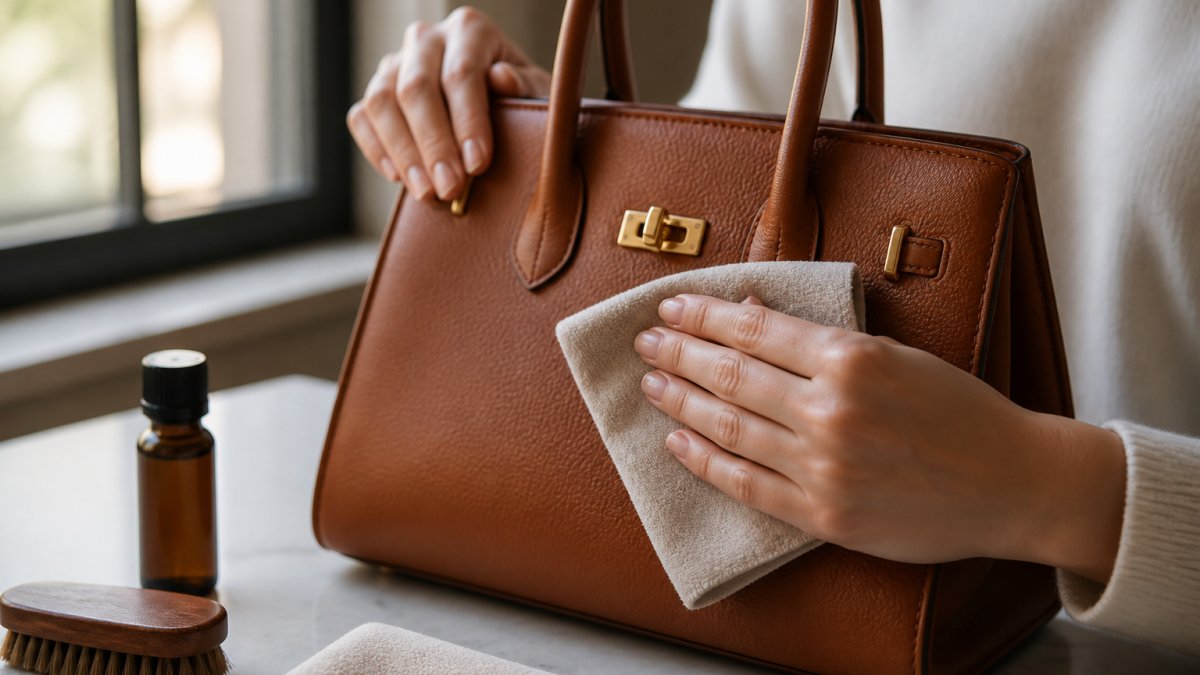
What You'll Need Before You Start
Gather these items before you begin:
- Soft, lint-free cloth (microfiber works best)
- Lukewarm water
- Mild soap or leather-specific cleaning solution
- Second soft cloth for drying
- Optional: leather conditioner for after cleaning
Avoid paper towels, harsh soaps, and abrasives, which damage the surface and leave residue.
The Complete Cleaning Routine
Step 1: Dust the exterior (Time: 2 minutes)
Wipe the entire bag, inside and out, with a dry cloth to remove dust and loose particles.
Step 2: Prepare your cleaning solution (Time: 1 minute)
Step 3: Clean the leather (Time: 5 minutes)
Dampen your soft cloth with the solution. Wring it out so it's damp, not wet.
Focus on the most-touched areas: handles, corners, and the bottom where the bag sits.
Step 4: Wipe with clean water (Time: 3 minutes)
Step 5: Dry completely (Time: 10 minutes)
Remove excess moisture with a dry cloth, then air dry in a cool, well-ventilated space.
How to Condition a Leather Bag for Long-Term Protection
Conditioning is where luxury leather goods care becomes preventive. Cleaning removes dirt.
Think of conditioning as a shield. It fills micro-cracks, repels moisture, and keeps leather flexible.
Apply conditioner every three to six months depending on use: daily bags every three months, occasional-use bags every six.
How to condition leather:
- Start with a clean, dry bag (condition after cleaning, or clean the day before)
- Apply a small amount of conditioner to a soft cloth
- Rub the conditioner into the leather using gentle, circular motions
- Cover the entire surface, including handles and sides
- Let it absorb for 15-20 minutes
- Buff away excess with a clean cloth
- Allow the bag to air dry for several hours before use
The leather will look slightly darker and feel softer afterward, normal signs the treatment worked.
Leather Care Products for Luxury Bags: What Works
The right products make maintenance easier, but the wrong ones can permanently ruin a luxury piece. The ingredient list matters more than the label.
What to Look For
A quality cleaner removes dirt without stripping the oils that keep leather supple, and a good conditioner restores moisture and adds protection. Look for products that are:
- pH-balanced (near neutral) so they don't disrupt the leather's natural chemistry
- Free of silicone, petroleum distillates, and mineral oil, which sit on the surface, attract dirt, and can darken or clog the grain over time
- Free of alcohol, acetone, ammonia, and bleach, which strip dyes and oils and cause cracking or discoloration
- Formulated for the specific leather type you're treating (see the leather-type guide below)
Products to Avoid
| Product | Why It Harms Luxury Leather |
|---|---|
| All-purpose household cleaners | Harsh surfactants strip oils and dyes |
| Furniture polish | Silicone and wax buildup clogs pores |
| Baby wipes and hand sanitizer | Alcohol and fragrance dry and discolor |
| Saddle soap on finished leather | Too alkaline; dulls the finish |
| Vinegar or lemon juice mixtures | Acidic; etches the surface over time |
| Melamine sponges | Micro-abrasive; removes finish and topcoat |
Care by Leather Type
The right product depends on the finish, not just the material.
- Smooth finished leather (calfskin, lambskin): Mild leather cleaner plus a cream or lotion conditioner. Buff with a soft cloth. Avoid heavy waxes that sit on the surface.
- Grained leather (pebbled, tumbled): Slightly more forgiving. A foam or lotion cleaner works well; condition with a light cream. The grain hides minor scratches.
- Suede and nubuck: Never use water or liquid cleaners, they mat the nap. Use a suede brush for dry dirt and a suede eraser for scuffs. A suede-specific protector spray helps repel moisture.
- Patent and coated leather: Wipe with a soft damp cloth only. No conditioner, it can cloud the finish. Avoid abrasives and solvents entirely.
- Exotic skins (alligator, python, ostrich): These dry out faster and are less forgiving. Use products formulated specifically for exotics, and condition sparingly. When in doubt, consult a professional.
Test Before You Treat
Always test any cleaner or conditioner on a small, inconspicuous area, inside a flap, along a bottom seam, or under a strap. Wait 24 hours and check for discoloration, darkening, or finish changes before applying it to the full piece.
A Note on DIY Mixtures
Homemade recipes circulate widely online, but many are risky on luxury leather. Diluted mild soap and water is fine for a quick surface wipe on finished leather, but oil-and-vinegar blends, alcohol sprays, and abrasive pastes can strip finishes, set stains, or cause irreversible uneven patina.
For jewelry storage alongside your leather goods, consider the Soft Leather Jewelry Case (TL142193). Made from premium full-grain leather, it uses the same care principles as your handbags and develops a beautiful patina with age.
Soft Leather Jewelry Case (TL142193) →

Watch Out
If a product's label does not list ingredients or says "for all leathers," treat it with caution. Formulas that claim to work on suede, patent, and smooth leather alike are usually too harsh for at least one of them.
How to Store Leather Bags Properly Between Uses
Storage conditions affect leather longevity more than most people realize. Temperature, humidity, and light all matter.
Store leather bags in a cool, dry place. Avoid basements (moisture), attics (temperature swings), and direct sunlight (fading) (Books - FAQ).
Use a dust bag if one came with your purchase. Dust bags protect from light and scratches.
Stuff the bag with acid-free tissue paper or a soft cloth. This maintains its shape and prevents creasing.
Keep leather bags away from:
- Direct heat sources (radiators, vents, fireplaces)
- Humid environments (bathrooms, kitchens)
- Extreme temperature changes
- Prolonged direct sunlight
- Damp areas
A stable environment preserves leather far better than expensive treatments applied to a bag stored poorly.
Protecting Leather From Scratches, Stains, and Water Damage
Prevention is easier than repair, but damage happens. Knowing how to respond, and when to call a professional, separates a piece that recovers from one that's permanently marked.
Scratches
Leather develops character marks with use, and light surface scratches often fade on their own as the hide's oils redistribute. To help them along:
- Rub the area gently with a clean fingertip, body heat and natural oils can lift shallow marks
- For finished leather, a tiny amount of color-matched cream polish buffed in a circular motion can blend the scratch
- Deep scratches that break the surface, or scratches on suede and nubuck, are best left to a professional
Avoid dragging your bag across rough surfaces, overstuffing it, or setting it on concrete, which stress the seams and leather.
Stains by Type
Treat every spill immediately, the longer it sits, the deeper it penetrates.
| Stain | First Response | What to Avoid |
|---|---|---|
| Water | Blot with dry cloth; air dry away from heat | Rubbing, heat drying |
| Oil or grease | Blot; apply a small amount of cornstarch or talc; let sit, then brush off | Water, it spreads oil |
| Ink | Dab (do not rub) with a dry cloth; a leather-safe ink remover may help on finished leather | Alcohol, hairspray, nail polish remover |
| Color transfer (from denim, dark fabrics) | A leather cleaner formulated for dye transfer; act quickly | Harsh scrubbing |
| Food or drink | Blot; wipe with a barely damp cloth and mild soap; condition after | Soap left to dry on the surface |
| Mold or mildew | Isolate the piece; wipe with a dry cloth outdoors; consult a professional | Sealing it in a bag or closet |
Water Damage
Leather handles light moisture, but soaking is a different problem. If your bag gets caught in rain:
- Blot the surface with a dry, absorbent cloth, do not rub
- Stuff the bag with acid-free tissue or a soft cloth to hold its shape
- Let it air dry naturally in a cool, ventilated space, away from direct sun and heat
- Do not use a hair dryer, radiator, or heater, heat cracks leather and sets water marks
- Once dry, condition lightly to restore suppleness
Set water marks often need a professional, trying to "even out" one with more water usually makes it worse.
When to Call a Professional
Some damage is beyond at-home care. Seek a leather specialist for:
- Deep cuts, tears, or punctures
- Mold or mildew that has spread or returned
- Ink or dye stains that don't lift with a leather-safe product
- Structural damage to seams, hardware, or lining
- Exotic skins with any significant damage
- Any stain you're unsure about, a failed DIY attempt often costs more to reverse than the original problem
For valuable items stored alongside your leather goods, the TL Messenger - Two Compartments Leather Shoulder Bag (TL141255) offers both style and protection. Its full-grain leather develops a rich patina.

Key Takeaway
The single best protective habit is a quick wipe-down after every use and immediate blotting of any spill. Most permanent damage starts as a small mark that was ignored for a day.
Common Mistakes to Avoid When Caring for Luxury Leather
Most damage to luxury leather comes from well-intentioned but misguided care.
Mistake 1: Using water alone. Water swells leather fibers and can cause permanent warping.
Mistake 2: Over-conditioning. Too much conditioner makes leather sticky and attracts dirt.
Mistake 3: Storing in plastic. Plastic traps moisture and promotes mold.
Mistake 4: Ignoring spills. The longer a spill sits, the deeper it penetrates.
Mistake 7: Skipping maintenance. Leather that's never cleaned or conditioned deteriorates faster.
| Mistake | What Happens | The Fix |
|---|---|---|
| Using water alone | Leather warps and stains spread | Use mild soap mixed with water |
| Over-conditioning | Sticky residue attracts dirt | Condition every 3-6 months only |
| Storing in plastic | Moisture traps cause mold | Use breathable dust bags |
| Ignoring spills | Stains set permanently | Blot immediately and clean gently |
| Using harsh cleaners | Oils strip, discoloration occurs | Use pH-balanced leather cleaners |
| Heat drying | Cracking and permanent damage | Always air dry naturally |
At Databazaar, we believe luxury items deserve intentional care. Our collection of luxury leather goods, from the Exclusive 3 Fold Leather Wallet For Men (Tl140817) to premium handbags, is designed to last.

Pro Tip
Leather develops a unique patina, a darkening and softening that happens naturally with age and use. This isn't damage; it's the leather's character developing. Embrace it. The best-looking luxury leather goods are often the oldest ones, cared for consistently over years.
Frequently Asked Questions
How often should you condition a luxury leather bag?
Condition your leather bag every 3 to 6 months, depending on how frequently you use it and your climate. Bags used daily or exposed to dry conditions may benefit from more frequent conditioning. Conditioning maintains the leather's suppleness and prevents it from drying out, which can lead to cracking. Check your bag's care recommendations, as some premium leather finishes may have specific conditioning schedules.
What is the best way to clean a luxury leather purse without causing damage?
Start by removing loose dust with a soft, dry cloth. For deeper cleaning, use a slightly damp cloth with lukewarm water and a small amount of mild soap. Wipe gently in circular motions, then dry immediately with a clean cloth. Avoid harsh chemicals, excessive water, and abrasive materials. For stubborn stains, test any cleaning solution on a hidden area first. Always allow the leather to air dry naturally away from direct heat.
Can you use the same leather conditioner on all types of luxury leather?
Not all leather conditioners work the same way on every leather type. Full-grain leather and nubuck have different absorption rates and finishes. Always check your bag's care tag or contact the manufacturer before applying any conditioner. Premium leather goods often come with specific care instructions. When in doubt, use a conditioner designed for delicate or luxury leather, and always test it on an inconspicuous area first to ensure it doesn't darken or alter the finish.
How should you store a leather bag when you are not using it?
Store your leather bag in a cool, dry place away from direct sunlight and heat sources. Use a dust bag or soft cloth covering to protect it from dust and scratches. Stuff the bag loosely with acid-free tissue or kraft paper to help it maintain its shape. Avoid storing in plastic, which can trap moisture and cause mildew. Keep it away from extreme temperatures and humidity fluctuations. If stored for extended periods, occasionally air it out and check for any signs of moisture or damage.