 Skip to content


Tuscany Leather: A Guide to Timeless Craft and Care
Tuscany leather isn’t just a material; it’s a piece of living history. It’s a symbol of Italian heritage, luxury, and true craftsmanship. When you hold it, you immediately notice the difference—the distinct feel, the rich aroma, and the promise that it will only get better with age, developing a unique and beautiful patina over time. It’s not a purchase; it’s an investment in quality that’s meant to last a lifetime.
The Enduring Allure of Italian Artistry
Holding a Tuscany leather product means you're holding a piece of a legacy. This isn't just about a bag or a wallet. It's about connecting with an art form perfected over centuries in the heart of Italy, a region celebrated for its leatherworking heritage where secret techniques are passed from one generation to the next.
This deep-rooted tradition is what elevates these goods from simple accessories to cherished heirlooms. Unlike mass-produced items, each piece is a testament to quality over quantity. That hands-on approach ensures every stitch is precise and every edge is flawlessly finished. You can explore how these elements come together in our guide on how Tuscany leather bags became a staple of Italian fashion.
A Legacy Woven into History
The story of Tuscany leather isn't new. Its origins go back more than 2,500 years to the Etruscan civilization, which practiced early forms of tanning. Fast forward to today, and that expertise is still the economic heartbeat of the region. Tuscany now accounts for about 35% of Italy’s total leather production by turnover, making it the country's most important leather district. You can dive deeper into Tuscany's rich leatherworking history on studiainitalia.com.
This legacy is built on a few core principles that define every authentic piece:
- Generational Skill: Artisans don't just learn their craft; they inherit it, refining techniques passed down through their families to preserve an irreplaceable human touch.
- Commitment to Quality: Only the finest raw hides are chosen, guaranteeing the final product is both beautiful and exceptionally durable.
- Artisanal Process: The focus is on meticulous, patient craftsmanship, not fast, automated production lines.
Owning a piece of Tuscany leather is an investment in a story. It's a commitment to an item that doesn't just withstand trends but gracefully evolves, becoming more personal and more beautiful with every passing year.
This enduring allure comes from a perfect blend of form and function. While the methods are traditional, the designs are timeless, built for modern needs without ever sacrificing their classic elegance. It's this balance that makes Tuscany leather the benchmark for excellence in the luxury goods world.
The Art of Traditional Vegetable Tanning
To really get what gives Tuscany leather its soul, you have to look past the surface and into the process itself—the one that turns a simple hide into a work of art. It’s a method called vegetable tanning, and it’s a slow, patient, and completely natural craft.
Think of it like the difference between slow-cooking a brisket for hours versus microwaving a TV dinner. Both get the job done, but only one develops a deep, complex character you can really savor. That contrast is everything when it comes to appreciating the final product.
While modern tanneries use chemicals to rush the process, often finishing leather in a single day, the traditional Tuscan way is a deliberate exercise in patience. It’s a craft that respects the material, letting its natural qualities shine through instead of covering them up. That dedication is what creates leather that doesn’t just look good but feels alive.
The infographic below shows the journey of Tuscany leather, from its deep-rooted heritage, through the hands-on craft, to the beautiful patina it develops over time.
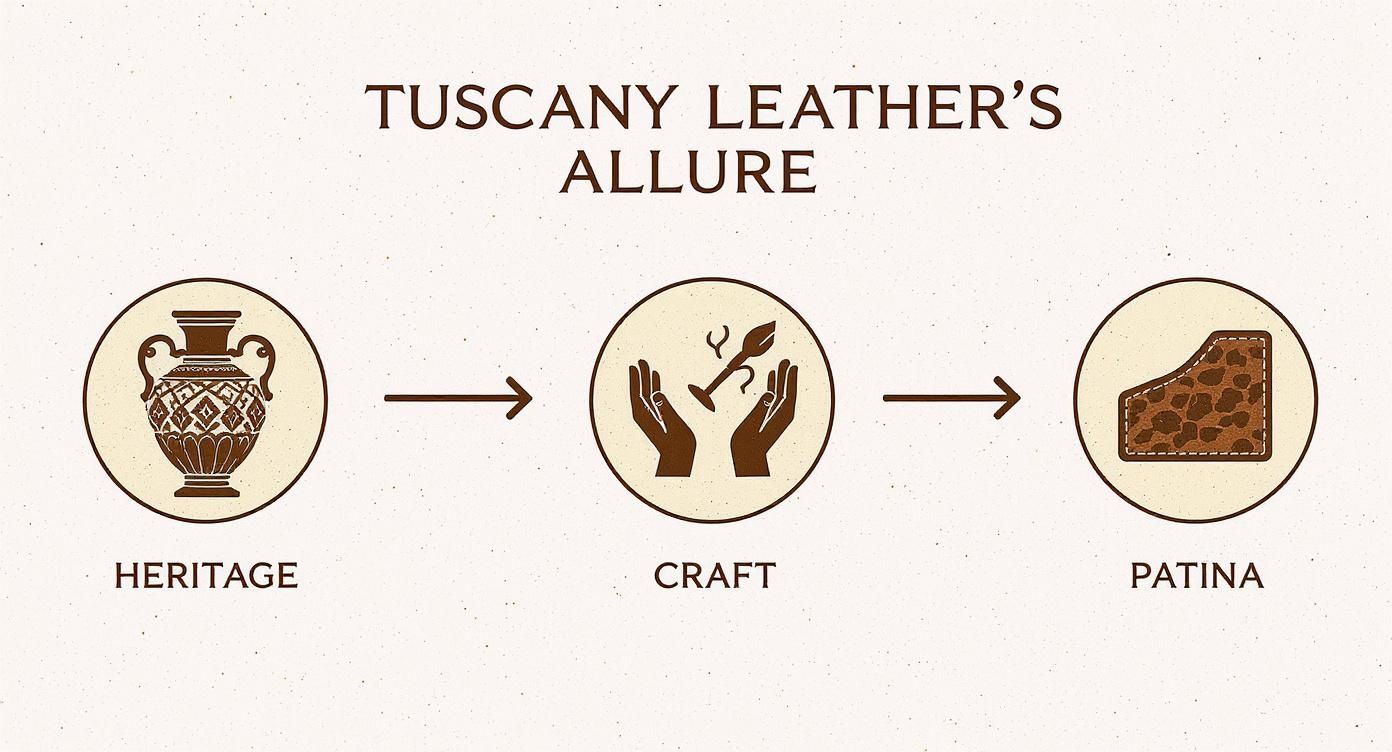
As you can see, every stage is connected. The artisan’s skill is the bridge between a rich history and a product that only gets more personal with age.
The Science of Natural Tannins
At the heart of vegetable tanning are tannins—natural compounds pulled from organic sources like chestnut, mimosa, or quebracho wood. These tannins are the magic ingredient. Instead of harsh chromium salts, Tuscan artisans submerge the hides in huge wooden drums filled with a carefully measured mix of water and these powdered tannins.
The drums turn slowly, letting the tannins gradually work their way into the hide's fibers. This isn’t a quick dip; it can take weeks, even months, for the leather to be fully tanned. During this time, the tannins naturally preserve the hide, giving it the firmness, durability, and rich, warm tones that Tuscany leather is famous for.
This organic approach is more than just tradition; it’s what allows the leather to remain breathable and develop a rich, personal patina over time. The leather tells a story because the natural process allows it to.
This meticulous method demands immense skill. The tanner, or conciatore, has to constantly check the tannin concentration and pH levels, making tiny adjustments to get the perfect result. It's a true dedication to the art of artisan craftsmanship.
From Raw Hide to Timeless Material
The journey from a raw hide to a finished piece of leather is a testament to knowledge passed down through generations. The quality is rooted in this centuries-old tradition, requiring weeks or even months of careful work.
The process has a few key stages:
- Preparation: First, the hides are thoroughly cleaned and de-haired to get them ready for tanning.
- Tanning Vats: They are then moved through a series of vats, each with a stronger tannin solution than the last. This ensures slow, even absorption.
- Drying and Finishing: After tanning, the leather is slowly dried, then conditioned with natural oils and waxes to enhance its color and make it supple.
This patient, hands-on approach results in a material that's not only strong but also has a unique, earthy aroma—another signature of genuine vegetable-tanned leather. You can see how this all comes together in the final products by exploring the craftsmanship behind Tuscany Leather handbags in our other article. This commitment to traditional methods ensures every piece is infused with character, ready to start its own journey with you.
How to Identify Authentic Tuscany Leather
In a market flooded with knock-offs, telling real Tuscany leather from a clever imitation can feel intimidating. But here's the good news: authentic vegetable-tanned leather has a unique personality that’s nearly impossible to fake. With a little know-how, you can train your senses to spot true Italian craftsmanship in seconds.
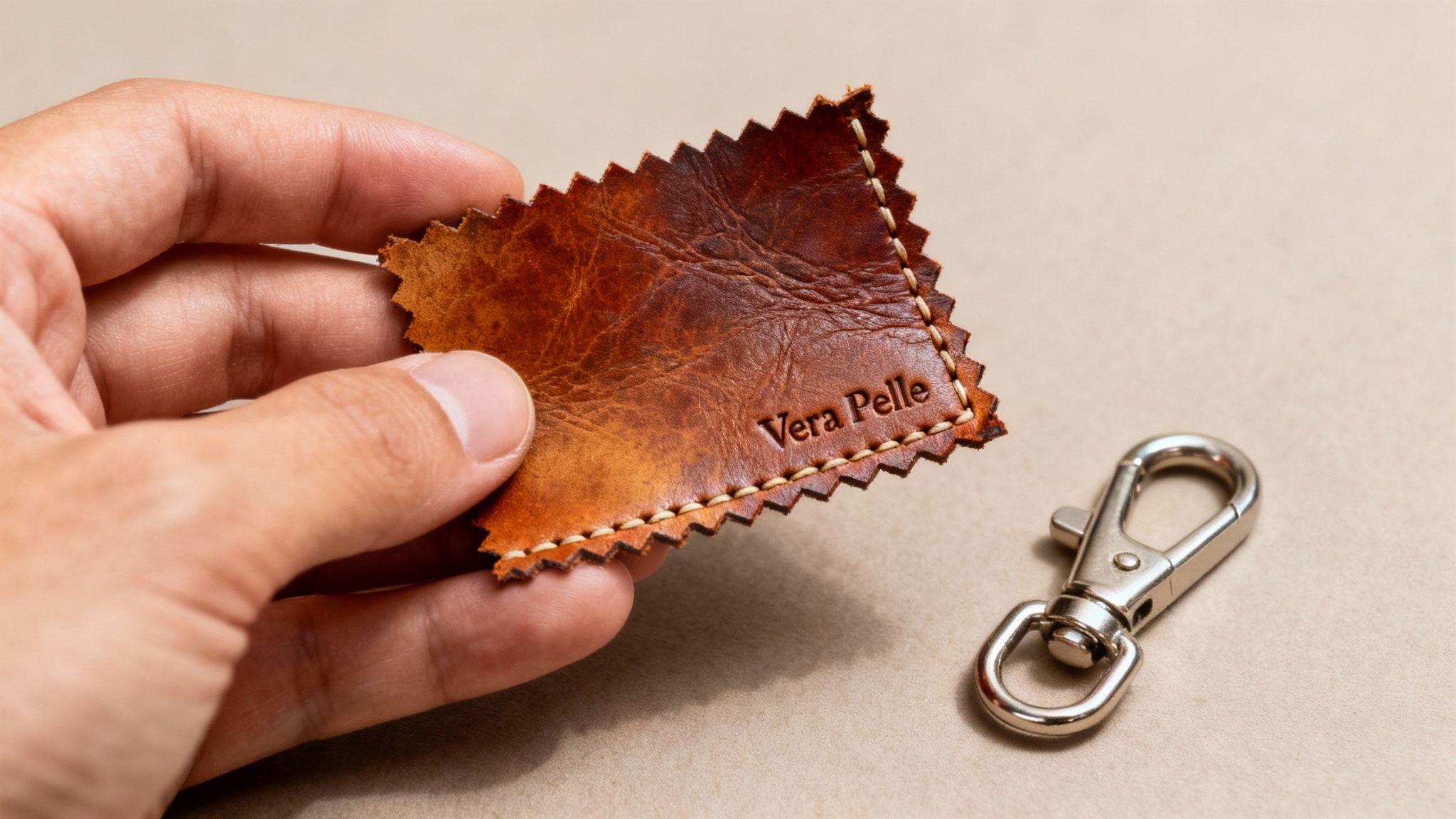
True authenticity isn’t about sterile perfection; it's all about character. Mass-produced leather is often coated and corrected to look unnaturally uniform. Real Tuscany leather, on the other hand, proudly shows off its natural origins. Learning to spot these tells is the first step toward making a smart, lasting investment.
A Hands-On Guide: Trust Your Senses
Your best tools for spotting the real deal are your own senses. Smell, touch, and sight will tell you more than any tag ever could. Unlike synthetic materials engineered to be flawless, authentic leather tells a story through its unique traits.
First, the smell. Take a moment and just breathe it in. Genuine vegetable-tanned leather has a rich, earthy, and almost sweet aroma. That distinct scent comes straight from the natural tannins used in the tanning process, like chestnut and mimosa wood. It’s an organic, warm smell. Chrome-tanned or fake leathers? They often give off a sharp chemical odor or have no scent at all.
Next, the touch. Real Tuscany leather feels supple and alive, but it also has a satisfying firmness and structure. Press your finger into the surface. The leather should wrinkle and react naturally, almost like your own skin. Imitations often feel plasticky, stiff, or oddly slick, snapping back into shape without any creasing.
Look for the Telltale Signs of Craftsmanship
Beyond the sensory cues, the construction of a bag reveals its pedigree. True artisans sweat the small stuff—the details that mass producers tend to skip. Inspecting the edges, hardware, and official certifications can give you all the proof you need.
Pay close attention to the edges. A high-quality Tuscany leather good will have stitched or burnished edges, which are smoothed and sealed by hand for durability. Lower-quality products often have painted or plastic-coated edges that will inevitably peel and crack. While you're at it, check the hardware. Zippers, clasps, and buckles should feel heavy, solid, and operate smoothly. No flimsy stuff here.
A critical indicator of authenticity is the 'Vera Pelle' consortium seal. This numbered guarantee tag from the Consorzio Vera Pelle Italiana Conciata al Vegetale is your proof that the leather was tanned in Tuscany using traditional, eco-friendly methods.
Finally, embrace the beautiful imperfections. Authentic full-grain leather will have subtle variations in color and texture. You might even spot small marks or scars from the animal's life. These aren't flaws; they are the hallmarks of a natural, high-quality material that tells a story. For a deeper dive, you can learn more about solving the mystery of authenticity in Tuscany leather bags in our related guide.
Authentic Tuscany Leather vs Mass-Produced Leather
To make it even simpler, let's put the key differences side-by-side. This quick comparison shows you exactly what to look for when distinguishing genuine Tuscany leather from the mass-produced alternatives.
| Characteristic | Authentic Tuscany Leather | Mass-Produced (Chrome-Tanned) Leather |
|---|---|---|
| Scent | Rich, earthy, and natural aroma from plant-based tannins. | Often has a chemical smell or no scent at all. |
| Feel | Supple yet firm, feels natural and "breathes." | Can feel plasticky, overly smooth, or stiff. |
| Aging | Develops a unique, beautiful patina over time. | Tends to fade, crack, or peel; does not age gracefully. |
| Imperfections | Shows natural grain variations, small marks, and character. | Surface is uniform, often coated to hide flaws. |
| Edges | Stitched, burnished, or raw edges that show craftsmanship. | Often painted or sealed with plastic that can crack. |
Ultimately, the differences aren't just cosmetic—they speak to durability, sustainability, and the soul of the product. Once you know these signs, you'll be able to spot true Tuscan quality from a mile away.
Tuscany Leather in the Global Luxury Market
Tuscany leather is so much more than a local craft—it's a powerful economic engine and a cultural ambassador on the world stage. While its soul lives in small workshops and generational skills, its influence reaches the highest tiers of the global luxury market. This small Italian region doesn't just play in the big leagues; it sets the worldwide standard for high-end leather.
The region’s incredible ecosystem of tanneries and artisan workshops is the backbone of Italy’s fashion supremacy. Think of the world’s most prestigious luxury brands, names like Gucci and Ferragamo—many of them have deep historical and operational roots right here in Tuscany. They depend on this specialized network for the exquisite, vegetable-tanned hides that become their iconic bags, shoes, and belts.
This unique relationship turns a local tradition into a global phenomenon. When you spot a flawlessly crafted luxury leather bag on a Parisian runway or in a New York boutique, there's a very good chance its journey started in a small Tuscan tannery. The region's output isn't just a material; it's a seal of quality that top-tier brands need to uphold their reputation for excellence.
The Engine of the Italian Economy
The economic weight of the Tuscany leather sector is immense, acting as a true cornerstone of the national economy. We're not talking about a quaint cottage industry. This is a multi-billion euro powerhouse that drives exports and supports thousands of jobs. The sheer concentration of skill in areas like the Santa Croce sull'Arno district has created an unmatched production hub, blending ancient tradition with the scale needed for massive global export.
It’s this dynamic mix of old-world methods and modern commercial muscle that makes the region so dominant. The industry's performance speaks for itself. Between 2018 and 2019, for instance, exports from the Tuscan leather sector shot up from €6 billion to €8 billion—a massive 33% increase in turnover in just one year. That kind of growth shows just how well the region meets the ever-changing demands of luxury consumers around the globe. You can read more about the history and growth of this noble craft at FlorenceLeatherMarket.com.
Setting the Global Standard for Quality
So, how does such a small area hold on to such outsized influence? The secret is an unwavering, almost obsessive, commitment to quality that is recognized and sought after everywhere. The "Made in Italy" label, especially when tied to Tuscan leather, carries serious weight in the luxury market.
This reputation is built on a few key pillars:
- Unmatched Material Quality: Using superior raw hides and the traditional vegetable tanning process creates a product that’s both incredibly durable and beautiful.
- Artisanal Integrity: Global brands know that Tuscan artisans have a level of skill that mass-production machinery simply cannot replicate. It’s in their DNA.
- Sustainable Practices: The classic, eco-friendly vegetable tanning methods resonate with a growing base of conscious luxury consumers who care about how their products are made.
Tuscany leather doesn't just compete in the global market; it defines it. The region provides the foundational material upon which luxury fashion empires are built, making its influence both deep and far-reaching.
This global reputation is exactly why owning a piece of Tuscany leather is such a smart move. It's not just about beauty and durability; it represents a standard of excellence that holds its value over time. To get a better feel for its long-term benefits, you can read our guide on why Tuscany leather is worth the investment. The region’s role as the gold standard ensures that its products remain desirable and relevant, connecting a small Italian workshop to the vast, interconnected world of high fashion.
Caring For Your Leather Investment
When you own a piece from Tuscany Leather, you're not just holding a bag; you’re the custodian of a future heirloom. This isn't just an accessory—it's an investment designed to last a lifetime. And like any fine natural material, it thrives with proper care.
Treating it right ensures it won’t just endure but will develop that gorgeous, one-of-a-kind patina that makes aged leather so treasured. Thankfully, keeping vegetable-tanned leather in prime condition is simpler than you think. Just think of it like skin: it needs to be kept clean, stay moisturized, and be protected from harsh elements to remain supple and strong.
Your Routine Cleaning and Conditioning Ritual
The secret to great leather care isn’t intensive scrubbing; it’s a consistent and gentle routine. Small, regular actions are what keep your bag looking its best and prevent minor wear from becoming a real problem.
Start with a weekly wipe-down using a soft, dry microfiber cloth. This takes less than a minute but makes a huge difference, lifting surface dust and dirt before it can settle into the leather's pores.
Every few months, your bag will thank you for a deeper clean and conditioning. This is the ritual that replenishes the leather's natural oils, preventing it from drying out and keeping it flexible and rich in color.
For this, slightly dampen a cloth with water and a tiny drop of pH-neutral soap made specifically for leather. Avoid harsh household cleaners, vinegar, or baby wipes at all costs. Their chemical makeup will strip the essential oils from the hide and cause damage that can't be undone. After a gentle cleaning, let the bag air dry completely, away from direct sunlight or heat sources like a radiator.
Protecting Your Leather From the Elements
Just as important as cleaning is shielding your bag from environmental stress. Its two biggest enemies are excessive moisture and prolonged sun exposure. A little preventative strategy goes a long way here.
If you get caught in an unexpected downpour, act fast but be gentle. Blot the water spots immediately with a soft, dry cloth—never rub, as that can push the moisture deeper into the leather. To help it dry properly and keep its shape, stuff the bag with acid-free paper and let it air dry naturally.
Sunlight can be just as damaging over time. UV rays can cause the rich dyes in your leather to fade and the material itself to dry out and become brittle, much like they do to skin.
- Avoid Direct Sunlight: When storing your bag, find a spot away from windows or direct sun.
- Rotate Your Bags: If you have more than one, rotating them prevents any single bag from getting overexposed.
- Use a Protective Cream: Certain leather conditioners contain UV protectants, offering an extra layer of defense against fading.
Handling Minor Mishaps and Long-Term Storage
Life happens, but most little accidents are easy to fix if you know what to do. One of the best qualities of Tuscany leather is its ability to self-heal minor scuffs. For a small scratch, often all it takes is gently rubbing the area with your fingertip. The natural warmth and oils from your skin can help the mark blend right back into the surrounding patina.
For an oil-based stain, resist the urge to use water. Instead, sprinkle a bit of cornstarch or talcum powder directly on the fresh spot. Let it sit for several hours to draw out the grease, then gently brush it away. For tougher stains or a deep clean that needs an expert touch, exploring professional leather dry cleaning services is a smart move.
Proper storage is the final piece of the puzzle. When you're not using your bag, keep it in its original dust cover to protect it from dust and light while still allowing the leather to breathe. Stuff it with tissue paper to maintain its shape, and store it in a cool, dark closet. And one last rule: never store leather in a plastic bag, as plastic traps moisture and can lead to mildew.
Timeless Examples of Tuscany Leather Goods
The real magic of Tuscany leather is its incredible versatility. It’s a material that can be both tough-as-nails and wonderfully soft, making it the perfect starting point for all sorts of iconic goods. From the boardroom to a weekend escape, these classic pieces show just how well this leather adapts to different needs while always adding a touch of class.
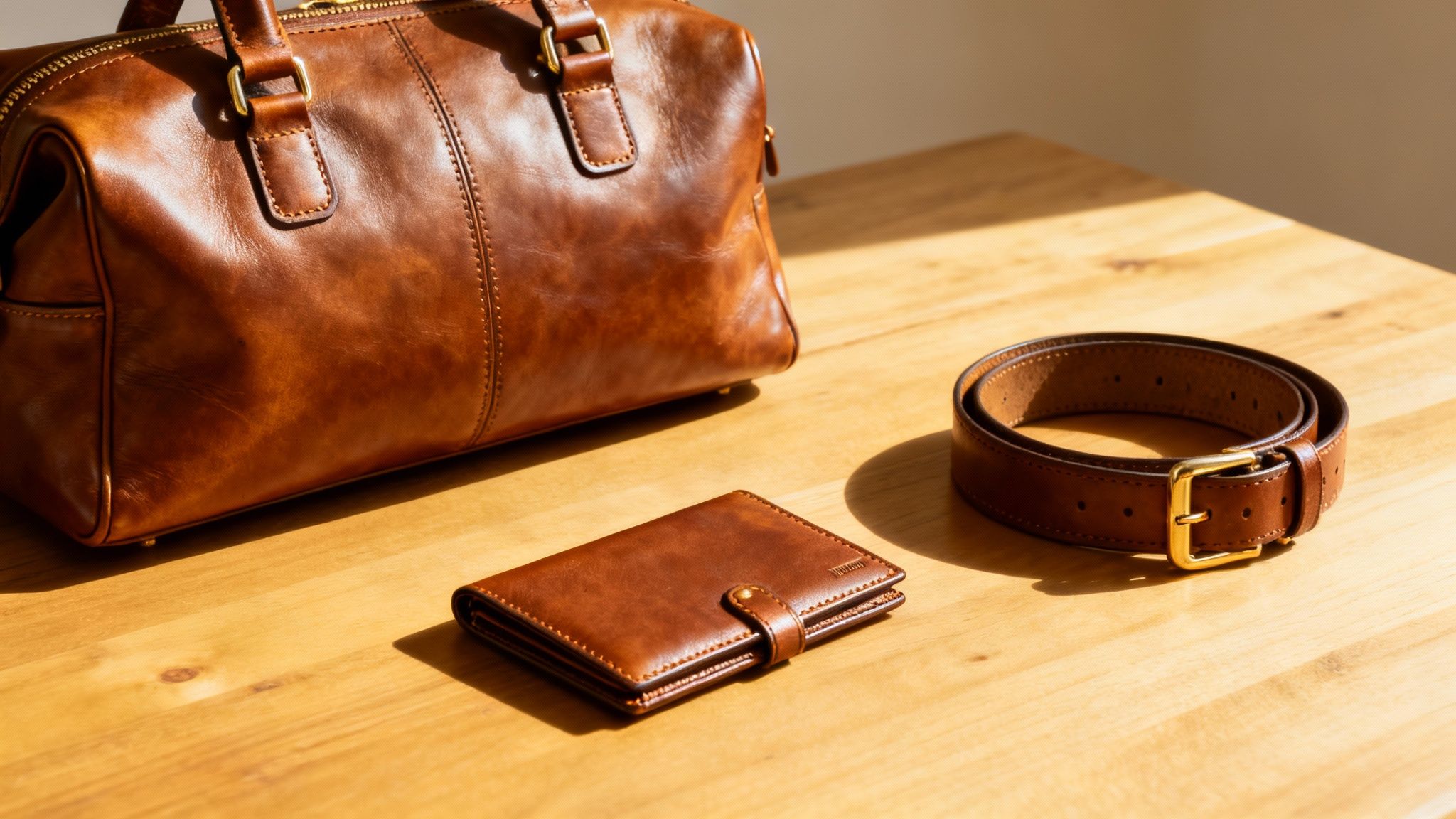
Looking at how it’s used helps you imagine how these timeless items could fit into your own life, bringing a little piece of Italian craftsmanship into your daily routine. Each product tells a story where form and function meet in the most beautiful way.
The Handcrafted Handbag
A Tuscany leather handbag isn’t just an accessory; it's a statement. For a handbag, the leather's supple feel and rich, deep color are everything. Artisans hand-pick hides that show off the material's ability to drape beautifully while still holding a definite shape.
This mix of softness and structure is what makes these bags so special. They feel amazing to the touch yet are sturdy enough for the daily grind, slowly developing a unique patina that tells your story. For a closer look at some of the most classic designs, you can explore our guide on the top ten Tuscany leather handbags worth investing in.
The Durable Briefcase
When you need a professional briefcase, strength and structure are non-negotiable. This is where the natural sturdiness of vegetable-tanned Tuscany leather really shines. It provides the right amount of stiffness to protect laptops and important papers, projecting an image of quiet confidence and dependability.
Unlike synthetic bags that just wear out, a leather briefcase wears in. The scuffs and marks from years of meetings and travel don’t ruin it; they add character. It turns a simple work bag into a testament to a career well-lived.
A well-made leather briefcase is a professional's armor. Its robust construction and timeless aesthetic ensure that it remains a relevant and respected accessory, no matter how trends in business attire may change over the years.
The Elegant Wallet and Stylish Belt
Smaller pieces like wallets and belts offer a more subtle—but just as powerful—way to bring Tuscany leather into your daily style. These items need a material that is both tough and refined, ready to handle constant use while still looking sharp.
- Wallets: For a wallet, the leather needs to be thin enough to stay slim but strong enough to resist stretching from cards and cash. The material’s ability to mold slightly over time creates a perfect, personalized fit in your pocket.
- Belts: A leather belt requires serious tensile strength to do its job without warping or cracking. The firm, dense structure of Tuscan hides ensures that a quality belt keeps its shape for decades, easily outlasting mass-produced versions.
At the end of the day, these examples show that Tuscany leather isn't just one thing. It's a chameleon, able to become whatever the artisan needs it to be—strong, soft, structured, or flexible. That adaptability is the real secret behind its timeless appeal across so many beloved products.
Answering Your Top Questions About Tuscany Leather
When you're thinking about investing in a piece of true Italian craftsmanship, it’s completely normal to have a few questions. Getting straight answers helps you really appreciate the story and the sheer quality behind every bag. This section tackles the most common queries, giving you the details you need to shop and care for your leather with total confidence.
Think of this as your quick-start guide to the finer points. From what the leather is actually made of to how you can spot the real deal, these answers will fill in any blanks and make you a smarter shopper.
Is Tuscany Leather Considered Full-Grain Leather?
Yes, the best Tuscany leather you can find is almost always full-grain. This means it’s made from the very top layer of the hide, which is where the fibers are the tightest and strongest. Unlike cheaper, "corrected-grain" leather, the surface isn't sanded down, so all its natural character—including tiny marks and imperfections—is left right where it belongs.
This is a big deal for two reasons. First, full-grain gives you incredible strength and durability, which is exactly what you want in a bag that’s built to last a lifetime. Second, the traditional vegetable tanning process is the perfect partner for this type of leather, allowing it to breathe, soften, and develop that gorgeous, rich patina over the years.
Why Does Real Tuscany Leather Have That Distinct Smell?
That rich, earthy, and slightly sweet smell is one of the most beloved signs of genuine Tuscany leather. The unique aroma comes directly from the natural tannins used during the slow, old-school vegetable tanning process. These tannins aren't chemicals; they're extracted from organic sources like chestnut wood, quebracho, or mimosa bark.
This pleasant, organic scent is a world away from the sharp, chemical odor you often get with mass-produced, chrome-tanned leather. It’s more than just a smell—it’s a sensory confirmation of the bag's artisanal roots and a key clue that you’re holding an authentic, high-quality piece.
The unique aroma is a direct result of the patient, eco-friendly tanning method. It's a signature that simply cannot be replicated by faster, industrial processes, making it a reliable sign of true quality.
How Can I Tell if It's Genuine Italian Vegetable-Tanned Leather?
Spotting genuine Italian vegetable-tanned leather is all about looking for a few key indicators. The most definitive proof is the official trademark certificate from the 'Consorzio Vera Pelle Italiana Conciata al Vegetale' (The Genuine Italian Vegetable-Tanned Leather Consortium).
This small, numbered tag is your guarantee that the leather was produced in Tuscany following strict, time-honored, and eco-friendly methods. Beyond the certificate, just trust your senses:
- Look for subtle, natural variations in the color and grain. No two pieces are ever identical.
- Feel for a texture that's supple and smooth, but still has a firm, substantial quality.
- Smell for that signature earthy, natural aroma we talked about.
When all these elements come together, you can be confident you've got the real thing.
At Databazaar.com, we’ve hand-picked a collection of authentic Tuscany Leather bags that bring timeless Italian style right to your door. Explore our selection and find a piece you'll love for years to come at https://www.databazaar.com.