 Skip to content


Why Italian Leather Bags Define Luxury
An Italian leather bag isn't just another accessory. Think of it as an investment in a legacy of unmatched craftsmanship and timeless style. These bags are famous for their incredible quality, durability, and the beautiful way they get better with age, making them a must-have piece for any wardrobe.
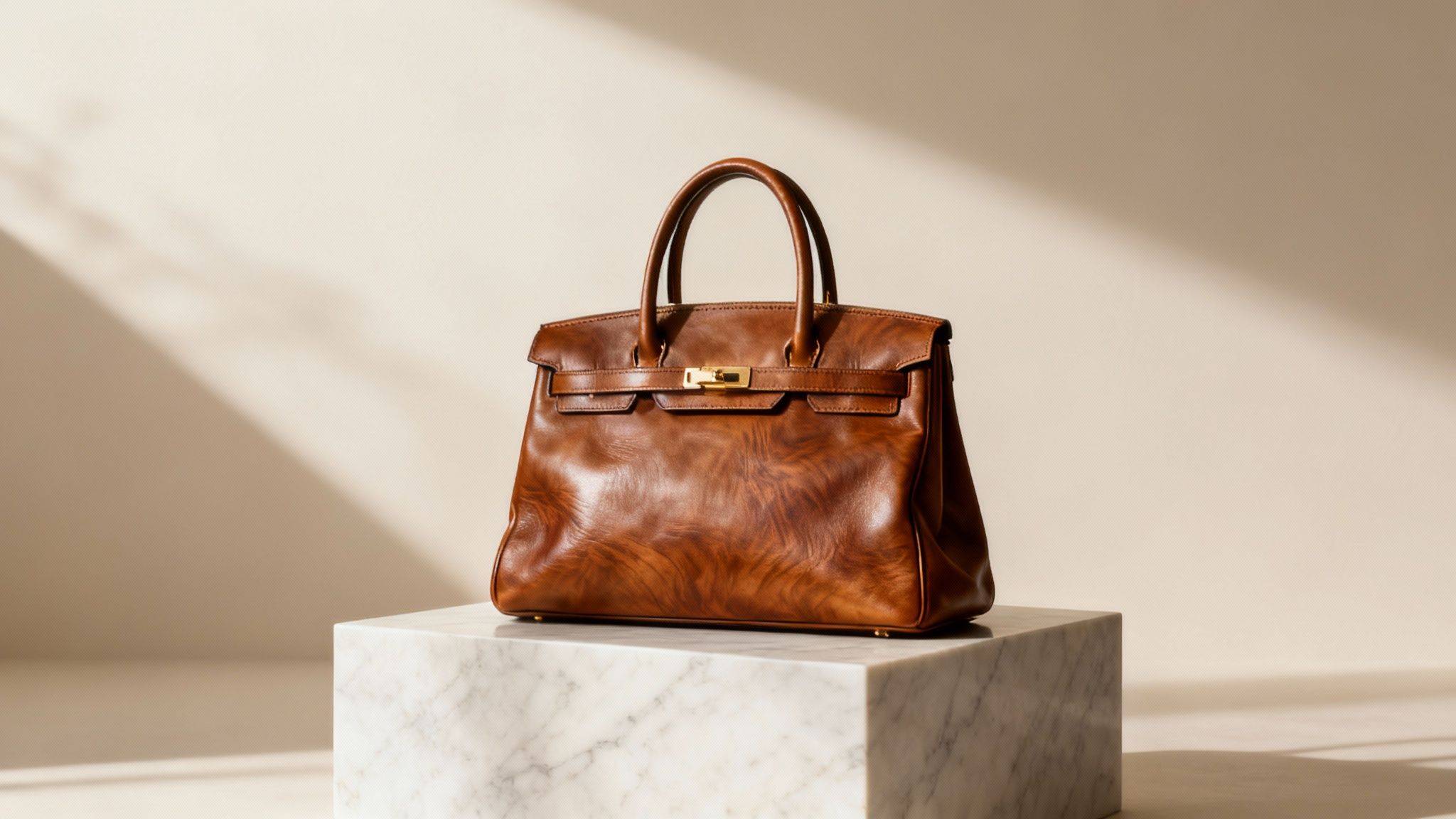
When you hold a genuine Italian leather bag, you're holding a piece of history. That "Made in Italy" stamp is more than just a label—it’s a promise, representing a deep-rooted heritage of artistry passed down through generations. These bags are the result of centuries-old techniques, where artisans pour their skill and soul into every single stitch.
This commitment to excellence is what creates such a strong connection. An Italian leather bag isn’t a throwaway trend. It’s a companion that develops its own unique patina over time, telling the story of your life’s adventures. This lasting value is exactly why these pieces are seen as investments, not just purchases.
A Legacy of Artistry and Quality
The magic of Italian leather bags really comes down to three key things working in perfect harmony. Once you understand these pillars, you’ll see what makes them so special.
-
Superior Raw Materials: It all starts with hand-picking the finest hides. Italian tanneries are true masters, treating the leather until it’s soft and supple, yet tough enough for daily life.
-
Meticulous Craftsmanship: From the precise cut of each panel to the flawless hand-stitching, every detail is handled with intention and skill.
-
Timeless Design Philosophy: Italian design strikes a perfect balance between classic elegance and everyday function, creating bags that are as practical as they are beautiful.
Owning an Italian leather bag is about more than fashion. It’s about becoming a custodian of a story—a story of heritage, quality, and an unwavering dedication to creating something truly beautiful that lasts.
This guide will walk you through everything you need to know, from spotting an authentic bag to caring for your new investment. To dig deeper, you can explore the secret behind Italy's most desired leather products.
More Than Just an Accessory
The global demand for these bags says it all. The Italian handbag market alone was valued at around $907.2 million and is expected to nearly double by 2033. That kind of growth shows a real, sustained appreciation for true quality in a world dominated by fast fashion.
When you're thinking about an investment like this, it's worth seeing how it fits your personal style. You can even explore virtual try-on tools to visualize how different bags will look with your favorite outfits, helping you choose a piece with true staying power.
Inside the Italian Artisan Workshop
To really get what makes an Italian leather bag so special, you have to picture the artisan's world. Imagine a sun-drenched workshop in Tuscany where the air is thick with the rich, earthy scent of tanned leather and old wood. This is where generations of skill are poured into every single cut, stitch, and finish.
The journey from a raw hide to a finished luxury bag is a careful dance between tradition and precision. It’s a process that simply can’t be rushed. Every stage demands a patient, masterful touch that has been honed over centuries, and that dedication is the true soul of an authentic Italian leather bag.
The Foundation of Quality
It all starts with picking the perfect raw material. Artisans are incredibly picky, choosing only the finest full-grain hides. They inspect each piece by hand, feeling for just the right texture, thickness, and softness, tossing aside any that show even the slightest imperfection.
This first step is everything. Think of it like a master chef sourcing ingredients; the final dish is only ever as good as what goes into it. This obsession with superior materials lays the groundwork for a bag that isn't just beautiful but built to last.
This infographic captures the heart of an artisan's workshop—the traditional tools, the natural materials, and the hands-on process that brings these timeless pieces to life.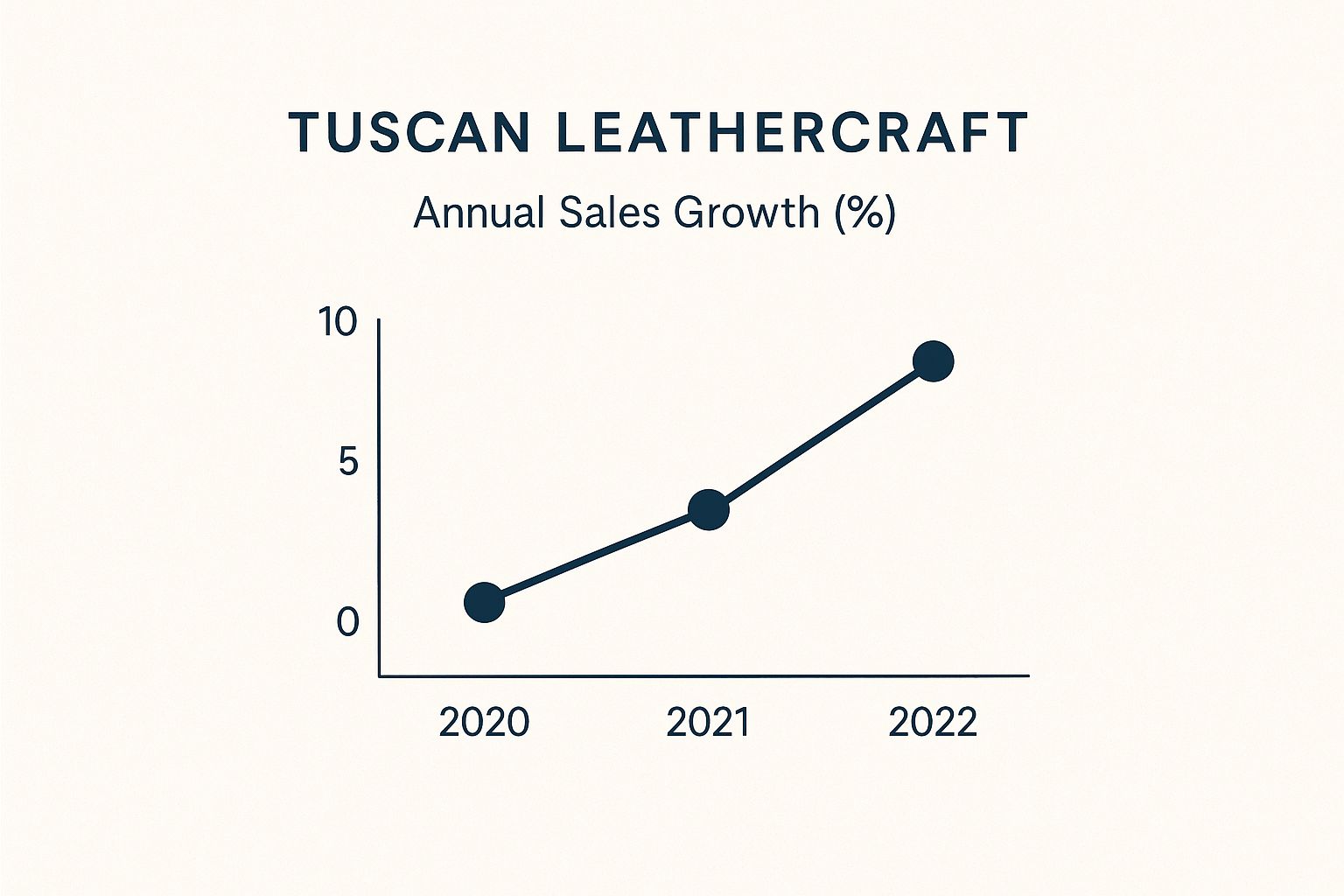
It’s a great visual reminder of why hand-craftsmanship is so central to the quality and character of every bag.
The Ancient Art of Tanning
Once the hide is chosen, it’s time for tanning—a craft Italian tanneries have perfected. Many workshops still swear by vegetable tanning, an ancient, eco-friendly method using natural tannins from tree bark, leaves, and roots. The process is slow, often taking weeks, but the result is something chemicals just can't replicate.
Vegetable-tanned leather is famous for its incredible character. It’s firmer than chrome-tanned leather and develops a beautiful, unique patina over time. Every scratch and mark it picks up tells a story, making the bag deeply personal. This organic aging process is one of the most beloved qualities of high-end Italian leather bags.
The patina on a vegetable-tanned Italian leather bag isn’t a flaw; it's the bag’s memory. It’s a visual diary of its journey with you, making it a one-of-a-kind piece that only gets more beautiful with every passing year.
Precision in Every Stitch
With the leather ready, the artisan’s real skill comes into play. Patterns are cut with surgical precision, ensuring every panel lines up perfectly. This is almost always done by hand, a skill that takes years to master and offers a level of control machines can't touch.
The pieces are then stitched together, and this is where you can really see the quality. Look closely at an authentic bag, and you’ll find strong, even, consistent stitching. It’s not just for aesthetics; it's fundamental to the bag’s structure and how long it will last. To discover the craftsmanship behind Tuscany leather handbags is to truly appreciate this incredible focus on the small things.
Here are the key stages of assembly that really define an artisan's work:
-
Hand-Cutting: Each leather panel is meticulously cut by hand. This ensures a perfect fit and minimizes waste of the precious material.
-
Edge Finishing: The raw edges of the leather are carefully burnished, painted, and polished. It's a time-consuming step that prevents fraying and gives the bag that clean, refined look.
-
Hardware Setting: Buckles, zippers, and clasps are attached with precision. They aren't just decorative; they have to be functional and durable enough for daily use.
Finally, the bag gets its finishing touches. The hardware is polished, the interior lining is inspected, and the entire piece is conditioned one last time. From start to finish, creating a single bag involves dozens of steps, each one performed with an unwavering commitment to excellence that you can both see and feel.
Understanding Different Italian Leathers
Stepping into the world of Italian leather bags can feel a bit like learning a new language. You’ll hear terms thrown around like full-grain, Vacchetta, and Saffiano, and knowing what they mean is the secret to picking a bag that truly fits your life. It’s not about finding the “best” leather, but about finding the one that’s best for you.
Think of it like you’re choosing wood for a custom table. You could go for a raw, rustic slab that tells a story or a sleek, polished top that looks perfect from day one. Leather works the same way—different grades and treatments create a completely different look, feel, and level of durability. Once you get the basics, you'll be able to choose with total confidence.
The Foundation: Full-Grain and Top-Grain Leather
Before we get into the beautiful Italian finishes, it’s important to understand the two main grades of high-quality leather. These terms describe which part of the animal hide is used, and they’re the building blocks for nearly every luxury bag you’ll find.
Full-grain leather is the absolute best you can get. It’s the top layer of the hide, complete with all its natural grain, unique marks, and beautiful imperfections. Since it hasn't been sanded down, it’s incredibly strong and breathable. Over time, it develops a stunning patina—that rich, soft sheen that makes a bag uniquely yours.
Top-grain leather is the second-highest grade. The very top layer is lightly sanded to buff away any imperfections. This gives it a more uniform look and makes it a bit more resistant to stains right out of the box. While it won't develop the same deep patina as full-grain, it delivers a clean, flawless look from the moment you get it.
A full-grain leather bag is like a fine wine—it gets better with age, developing more character and depth over the years. A top-grain leather bag is more like a perfectly crafted cocktail—pristine, consistent, and ready to enjoy right away.
Popular Italian Leather Finishes
With that foundation set, let's explore some of the iconic finishes you’ll see on Italian leather bags. Each one has its own personality, created through unique tanning and treatment methods that define not just how the bag looks, but how it stands up to everyday life.
-
Vacchetta Leather: This is a type of full-grain, vegetable-tanned leather left in its most natural state—untreated and unfinished. It starts out as a pale, creamy beige but darkens dramatically with exposure to sunlight and the oils from your skin, eventually turning into a gorgeous honey or caramel color. People prize it for this beautiful aging process, but be aware it's sensitive to water and scratches.
-
Saffiano Leather: Instantly recognizable by its signature cross-hatch pattern, Saffiano leather is a workhorse known for its incredible durability. The texture is machine-pressed into the leather, which is then coated with a wax finish. This makes it highly resistant to scratches, stains, and water—a perfect choice for an everyday work bag that needs to look sharp no matter what.
-
Dollaro Leather: Also known as pebbled leather, Dollaro has a soft, textured feel that’s wonderful to the touch. That distinctive pebble grain is created by shrinking the leather, resulting in a finish that’s not only supple but also great at hiding minor scuffs and scratches. It’s ideal for more relaxed, slouchy styles.
For a closer look at regional specialties, our guide comparing Tuscany leather vs other Italian leather bags offers even more detail.
Choosing the Right Leather for You
So, which one is your perfect match? It all comes down to your personal style and what you need your bag to do. Do you love the idea of a bag that tells a story and changes with you, or do you prefer one that stays polished and pristine?
This little table breaks it down to help you decide.
Comparing Popular Italian Leather Finishes
| Leather Type | Key Characteristic | Durability | Best For |
|---|---|---|---|
| Vacchetta | Ages beautifully, developing a rich patina. | Moderate (sensitive to water/scratches) | Someone who loves a bag with evolving character. |
| Saffiano | Textured, cross-hatch finish. | High (scratch and water-resistant) | Daily use, work bags, and travel. |
| Dollaro | Soft, pebbled, and supple texture. | High (hides scuffs and scratches well) | Everyday bags with a relaxed, luxurious feel. |
At the end of the day, whether you go for the evolving beauty of Vacchetta, the tough elegance of Saffiano, or the soft touch of Dollaro, you’re investing in a piece of Italian artistry. Each one offers a completely different experience, guaranteeing there’s a perfect Italian leather bag out there for everyone.
How to Spot an Authentic Italian Leather Bag
In a world full of convincing lookalikes, telling a genuine masterpiece from a clever imitation can feel overwhelming. But here’s the secret: spotting an authentic Italian leather bag isn’t about finding one single “tell.” It’s about using your senses to recognize the markers of true craftsmanship that machines and shortcuts just can’t replicate.
Think of yourself as an art appraiser. You wouldn't just glance at a painting; you'd get up close to examine the brushstrokes, the texture of the canvas, and the quality of the frame. The same principle applies here. By learning to look, touch, and even smell the details, you can develop the confidence to identify the real deal.
Trust Your Senses First
The first and most immediate test of authenticity comes down to touch and smell. Genuine Italian leather has a unique character that’s nearly impossible to fake.
Run your fingers across its surface. It should feel soft and supple, yet have a structured integrity. Real leather has a natural warmth; it doesn’t feel cold or plasticky like its synthetic counterparts. You should also notice tiny, unique imperfections—subtle variations in the grain that prove it’s a natural material, not a machine-pressed pattern.
Next, bring the bag closer and take a breath. Authentic leather has a rich, earthy, and slightly sweet aroma. It’s a distinctive smell that is never overpowering or chemical-like. Imitations, often called "PU leather," will have a sharp, plastic odor that gives them away instantly.
Examine the Stitching and Edges
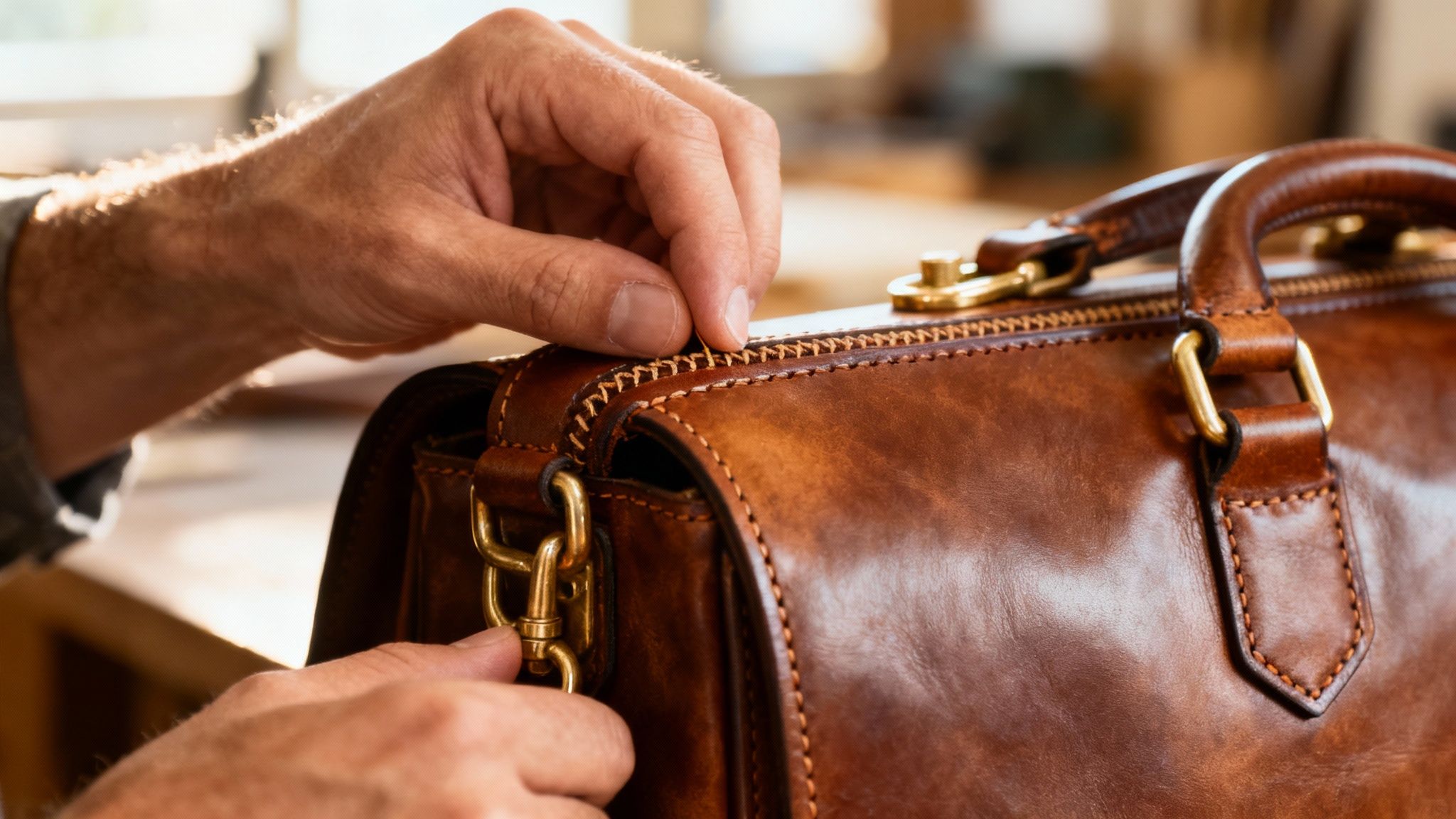
The true mark of an artisan is found in the details, and the stitching on an Italian leather bag tells a story of patience and precision. Lean in and look closely at the seams.
On an authentic bag, the stitching will be:
-
Even and Consistent: Each stitch should be the same length and perfectly spaced.
-
Thick and Durable: Artisans use strong, high-quality thread that is meant to last a lifetime.
-
Slightly Imperfect: Because it’s often done by hand or with manually guided machines, you might find tiny variations that signal a human touch—unlike the flawless but soulless perfection of mass-produced items.
Now, check the edges of the leather panels. High-quality bags have meticulously finished edges that are burnished, painted, and polished to prevent fraying. This small but time-consuming step is often skipped on fakes, which may have raw, frayed, or sloppily painted edges.
When you inspect an Italian leather bag, you're not just looking at a product; you're examining evidence of skill. The evenness of a stitch line and the smoothness of a finished edge are the fingerprints of a master craftsman.
Evaluate the Hardware and Lining
The hardware—zippers, clasps, buckles, and feet—is another critical clue. On genuine Italian leather bags, the hardware will feel substantial and heavy, not flimsy or hollow. It should be made from high-quality metals like solid brass or nickel that won't easily chip or tarnish.
Test the zippers. They should glide open and closed smoothly without snagging. The clasps should lock securely with a satisfying click. These are functional parts of the bag, and a true artisan ensures they are built to withstand daily use. If the hardware feels cheap, it's a major red flag.
Don't forget to look inside. A bag’s lining is often a giveaway. Artisans who spend hours perfecting the exterior won’t cut corners on the interior. The lining should be made from a durable, high-quality fabric like canvas, suede, or a strong synthetic blend, stitched neatly into place with no loose threads or puckering.
Learning to spot these details is the key to making a wise investment. For those specifically interested in regional excellence, you might be interested in the buyer's guide to Tuscany leather handbags, which offers some great additional insights. Ultimately, recognizing true craftsmanship is a skill that empowers you to choose a bag that won’t just look beautiful but will last a lifetime.
Caring for Your Leather Investment
A beautiful Italian leather bag isn't just a purchase; it's an investment meant to last a lifetime. And like any prized possession, its beauty and longevity depend on how you care for it. The great news is that keeping it gorgeous doesn’t require a complicated routine—just a simple, consistent approach to cleaning, conditioning, and storing.
Think of your bag's leather like your own skin. It's a natural material that can get dirty, dry out, or suffer from the elements if you neglect it. A little bit of proactive attention will ensure your bag not only survives but thrives, developing that rich, coveted patina that tells the story of its journey with you.
Gentle Cleaning and Maintenance
The cornerstone of leather care is regular, gentle cleaning. Over time, dust and dirt can be surprisingly abrasive, slowly wearing down the leather's surface. The most effective way to preserve its finish is to build a simple cleaning habit.
For weekly upkeep, just wipe your bag down with a soft, dry microfiber cloth. This little ritual removes surface dust and brings back its natural sheen. For minor smudges, slightly dampen the cloth with water—never soak it—and gently wipe the spot. Always let the leather air dry completely, and keep it away from direct sunlight or heat.
Conditioning and Protecting
Conditioning is the next crucial step. Just like skin needs moisturizer, leather needs its natural oils replenished to stay soft, supple, and prevent it from drying out and cracking. A high-quality leather conditioner is non-negotiable here.
Apply a small, pea-sized amount of conditioner to a clean cloth and work it into the leather with gentle, circular motions. It’s always smart to test the conditioner on a hidden spot first, like the bottom of the bag, just to make sure it doesn't alter the color.
Think of leather conditioner as a protective shield. It not only nourishes the material from within but also creates a barrier against minor spills and stains, giving you a precious few moments to wipe them away before they set.
So, how often should you condition your bag? It really depends on your climate and how often you use it.
-
Dry Climates: Condition every 2-3 months to keep the leather from getting brittle.
-
Humid Climates: Every 4-6 months is usually plenty.
-
Regular Use: If your bag is your daily go-to, a quarterly conditioning is a great rule of thumb.
Proper Storage and Handling
How you store your bag is just as important as how you clean it. When you’re not using it, never put it in a plastic bag—that traps moisture and can lead to mildew. Instead, use the breathable dust bag that it came with.
To help your bag keep its beautiful shape, stuff it with acid-free tissue paper or even an old, clean t-shirt. This prevents it from creasing and slumping. Store it upright on a shelf, away from direct sunlight that can fade the color and away from extreme heat or cold.
With the right care, your Italian leather bag will not just endure; it will become a more beautiful and personal piece with each passing year, a true testament to its quality and your journey together.
Why Italy Is Still the Heartbeat of Luxury Leather
Take a look at the global luxury market, and you might see other countries posting bigger sales numbers. But that data only tells a sliver of the story. Italy isn’t just a participant in the world of high-end leather; it is the main event. It remains the undisputed center of production, innovation, and craftsmanship—the true heart of the industry.
This is a critical distinction. The world’s most prestigious fashion houses—whether they're based in Paris, London, or New York—all turn to Italian tanneries and workshops for their finest goods. They do this because "Italian leather" is more than just a label on a map. It’s a gold standard for quality, a benchmark that represents a deep, almost instinctual mastery of the craft.
The Epicenter of Production and Prestige
While Italy may not always be the biggest consumer market, its dominance in production is absolute. The country has an entire ecosystem of skilled artisans, multi-generational tanneries, and specialized suppliers that creates a synergy no other nation can touch. This is where new tanning techniques are born and where ancient traditions are protected with fierce pride.
This unique environment means an Italian leather bag is never just a product; it's the result of a collaborative heritage of excellence. The most famous luxury brands depend on this infrastructure, knowing Italian artisans possess an intuitive feel for the material that can turn a simple design into a true work of art.
Think of Italy's role in the luxury leather world like Silicon Valley's role in tech. The final products might be sold everywhere, but the core innovation, the top talent, and the foundational work all happen in one concentrated hub of expertise.
A Quality That Defines the Market
The numbers tell an interesting story. Projections show that Italy, with an 11.52% share of Europe's luxury leather bag market in 2025, will rank behind the UK and Germany in revenue. But that statistic misses the bigger picture: Italy's real influence isn't measured in direct sales but in its role as the premier producer for the entire global market, which is set to hit $17.1 billion by 2033. For a deeper dive into these trends, you can get the full luxury leather report.
This data confirms what the experts already know: while other nations are major consumers, Italy remains the source. The prestige tied to authentic Italian manufacturing drives value across the board, reminding us why owning a piece made in Italy is a genuine investment. The "Made in Italy" tag means your bag was born at the very epicenter of quality—a place where leather isn't just a material, but a lifelong passion.
Got Questions? We’ve Got Answers
To wrap things up, let’s tackle some of the most common questions people have when they're choosing or caring for an Italian leather bag. Think of this as your quick-reference guide to help you feel completely confident in your investment.
Getting these details right is the key to appreciating your bag and making sure it lasts for years—or even decades—to come.
What Does "Vegetable-Tanned" Actually Mean?
You’ll see this term a lot with high-quality Italian leather, and it’s a nod to an ancient, all-natural tanning process. Instead of using modern chemicals like chromium, artisans use organic tannins that come from things like tree bark, leaves, and roots.
It’s a much slower method, often taking weeks to complete, but the result is a leather that’s truly special. It’s firm yet supple, has a wonderful earthy smell, and is famous for developing a beautiful, rich patina over time. It’s an eco-friendly approach that gives the leather a unique character that synthetic methods just can't touch.
"Vegetable-tanned" is really a promise of tradition and character. It means your bag was made with patience, allowing the leather to age gracefully and tell its own story.
Are Italian Leather Bags Waterproof?
The short answer is no. Leather is a natural, porous material, so it’s not inherently waterproof. High-quality Italian leather bags, especially full-grain and vegetable-tanned ones, can be quite sensitive to water. If it gets soaked, water can leave spots, create stains, or even make the leather stiff once it dries.
But you can (and should!) make your bag highly water-resistant. Here’s how:
-
Use a Protectant Spray: A good leather waterproofing spray creates a barrier against moisture. Just be sure to test it on a small, hidden spot first.
-
Act Fast: If your bag gets caught in the rain, don't panic. Gently blot the water off right away with a soft, dry cloth. Never rub—that just pushes the moisture deeper into the grain.
-
Let It Air Dry: Whatever you do, don't use a hairdryer or put your bag near a radiator. Stuff it with some paper to help it keep its shape and let it dry slowly and naturally at room temperature.
How Should I Handle Repairs?
For minor scuffs and light scratches, a good leather conditioner can often work wonders and buff them right out. But for more serious damage—like a broken zipper, a torn lining, or a deep gash in the leather—it’s always best to call in a professional.
Your best bet is to find a reputable cobbler or a leather repair specialist. These experts have the right tools, materials, and skills to fix your bag without compromising its integrity. Trying to DIY a major repair often backfires, leading to bigger and more expensive problems down the road.
At Databazaar.com, we believe in the timeless beauty and unmatched quality of true Italian craftsmanship. Our curated collection of Tuscany Leather bags embodies this tradition, offering enduring style and exceptional durability. Explore our collection today and find the perfect piece to accompany you on your journey.