 Skip to content


Handcrafted Leather Bag Care Tips: 7 Steps
Table of Contents
- Why Handcrafted Leather Bags Deserve Special Care
- How to Clean a Leather Bag: Daily and Weekly Maintenance
- How to Condition a Leather Bag to Prevent Dryness
- Leather Bag Stain Removal: Quick Action Techniques
- How to Store Leather Handbags for Long-Term Protection
- Protecting Hardware, Seams, and Straps
- Your Leather Bag Care Schedule
- Frequently Asked Questions
Last Updated: October 11, 2026
Why Handcrafted Leather Bags Deserve Special Care
Handcrafted leather bags are investments. Unlike mass-produced alternatives, these pieces develop character and patina over time. The leather becomes softer and more beautiful with proper care.
Premium full-grain leather responds to intentional maintenance. Neglect leads to dryness, cracks, and permanent damage.
Handcrafted leather bag care isn't complicated, it's about consistency and using the right techniques.
This guide covers daily maintenance, conditioning, stain removal, and storage. You'll have a simple schedule to keep your bag looking pristine for years.
Pro Tip
Handcrafted leather ages beautifully when protected from moisture and heat. The key is prevention, not correction.
How to Clean a Leather Bag: Daily and Weekly Maintenance
Regular cleaning prevents dirt from embedding into the leather. Dust and debris scratch the surface and work into seams over time.
Step 1: Empty and Shake Out Debris
Remove everything from your bag and shake it gently over a trash can to dislodge loose dirt and crumbs, paying special attention to interior corners and seams. Trapped particles scratch leather when you sit the bag down.
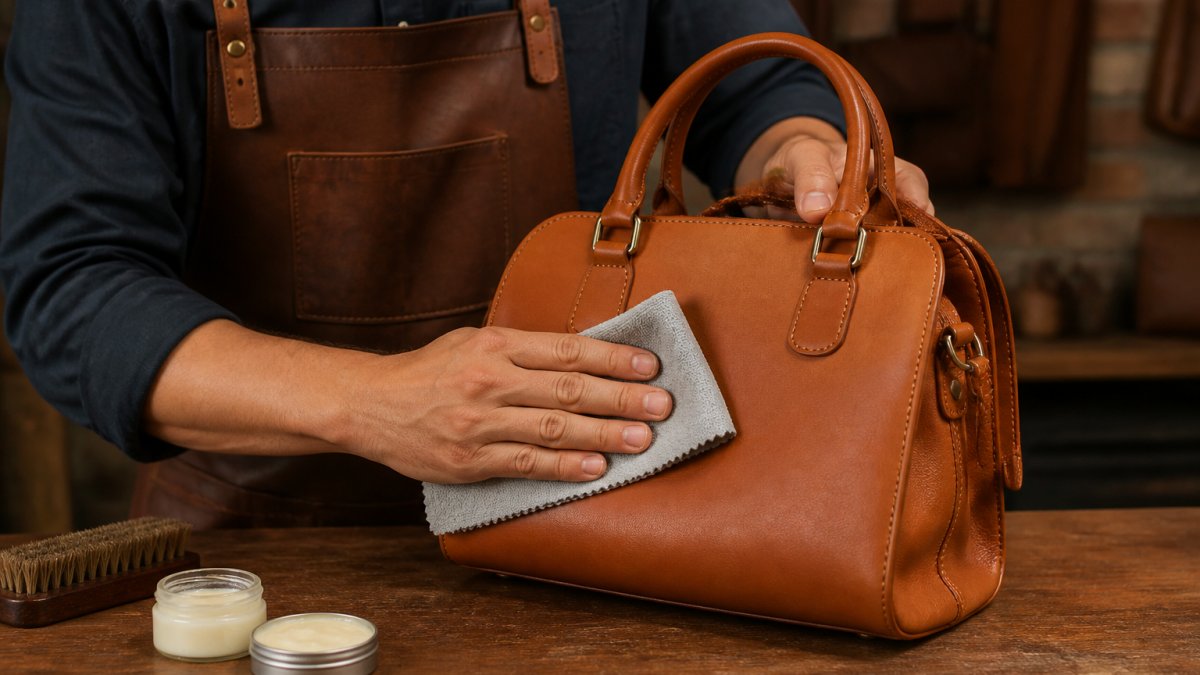
Step 2: Wipe Down Surfaces with a Soft Cloth
Use a soft, dry microfiber cloth to wipe the exterior in circular motions, covering the entire surface including the bottom, sides, and back.
For weekly cleaning, use a barely damp cloth with distilled water only. Wipe gently without scrubbing and let the bag air dry naturally.
Watch Out
Never use tap water on leather. Minerals and chemicals in tap water leave residue and water spots. Stick to distilled water.
Step 3: Clean the Interior Lining and Pockets
Clean the interior lining weekly to prevent mold and odors. Shake out pockets, use a soft brush or toothbrush for corners, and wipe with a dry cloth. For stubborn debris, use a lint roller. For stains, use a barely damp cloth with distilled water.
How to Condition a Leather Bag to Prevent Dryness
Conditioning replaces natural oils that leather loses over time, preventing cracks and brittleness. Condition every three to six months depending on use and climate.
Testing Your Leather Conditioner First
Always test conditioner on a hidden area first. Apply a small amount to the interior bottom or back corner and wait 24 hours to check for discoloration, darkening, or residue. Choose conditioners made for full-grain leather and avoid silicone-based products, which build up over time.
Applying Conditioner to Maintain Softness
Use a dime-sized drop of conditioner applied with a soft cloth in circular motions, working in sections. Pay special attention to seams and creases. Let it absorb for 15 minutes, then buff away excess. The leather should feel soft but not greasy. Wait at least 24 hours after cleaning before conditioning.
Key Takeaway
Conditioning keeps leather supple and prevents cracks. A light conditioning every few months is better than heavy conditioning once a year.
Leather Bag Stain Removal: Quick Action Techniques
Stains set quickly on leather. Speed matters, the faster you act, the better your chances of removal. Different stains require different approaches.
Understanding Stain Types and Immediate Response
Liquid spills (water, coffee, alcohol): Blot immediately with a soft, dry cloth, do not rub. Let the bag air dry naturally in a cool location away from direct sunlight or heat sources.
Oil-based stains (cooking oil, body oils, makeup): Sprinkle baking soda, talc powder, or cornstarch on the stain and let it sit for 4 to 8 hours. Brush away gently with a soft cloth.
Ink stains (ballpoint pen, fountain pen): Blot immediately with a dry cloth. For ballpoint ink, test rubbing alcohol (70% isopropyl) on a hidden area first, then dab gently on the stain.
Dye transfer (from new clothing, dark leather rubbing off): Blot with a dry cloth.
Food stains (chocolate, grease, fruit): Remove solid debris first. For greasy stains, use baking soda or talc.
Testing Products Before Full Application
Always patch-test any cleaner, conditioner, or treatment on a hidden area (interior bottom, inside pocket, or back of bag). Apply a pea-sized amount and wait 24 hours. If it darkens, lightens, leaves a greasy film, or feels sticky, do not use it. Some products marketed for "all leather" contain silicone, wax, or solvents that damage full-grain leather.
When to Stop and Consult a Professional
Consult a leather-care professional if the stain does not improve after one treatment, covers more than 2 inches, has set for more than 48 hours, is on delicate leather, or is accompanied by odor or visible damage. Professional cleaners have specialized solvents and expertise that home treatments cannot match.
Watch Out
Never use household cleaners, bleach, acetone, or strong solvents on leather. These can strip the leather's finish, cause permanent discoloration, or weaken the material. Stick to products specifically formulated for leather, or use only distilled water and mild soap.
How to Store Leather Handbags for Long-Term Protection
Proper storage prevents damage when you're not using your bag. The right environment keeps leather healthy for years, even during extended periods of non-use.
Ideal Storage Environment: Temperature and Humidity
Store your bag between 60°F and 75°F in a climate-controlled closet, avoiding basements, attics, and garages. Maintain 40% to 50% relative humidity. Use a dehumidifier in humid climates or a humidifier and silica gel packets in dry climates. A digital hygrometer ($10-$20) helps monitor storage conditions.
Seasonal Storage Considerations
Seasonal storage requires different approaches depending on how long the bag will sit unused.
Short-term storage (1 to 3 months): Condition lightly before storage, stuff loosely with unprinted tissue paper, and store in a cool, dry closet. Check monthly for moisture or odor.
Long-term storage (3 months or longer): Clean and condition thoroughly. Stuff with tissue paper, changing it every 2 weeks for the first month.
Nora - Soft Leather Handbag (TL142372) →
Winter storage: Ensure your storage space is heated. If storing in an unheated space, wrap the bag in breathable cloth and place in a box with crumpled newspaper for insulation.
Summer storage: Check stored bags every 2 weeks for mold or mildew. Ensure air circulation and avoid direct sunlight.
Preventing Mold, Mildew, and Odor
Mold and mildew develop in damp, dark, poorly ventilated spaces. Ensure the bag is completely dry before storing. Use unprinted tissue paper, not newspaper. Place silica gel packets inside the bag and dust bag, replacing every 3 months. Ensure adequate air circulation and avoid storing near exterior walls.
If mold develops, remove the bag immediately and place it in a well-ventilated area. Wipe the exterior with a barely damp cloth and distilled water. For interior mold, use a cloth barely dampened with a 1:1 solution of white vinegar and distilled water, then air dry in sunlight. Condition the leather afterward. For deep mold penetration, consult a professional.
Maintaining Shape and Preventing Color Transfer
Stuffing your bag correctly prevents it from collapsing and developing permanent creases.
Proper stuffing: Use unprinted tissue paper, white cloth, or acid-free packing paper. Stuff loosely, the goal is to support the bag's shape, not to stretch it. Overstuffing distorts the structure and can stress seams. For a medium-sized handbag, use roughly 8 to 12 sheets of tissue paper, crumpled loosely. For larger bags like totes or backpacks, use more.
Preventing color transfer: If you store multiple leather bags together, keep them separated. Dark leather can transfer dye to light leather, especially in humid conditions. Wrap each bag in a separate white cloth or place each in its own breathable dust bag. Never store a new, dark leather bag directly against a light-colored bag.
Checking on Stored Bags
Even in ideal storage conditions, check on your bag periodically.
Monthly inspection during the first 3 months: Look for signs of mold, mildew, odor, or pest damage. Check that the bag's shape is maintained and that stuffing hasn't shifted. Ensure the storage area remains at the correct temperature and humidity.
Quarterly inspection after 3 months: Continue checking every 3 months for long-term storage. Replace moisture-absorbing packets. If you notice any issues, remove the bag immediately and address the problem.
Before returning to use: When you remove a stored bag, let it air out in a well-ventilated space for a few hours before using it. Condition the leather lightly to restore moisture and softness.
Key Takeaway
Proper storage is an investment in your bag's longevity. A few minutes of attention every few months prevents damage that would otherwise require professional restoration.
Protecting Hardware, Seams, and Straps
Hardware, seams, and straps need special attention. These areas experience the most stress and wear.
Metal hardware like the TL logo on the Nora - Soft Leather Handbag (TL142372) can tarnish or corrode. Wipe hardware monthly with a soft, dry cloth. This removes moisture and prevents oxidation.

Seams are vulnerable to moisture penetration. Keep seams dry. If water gets into seams, use a barely damp cloth to wipe the area, then let it air dry completely.
Straps and handles experience constant friction and stress. Condition them more frequently than the rest of the bag. These areas dry out faster from repeated handling.
Check stitching regularly for loose threads or separation. If you notice damage, have a professional leather repair specialist address it before it worsens.
Best For
Handcrafted leather bags from Databazaar are built to last. Models like the Bangkok - Leather Laptop Backpack - Large Size (TL142336) feature reinforced seams and quality hardware designed for years of use.
Your Leather Bag Care Schedule
Consistency matters more than intensity. A simple routine prevents problems better than occasional deep cleaning.

| Care Task | Frequency | Time Required |
|---|---|---|
| Empty and shake out debris | After each use | 1 minute |
| Wipe exterior with dry cloth | Daily or weekly | 2-3 minutes |
| Clean interior lining | Weekly | 3-5 minutes |
| Wipe down with damp cloth | Every two weeks | 3-5 minutes |
| Condition leather | Every 3-6 months | 10-15 minutes |
| Deep inspection | Monthly | 5 minutes |
| Professional cleaning | As needed | Varies |
This schedule keeps your bag in excellent condition without excessive effort. Adjust frequency based on how often you use the bag and your climate.
Bags used daily need more frequent attention. Bags used occasionally need less. Humid climates require more frequent cleaning to prevent moisture damage.
Track your conditioning schedule. Mark your calendar or set phone reminders. Consistency is what keeps handcrafted leather beautiful.
Handcrafted leather bags deserve care that matches their quality. Our Larry - Leather Crossbody Bag (TL141915) and other pieces are crafted from full-grain leather specifically chosen for its ability to age beautifully with proper care.

Frequently Asked Questions
How often should you condition a leather bag?
Condition your handcrafted leather bag every 3-6 months, depending on how often you use it and your climate. Frequent use and dry indoor air may require more frequent conditioning. Start with every 6 months and adjust based on how the leather feels, if it becomes dry or stiff, condition sooner. Always test the conditioner on a hidden area first to ensure it won't darken or damage the leather finish.
Is Dawn dish soap safe to use on a leather bag?
No, avoid dish soap on leather bags. Dish soap is too harsh and can strip natural oils from the leather, causing it to become dry, stiff, or discolored. Instead, use a soft, damp cloth with lukewarm water for light cleaning, or invest in a proper leather cleaner formulated to be gentle on handcrafted leather. Always patch-test any cleaner on an inconspicuous area before applying it to visible surfaces.
How do you remove stains from a leather bag?
Act quickly when a stain occurs. For dry stains, brush gently with a soft brush to remove loose debris. For wet spills, blot immediately with a clean, dry cloth, do not rub. For set-in stains, use a leather-specific stain remover applied to a soft cloth, working in small circular motions. Always test on a hidden area first. Air dry the bag naturally away from direct heat or sunlight. If the stain persists, consult a professional leather cleaner to avoid permanent damage.
What should you do if your leather bag gets wet?
If your handcrafted leather bag gets wet, blot excess moisture immediately with a clean, soft cloth. Never use direct heat like a hair dryer or radiator. Instead, stuff the bag loosely with unprinted paper or a breathable cloth to help it maintain shape, and place it in a well-ventilated area away from direct sunlight and heat sources. Allow it to air dry completely, which may take several days. Once dry, condition the leather to restore moisture and prevent cracking.