Skip to content


Tuscany Leather Bags: Your Essential Explainer
Close your eyes and picture the sun-drenched hills of Tuscany. It's a place where art isn't just in a museum—it's woven into the fabric of everyday life. This is the world that gives us Tuscany leather bags, and trust me, they're so much more than just a place to put your things. They’re a piece of heritage you can carry.
The Enduring Appeal of Italian Craftsmanship
A genuine Tuscany leather bag isn't just a fashion accessory; it's an investment in a piece of art that tells a story. Each one is a product of its environment, born from a region famous for its leatherworking guilds since the Renaissance. This isn't just history—it's a living legacy built on meticulous skill, incredible materials, and a genuine passion for creating things that last.
The real magic of these bags is how they completely ignore fleeting trends. Unlike a mass-produced purse that's "in" one season and out the next, a bag from Tuscany is designed to get better with age. It develops a rich, unique patina over time that tells the story of your life with it. That beautiful aging process is the hallmark of high-quality, vegetable-tanned leather used by true artisans. It's no wonder the global appetite for quality like this is huge; the leather goods market hit about $295.4 billion in 2024 and is still climbing, proving people are hungry for authentic, durable products. (You can dig into more market data over on factmr.com.)
What Defines a Tuscany Leather Bag
So, what really sets these bags apart from everything else on the shelf? It's not just one thing, but a perfect blend of elements working together.
- Generational Artistry: The skills used to make these bags have been fine-tuned for centuries, handed down from master to apprentice. It’s a level of detail and quality that a machine simply can't match.
- Superior Materials: Real Tuscan artisans are picky. They use locally sourced, top-tier leather—often full-grain, which is the strongest and most natural part of the hide.
- Timeless Design: The look is pure Italian elegance, but it’s always practical. The result is a bag that looks just as stylish in ten years as it does today.
This commitment to doing things the right way is what separates an authentic piece from a cheap imitation. You can learn more about what sets Tuscany Leather apart from other Italian brands in our detailed comparison. These bags aren’t just made; they’re brought to life by a process that honors both tradition and the raw beauty of the leather itself.
Owning a Tuscany leather bag means carrying a piece of Italian heritage. It's an accessory that doesn't just complete an outfit—it adds a layer of history, quality, and undeniable sophistication.
Uncovering the Heritage of Italian Leather Craft
To really get a feel for a Tuscany leather bag, you have to go back in time. Not to a modern factory, but to the lively medieval streets of Florence, the absolute heart of Italy’s leatherworking legacy. It was here, along the Arno River, that ancient guilds of artisans built the foundation for a craft that would become famous worldwide.
These early craftsmen weren’t just making things; they were perfecting an art. They set uncompromising standards for quality, skill, and materials—standards that have been passed down through countless generations. This deep-rooted history is what sets a true Tuscan creation apart. It’s a living tradition you can feel in every single stitch.
The Art of Vegetable Tanning
At the very core of this heritage is a time-honored technique known as vegetable tanning. Think of it less like a harsh chemical process and more like a slow, patient marination. Instead of using synthetics like chromium, Tuscan tanners immerse raw hides in large wooden drums filled with a special blend of natural tannins.
These tannins are organic extracts pulled from the barks, leaves, and roots of trees like chestnut, oak, and quebracho. Not only is this method far kinder to the environment, but it also gives the leather a character that simply can't be faked.
The vegetable tanning process is a testament to patience and nature. It can take up to 40 days for the tannins to fully penetrate the hide, creating a material that is strong, supple, and rich with warm, earthy tones.
This slow transformation is what gives a high-end Tuscany leather bag its signature qualities. It’s responsible for that distinct, pleasant aroma and the leather’s ability to develop a beautiful patina—a lustrous sheen that deepens and changes the more you use it. Every scratch and mark it picks up along the way doesn’t ruin its beauty; it adds to its story, making your bag uniquely yours. To dive even deeper, you can learn more about the nuances of Italian craftsmanship in our detailed guide.
From Medieval Guilds to Modern Masters
That legacy of the Florentine guilds is alive and well today in the small, often family-run workshops dotted across the Tuscan countryside. While technology has brought some new efficiencies, the core principles of the craft haven't changed a bit. Artisans still rely on their hands, their eyes, and years of hard-won experience to cut, stitch, and finish every bag.
This commitment to manual skill ensures an incredible level of precision and attention to detail. It’s a world away from the anonymous, automated production lines that churn out most of the world's accessories. When you hold a Tuscany leather bag, you’re holding the result of centuries of refinement.
The process is a careful dance of specialized skills, with each stage handled by an expert:
- Leather Selection: It all starts with a master artisan hand-selecting the finest full-grain hides, checking for any imperfections and ensuring consistent quality.
- Cutting and Skiving: Patterns are meticulously cut by hand, and the edges are skillfully thinned (a process called skiving) to create clean, impossibly strong seams.
- Stitching and Assembly: The pieces are then assembled using durable threads, often with reinforced stitching at stress points to guarantee the bag will last a lifetime.
- Finishing Touches: Finally, hardware is attached, edges are burnished smooth, and the leather is conditioned to bring out its natural luster and prepare it for years of use.
This unbroken line from past to present is what makes these bags so exceptional. They aren’t just products; they are artifacts of a proud and enduring tradition, carrying the spirit of the artisans who made them.
How to Identify High-Quality Italian Leather
Stepping into the world of Tuscany leather can feel like learning a new language. You’ll hear artisans talk about "full-grain" or "vegetable-tanned," but what does that actually mean for the bag on your shoulder? It’s simple: understanding these terms is the key to telling a true, lifelong accessory apart from a pretty imitation.
Not all leather is created equal, and Italian artisans are masters of their craft. This guide will help you decode the labels and spot the signs of superior quality, so you can feel confident that you're investing in a bag that's truly built to last.
This is what real Tuscan leather looks like up close—notice the rich, natural grain and the precision of the hand-stitching.
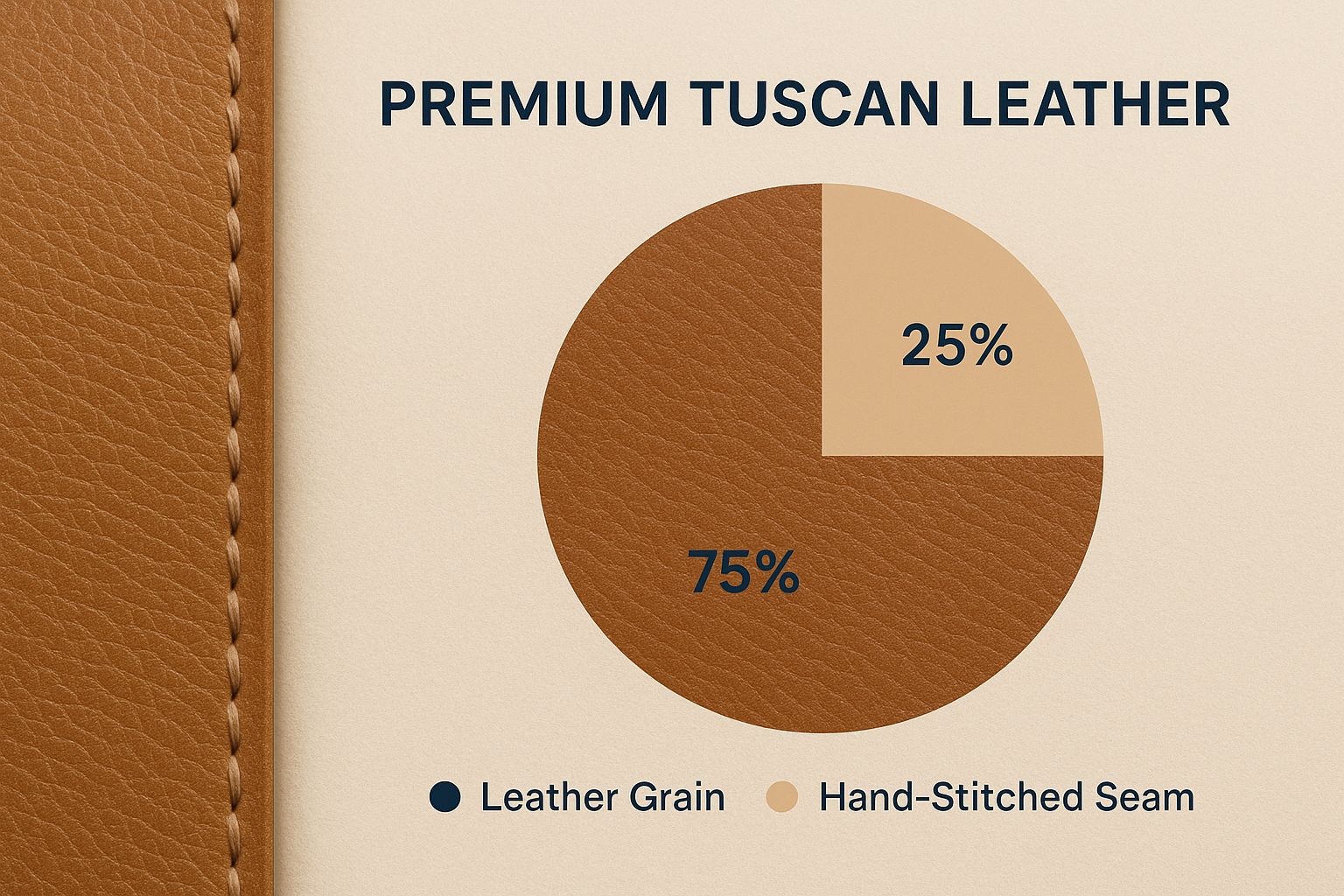
That unique texture comes from preserving the hide's natural surface, a hallmark of high-grade leather that mass-produced alternatives just can't replicate.
Understanding Leather Grades
Think of leather grades like cuts of prime beef—some are simply better than others. The grade doesn't just determine how a bag looks on day one, but how beautifully it will age over the next ten, twenty, or even thirty years.
Here’s a quick rundown of the most common types of Italian leather you'll encounter.
Comparing Common Types of Italian Leather
| Leather Type | Key Characteristics | Durability | Best For |
|---|---|---|---|
| Full-Grain Leather | The highest quality. It's the top layer of the hide, with all its natural markings and imperfections intact. | The strongest and most durable type available. Develops a beautiful patina over time. | Investment pieces like briefcases, travel bags, and heirloom-quality handbags. |
| Top-Grain Leather | The second-best. The surface is sanded to remove blemishes, giving it a more uniform look. | Very strong and durable, but slightly less breathable than full-grain. | Everyday totes, crossbodies, and accessories that need to be resilient but flawless. |
| Genuine Leather | A misleading term. It's real leather, but made from the lower layers of the hide after the top is split off. | Less durable and will show wear much faster. Often has an artificial grain stamped on it. | Budget-friendly items or pieces that won't see heavy daily use. |
For a true investment piece, always aim for full-grain leather. Its natural surface tells a story and is the foundation of a bag that gets better with every single use.
The Signature of Vegetable Tanning
Beyond the grade, the tanning method is what gives Tuscan leather its soul. As we've touched on, the traditional vegetable tanning process is a true art form. It uses natural tannins from tree bark and plants, creating a finished product that is eco-friendly, smells incredible, and is rich in character.
This stands in stark contrast to chrome tanning, a much faster and cheaper industrial process that relies on chromium salts and harsh chemicals. While efficient, chrome-tanned leather often has a faint chemical smell and lacks the warmth and depth of its vegetable-tanned counterpart. It simply doesn't age with the same grace.
Engaging Your Senses to Spot Quality
Sometimes, the best way to identify a high-quality Tuscany leather bag is to just trust your senses. You don’t need to be an expert to notice the little things that set authentic craftsmanship apart.
Here’s what to look—and feel—for:
- The Smell: Real vegetable-tanned leather has a distinct, rich, and earthy aroma. If a bag smells like plastic or chemicals, that's a major red flag for a cheap tanning process.
- The Touch: Run your hand across the surface. Full-grain leather feels supple, warm, and has a slight texture to it. It should never feel stiff, plasticky, or perfectly smooth like a synthetic material.
- The Look: Get up close and examine the grain. Real full-grain leather will have minor imperfections—tiny scars, pores, or slight variations in texture. These aren't flaws; they are signs of authenticity that prove the leather is natural and unprocessed.
By combining this sensory check with an understanding of leather grades, you’ll be ready to make a smart choice. It’s also helpful to see how Tuscany Leather compares to other Italian brands, as this will sharpen your eye for what true quality looks and feels like.
Finding Your Signature Tuscany Bag Style
Choosing a Tuscany leather bag isn't just about finding a place to stash your keys and phone. It's about picking a partner for your daily life—a functional piece of art that says something about you before you even speak. Let's move beyond a simple catalog and dig into the personality behind each design.
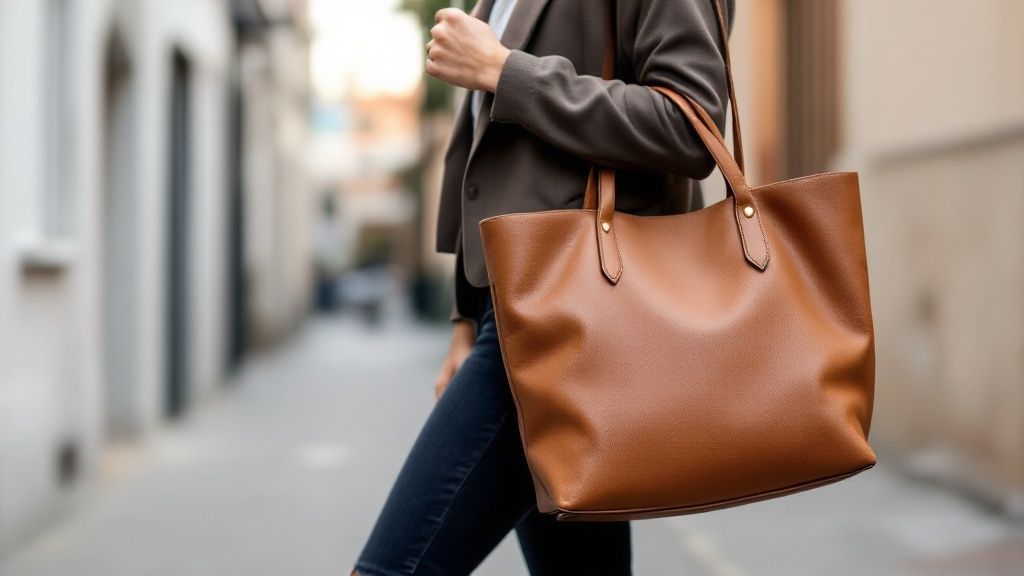
The right bag shouldn't just be an accessory; it should feel like it was made for you, effortlessly fitting your routine while elevating your style.
The Professional Powerhouse: The Briefcase and Satchel
For the driven professional, a structured leather briefcase or a sharp satchel is the ultimate power move. Its clean lines and organized interior project an image of confidence, control, and an eye for detail. Think of it as the sartorial equivalent of a firm handshake.
These bags are built for business. They come with dedicated compartments for laptops, documents, and other essentials, keeping everything secure and easy to find. A high-quality leather briefcase in a classic shade like deep brown, black, or cognac is a timeless investment that never fails to complement a suit or sharp business-casual look.
This appreciation for genuine Italian artisanship is global. Tuscany Leather, for example, exports its goods to around 190 countries through a network of over 1000 partners. The brand processes roughly 300 orders a day and engraves 20,000 products annually, with exports making up about 84% of its revenue.
Everyday Elegance: The Tote and Crossbody
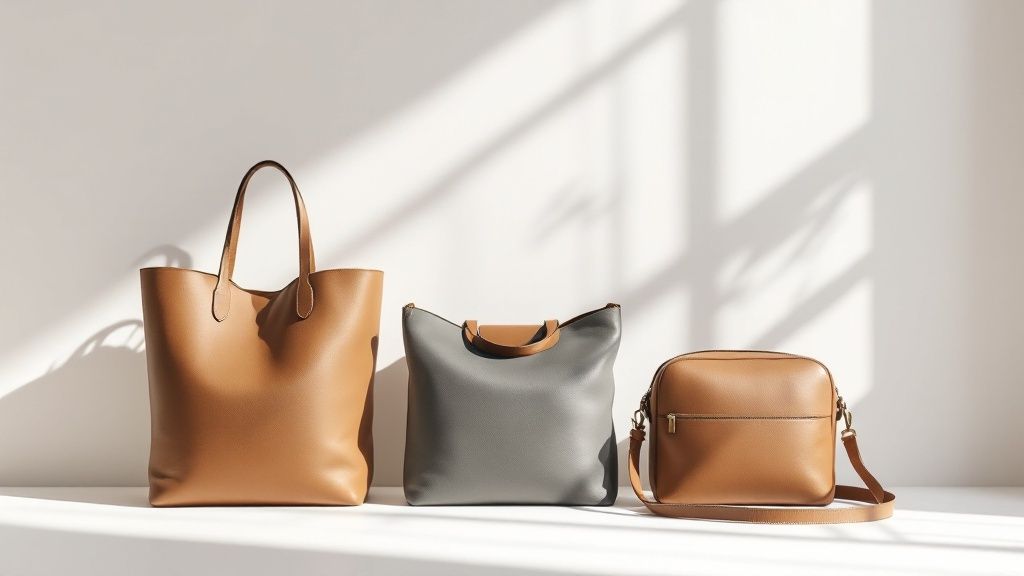
When your day is less about the boardroom and more about navigating a busy, multifaceted life, the tote and crossbody are your trusted allies. A soft, unstructured leather tote carries a sense of relaxed, effortless style. It's spacious enough for everything—a tablet, a book, a spare pair of flats—making it perfect for weekend errands or a casual day at the office.
The crossbody, on the other hand, is all about freedom. It keeps your hands free while your valuables—phone, wallet, keys—stay secure and close. This style is a lifesaver for travelers, busy parents, or anyone who values convenience but refuses to sacrifice style. A great leather crossbody can easily go from a daytime exploring companion to a chic evening accessory.
A tote bag says, "I am prepared for anything," while a crossbody whispers, "I am free to go anywhere." The choice reflects not just what you carry, but your entire mindset.
The Sophisticated Traveler: The Duffle and Backpack
For those with a bit of wanderlust, a leather duffle bag is the peak of travel style. It's a world away from a generic nylon suitcase, signaling a traveler who appreciates durability, elegance, and the romance of the journey itself. A leather duffle is roomy enough for a weekend trip and rugged enough to handle transit, all while looking better with every scuff and mark it collects.
In the same vein, the modern leather backpack has shaken off its old academic image. It's now a chic, functional choice for urban commuters and travelers. It gives you ergonomic comfort and plenty of storage, but in a refined package that looks just as sharp with a blazer as it does with a casual jacket.
So, how do you choose? It’s all about matching the bag to the rhythm of your life.
- For the Career-Focused: A structured briefcase commands respect.
- For the Daily Multitasker: A supple tote offers versatile grace.
- For the Adventurous Spirit: A durable duffle is the perfect travel partner.
Each style of Tuscany leather bag is a distinct choice. By understanding the personality behind each design, you can find a piece that not only works for you but truly feels like you. To help narrow down the search, check out our curated list of must-have leather bags for women.
Caring For Your Leather Bag to Ensure It Lasts
A genuine Tuscany leather bag isn't just an accessory; it's a lifelong companion, designed to develop more character and beauty with every passing year. This isn't just a romantic idea—it's the reality of high-quality, vegetable-tanned leather. But like any fine natural material, it needs a little care to help it age gracefully. Think of it less as a chore and more as a simple ritual that protects your investment.
Proper maintenance keeps the leather supple, its color rich, and its structure sound. A few simple habits will allow it to withstand daily use while developing that gorgeous, coveted patina. This guide breaks down the straightforward, effective ways to clean, condition, and store your bag.
Routine Cleaning and Conditioning
The real secret to long-term leather health is consistency. A quick wipe-down here and some conditioning there prevents the buildup of dirt and oils that can break down the material over time.
For daily upkeep, just use a soft, dry microfiber cloth to gently wipe away dust after you use it. This simple step keeps tiny abrasive particles from settling into the grain. If you’ve got a more stubborn spot, lightly dampen the cloth with a little water—never soak the leather—and gently work on the area.
Conditioning is like moisturizer for your skin. It puts back the natural oils inside the leather, stopping it from getting dry, brittle, and cracked.
- Frequency: Condition your bag every 3-6 months, depending on your climate and how often you carry it. If you live somewhere dry or your bag sees a lot of sun, you might need to do it more often.
- Application: Put a small amount of a high-quality leather conditioner (one made for vegetable-tanned leather is best) onto a clean cloth. Rub it into the bag using small, circular motions.
- Finishing: Let the conditioner soak in for about an hour. Then, grab a separate clean cloth and buff off any excess. This brings out a beautiful, subtle sheen.
Always test a new cleaning or conditioning product on a small, hidden spot first—like the underside of a strap. This way, you can be sure it won't cause any discoloration before you apply it all over.
Storing Your Tuscany Leather Bag Properly
How you store your bag is just as important as how you clean it. The wrong storage can lead to a misshapen silhouette, mildew, or faded color.
When you’re not using it, stuff your bag with acid-free paper or even an old T-shirt to help it keep its shape. Just avoid newspaper, since the ink can easily transfer to the lining. Pop it inside the breathable dust bag it came with; this protects it from dust but still lets the leather breathe. Never, ever store your leather bag in plastic—it traps moisture and is a recipe for mildew.
Finally, find a cool, dry spot for it away from direct sunlight. The sun’s rays can cause the rich, natural dyes in vegetable-tanned leather to fade over time.
Handling Common Leather Issues
Even with the best care, life happens. Here’s how to handle a couple of common problems without panicking.
- Minor Scratches: For light surface scuffs, you can often just rub the scratch with a clean fingertip. The natural oils from your skin are sometimes enough to buff it right out. If it's a little deeper, apply a tiny dab of leather conditioner and gently rub it in.
- Water Spots: Caught in the rain? Don't stress. Blot the water spots immediately with a dry cloth to absorb the moisture. Whatever you do, don't use a hairdryer or any other heat source—that will cause more damage. Let the bag air dry naturally, away from direct heat.
Your Guide to Choosing the Perfect Bag
Now that you've got a handle on the quality, craftsmanship, and styles that make Tuscany leather so special, it's time for the fun part: picking the one that's right for you. This is where all that knowledge comes together in a simple, practical way. It’s about matching your real-world needs with the timeless artistry of Italian leather.
Making the right call means asking the right questions. Your bag should be more than just a beautiful object; it needs to be a functional partner that fits right into your daily life. Think of it as an investment—the perfect one will be by your side for years.
Define Your Daily Needs
First things first, let's talk function. A bag that looks incredible but can’t fit your laptop is just an expensive accessory. Get real about what you carry every single day and how you get around. This little reality check is the most important step.
Ask yourself these key questions:
- What are your non-negotiables? Make a list of everything you must carry, from your tech and keys to that emergency snack.
- How do you commute or travel? Do you need a hands-free crossbody for navigating public transit, or a sturdy tote that can sit on the passenger seat of your car?
- What's your work environment like? A structured briefcase sends a powerful message in a corporate setting, while a softer satchel might feel more at home in a creative studio.
Answering these honestly will quickly point you toward the styles that actually work for your lifestyle. For a little more guidance, check out our article on how to choose your first luxury leather bag.
Verifying Authenticity and Quality
Once you’ve zeroed in on a style, the next move is to make sure you're getting the genuine article. Authentic Tuscany leather has a few tell-tale signs that set it apart from fakes and knock-offs. The best tools you have are your own senses.
A real Tuscany leather bag will have a rich, earthy smell from the vegetable tanning—never a chemical or plastic-like odor. The full-grain leather should feel supple yet strong, and you should be able to see tiny, natural variations in the grain. Those little imperfections are your proof that it’s real hide, not a synthetic copy. Also, keep an eye out for a tag from the Consorzio Vera Pelle Italiana Conciata al Vegetale (The Genuine Italian Vegetable-Tanned Leather Consortium), which is a mark of certified quality.
Investing in a genuine Tuscany leather bag means choosing a piece that is not only beautiful but also ethically produced and built to last. It’s a commitment to sustainable luxury and timeless style.
This focus on durable, high-quality goods is what the Italian luxury market is built on. The luxury leather goods sector in Italy is projected to hit a market value of around $1.47 billion in 2025, with revenues per person reaching about $25.09. These numbers reflect a huge global demand for items that offer both lasting value and ethical craftsmanship. You can discover more insights about the Italian luxury leather market on Statista.com. When you choose an authentic piece, you're not just buying a bag; you're becoming part of a celebrated tradition of excellence.
Still Have Questions? Let’s Clear Things Up
Choosing a high-quality leather bag is a big decision, and it’s natural to have a few questions before you commit. To make sure you feel totally confident, we’ve put together answers to some of the most common things people ask about Tuscany leather bags.
Think of this as a final run-through—a quick guide to reinforce what makes these pieces so special. After this, you’ll have everything you need to pick a bag you’ll love for years.
What’s the Big Deal with Vegetable-Tanned Leather?
The real magic of any Tuscany Leather piece is in how it’s made, and that starts with the vegetable-tanning process. This isn’t a modern, chemical-heavy shortcut. It’s an old-world, eco-friendly method that uses natural tannins found in things like tree bark and plants. No chromium, no harsh additives.
It’s a slow, deliberate craft that can take weeks, giving the tannins time to soak deep into the hide. This is what gives the leather its signature rich color, that unmistakable earthy aroma, and most importantly, the ability to develop a gorgeous patina over time. Your bag won’t just last—it will get better, telling the story of your life with every mark and burnish.
How Can I Be Sure It’s a Real Tuscany Leather Bag?
The best sign of authenticity is the official certificate from the "Consorzio Vera Pelle Italiana Conciata al Vegetale" (The Genuine Italian Vegetable-Tanned Leather Consortium). Always look for this trademarked tag—it’s a rock-solid guarantee that you’re getting the real deal, made according to centuries of tradition.
Beyond the paperwork, just use your senses. Real vegetable-tanned leather has a unique, pleasant smell—nothing like chemicals. It feels supple and rich, and you’ll notice tiny, natural imperfections that prove it’s not a synthetic imitation. If a bag smells like plastic or looks unnaturally uniform, it’s a red flag for cheap processing.
Are Tuscany Leather Bags Really Worth the Investment?
Without a doubt. While the upfront cost is more than a mass-produced bag, you're not just buying an accessory; you're investing in quality that lasts. Thanks to the superior materials and expert Italian craftsmanship, these bags are built to endure for decades with a little care.
These aren't fast-fashion items that will look dated next season. They're timeless classics that actually gain value—both in looks and in sentiment—as they age. In the long run, it's a far more sustainable and economical choice than buying and replacing cheaper bags every year or two. For answers to other common inquiries about accessories, you might also find their general FAQs helpful.
At Databazaar.com, we’re incredibly proud to offer a curated collection of authentic Tuscany Leather bags that carry this rich heritage forward. Take a look at our selection and find a timeless piece of Italy to take with you on your journey.