Skip to content


How to Remove Stains from Leather Bags: A Step-by-Step Guide
Before you grab the first cleaner you see, stop. Rushing to treat a stain on a luxury leather bag is the fastest way to make a small problem a permanent one. Think of it like a surgeon preparing for an operation—the prep work is what ensures a successful outcome.
What You Must Do Before Treating Any Leather Stain
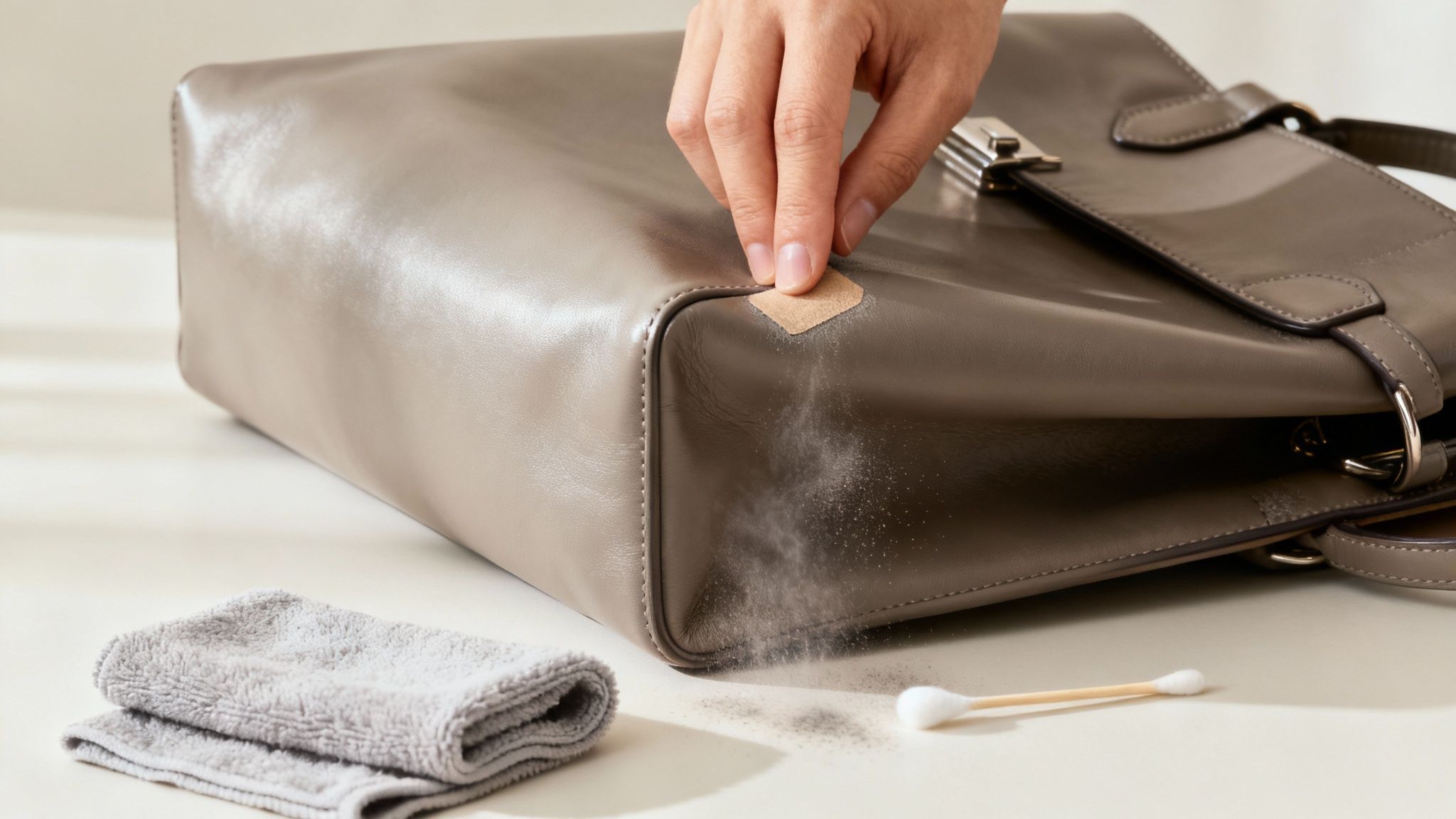
Skipping these early steps is the number one reason for irreversible damage. You could end up with discoloration, dried-out patches, or a weirdly altered texture that ruins the look and feel of your bag. So, take a breath and do these three things first.
Know Your Leather Type
Your entire cleaning strategy hinges on one thing: the type of leather you're working with. Not all leathers are created equal, and what works for one can destroy another.
Is your bag made of smooth, finished leather? This kind usually has a protective topcoat, making it a bit more resilient against spills. Patent leather, with its glossy finish, is also relatively easy to wipe down but can be a magnet for dye transfer.
Then you have the delicate ones: suede and nubuck. Their napped, velvety surfaces are incredibly porous and will soak up liquids in seconds. Using a cleaner meant for smooth leather on suede is a recipe for disaster.
The All-Important Patch Test
Once you know your leather, you need to perform a patch test. This is the most critical step to protect your investment. I don’t care if a cleaner says it’s “100% gentle”—you have to test it first.
Find a hidden spot on your bag to do the test. Good options include:
- Inside a pocket seam
- Underneath a flap
- The part of the bag covered by a strap buckle
Just dab a tiny amount of your cleaner onto a cotton swab and apply it to that hidden area. Let it dry completely, then check for any changes in color or feel. If it looks good, you’re safe to proceed. This two-minute check can save you a lifetime of regret.
A Gentle Pre-Cleaning Routine
Finally, give your bag a quick wipe-down. Trying to clean a stain on a dusty surface just grinds the dirt deeper into the leather’s grain, creating a bigger mess.
Use a soft, dry microfiber cloth to gently go over the entire bag. This simple action ensures you’re treating the actual stain, not just smearing surface grime around. Learning what not to do is just as important, similar to understanding the common upholstery cleaning mistakes to avoid.
The impulse to immediately scrub a fresh stain is strong, but it's the worst thing you can do. Patience and preparation are your best tools. A careful approach preserves the leather's integrity, ensuring your bag looks beautiful for years to come.
There's a reason the leather care market is so huge—the right products work. In 2023, leather cleaners made up about 64.3% of all sales in the industry, showing just how vital specialized formulas are for stain removal. This highlights why quality matters when caring for high-end goods, like the expertly crafted pieces you'll find in our collection of Tuscany leather bags.
Assembling Your Essential Cleaning Toolkit
Trying to tackle a stain on a beautiful leather bag without the right tools is a recipe for disaster. You might think you're helping, but you could be setting that stain permanently. Having a small, dedicated kit ready to go means you can act fast when spills happen, which is often the difference between a minor cleanup and a lasting mark. This isn't about spending a fortune; it's about having the right, simple items on hand to protect your investment.
Your first line of defense will always be soft, clean cloths. I swear by high-quality microfiber cloths because their tiny fibers are incredible at lifting dirt and soaking up moisture without scratching the leather. Keep a few clean ones tucked away. You'll also want cotton swabs and cotton balls for getting into tight corners or handling tiny, precise stains.
Choosing Your Cleaning Agents
When it comes to leather cleaners, my motto is simple: less is more. For general upkeep or a very light, fresh stain, you can often get by with a simple DIY mix. Just a few drops of a gentle, pH-neutral, non-moisturizing soap—think clear dish soap or even baby shampoo—mixed with distilled water can work wonders. Always use distilled water; the minerals in tap water can leave behind ugly spots and residue.
For anything more stubborn, however, a commercially prepared leather cleaner is your safest option. There's a reason these products exist, and the market for them is booming. In fact, the global leather cleaner market is already worth over USD 200 million and is expected to sell more than 350 million units by 2033 as more people realize specialized care is non-negotiable for luxury goods.
What You Must Absolutely Avoid
Knowing what not to use is just as crucial as knowing what to use. So many common household cleaners are absolute poison for fine leather. Please, keep these far, far away from your bag:
- Rubbing Alcohol: It will literally strip the finish and oils right out of the leather, leaving it dry, cracked, and discolored.
- Vinegar: It’s far too acidic. Vinegar will eat away at the leather’s protective top coat and can permanently alter the dye.
- Bleach and Ammonia-Based Cleaners: These are incredibly harsh chemicals. They will cause severe, irreversible damage to the leather’s structure. No coming back from that.
- Saddle Soap (on most bags): While it’s great for rugged work boots, saddle soap is too aggressive for the delicate, finished leather on most handbags. It often contains waxes and harsh lye that leave a sticky film. Understanding the importance of non-soapy cleaning solutions is key to avoiding this kind of buildup.
The goal is to lift the stain, not attack the leather. Harsh chemicals create a bigger problem than the one you started with, often leading to costly professional repairs or a ruined bag.
Putting together this simple toolkit is a core part of being a responsible owner. With these items ready, you’re prepared to handle spills the right way and keep your bag looking beautiful for years. For a complete overview of leather maintenance, be sure to check out our full guide on how to care for leather bags.
Your Tactical Guide to Tackling Common Stains
Every stain tells a different story, and each one needs its own strategy. This is your playbook for the most common culprits you’ll face. Forget the generic advice—we’re diving into what actually works for each type of blemish so you can act with confidence when an accident happens.
Knowing the right approach is everything. In fact, a recent industry report noted that roughly 70% of leather bag owners now reach for specialized leather care products instead of all-purpose household cleaners. It's a smart shift that shows people get it: preserving a luxury bag means using the right tools for the job. You can dig deeper into that trend in the full handbag cleaning and repair service market analysis.
This simple decision tree lays out the fundamental choice you have when a stain appears: pick the safe, effective tools or risk causing irreversible damage.
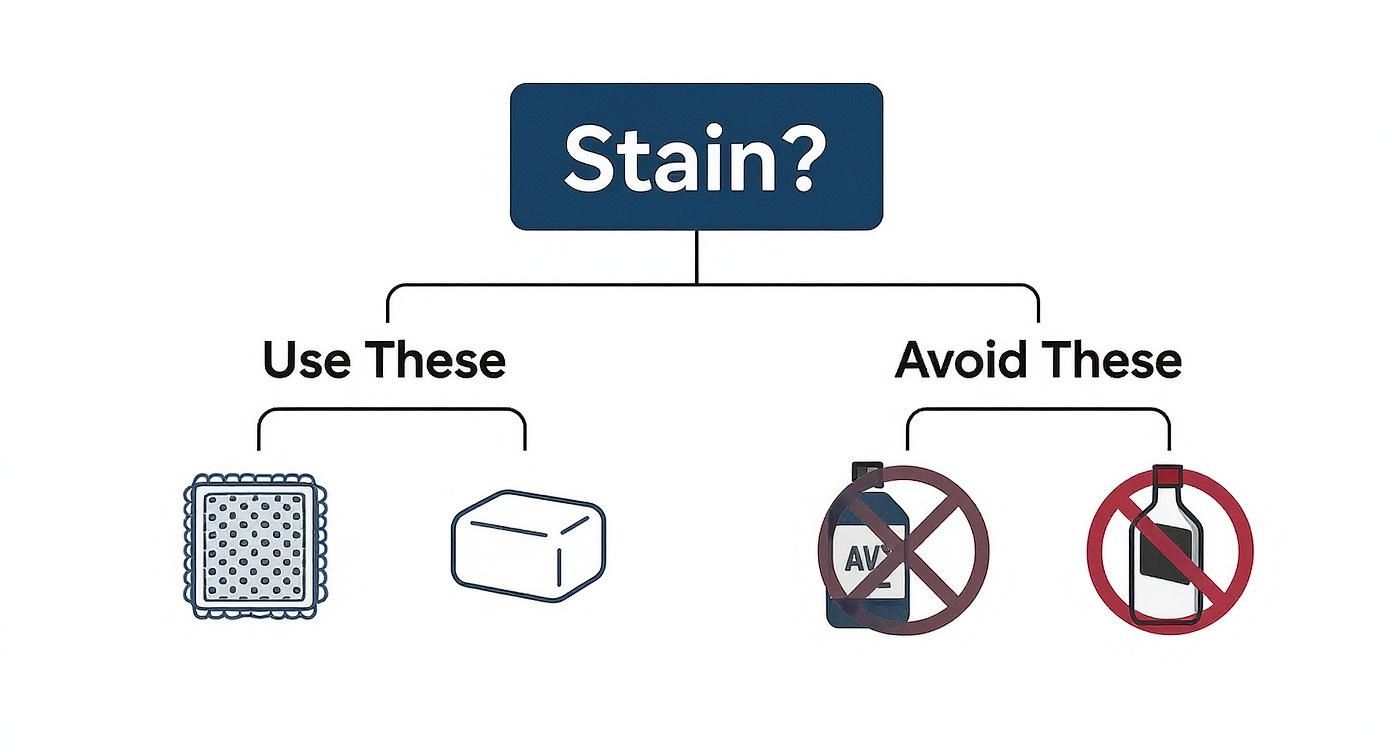
The key takeaway is clear. Success starts with avoiding harsh agents like bleach or vinegar, which will strip the leather of its natural finish and color in a heartbeat.
Here’s a quick-reference guide to the most common stains and the best ways to handle them.
Stain Removal Methods at a Glance
| Stain Type | Recommended Cleaning Agent | Technique | Cautionary Note |
|---|---|---|---|
| Grease/Oil | Cornstarch or talcum powder | Blot excess, cover stain with powder, let sit overnight, then gently brush off. | Never rub an oil stain; it will only push the grease deeper into the leather. |
| Fresh Ink | Leather-specific ink remover stick | Dab gently from the outside of the stain inward with a cotton swab. | Act fast! Old ink is a professional job. Avoid rubbing alcohol at all costs. |
| Water Spots | Distilled water on a damp cloth | Gently wipe the entire panel from the center outward to blend the moisture. | Let the bag air dry completely, away from direct heat or sunlight. |
| Dye Transfer | High-quality finished leather cleaner | Apply cleaner to a cloth (not the bag) and rub gently in a circular motion. | Stop if the stain persists after a few tries to avoid damaging the finish. |
This table is your starting point, but let’s break down the why and how for each scenario.
Conquering Grease and Oil Stains
There’s nothing quite like that sinking feeling when a dark, greasy spot appears on your beautiful bag. Whether it’s from a stray french fry or a leaky lotion bottle, oil penetrates leather fast. The secret weapon here isn't a liquid cleaner—it’s an absorbent powder.
Your best friends for this job are cornstarch or talcum powder. These fine powders are exceptionally good at drawing the oil out of the leather's pores before it has a chance to set.
Here’s the game plan:
- Blot Immediately: The second you notice the spill, gently blot any excess oil with a clean, dry microfiber cloth. Do not rub or press hard—that just forces the oil deeper into the material.
- Apply the Powder: Generously cover the entire stain with a thick layer of cornstarch or talcum powder. Don't be shy; you want to create a substantial mound over the whole spot.
- Let It Sit: This part requires patience. Leave the powder on for at least a few hours, but overnight is even better. This gives it plenty of time to work its magic and absorb the grease.
- Brush Away: The next day, gently brush the powder off with a soft-bristled brush. The powder should have lifted most, if not all, of the oil.
If a faint spot remains, don't panic. Just repeat the process. This method is so effective because it works with the porous nature of leather, not against it.
Dealing with Fresh Ink Marks
An accidental pen mark can feel like a death sentence for a leather bag, but if you act fast, you can often save it. The trick is to tackle it while the ink is still fresh. Once an ink stain sets, it becomes notoriously difficult and usually requires a professional's touch.
For a new ink mark, avoid harsh solvents like rubbing alcohol at all costs. It will absolutely strip the leather's finish. Instead, your best bet is a specialized leather ink removal stick or a very gentle, alcohol-free solution designed for the job.
Expert Tip: When tackling a fresh ink stain, always work from the outside of the mark inward. This prevents you from accidentally spreading the ink and making the smudge bigger. Use a cotton swab for precision and dab lightly.
If you don't have a specific ink remover on hand, a slightly damp cloth with a tiny drop of pH-neutral soap can sometimes help lift a very fresh, minor mark. Just remember to always do a patch test on a hidden area first.
Erasing Water Rings and Spots
It’s ironic that water, the universal cleaner, can leave such prominent stains on leather. Water spots appear when minerals and impurities get left behind after the water evaporates, creating a distinct, dark ring.
The goal here isn't to remove the water but to blend the edges of the stain into the surrounding leather so it dries evenly.
To do this, take a clean, damp cloth (use distilled water if you can, to avoid adding more minerals) and gently wipe the entire panel where the stain is. Work from the center of the stain outward, feathering the moisture into the unstained areas. This helps the whole section dry at the same rate, preventing a new ring from forming.
Once you’ve dampened the area, just let it air dry completely, away from any direct heat or sunlight.
Fighting Stubborn Dye Transfer
Ever notice a blueish tint on your light-colored bag after wearing it with new jeans? That's dye transfer, and it's one of the most frustrating stains to deal with. The dye from dark, unwashed fabrics can migrate right onto your leather's surface, especially if there's any friction or moisture involved.
Tackling dye transfer requires a good-quality leather cleaner specifically made for finished leather.
- First, apply a small amount of the cleaner to a clean microfiber cloth—never directly onto the bag.
- Next, gently rub the stained area in a circular motion with very light pressure.
- Then, wipe away any residue with a separate, clean, slightly damp cloth.
- Finally, allow the area to air dry completely.
Because dye transfer can be so stubborn, you might need to repeat this a couple of times. If the stain doesn't lift after a few gentle attempts, it’s wise to stop and consult a professional. Over-scrubbing can easily damage the leather's finish, creating a much bigger problem than the one you started with.
The Final Step: Restoring and Conditioning Your Bag
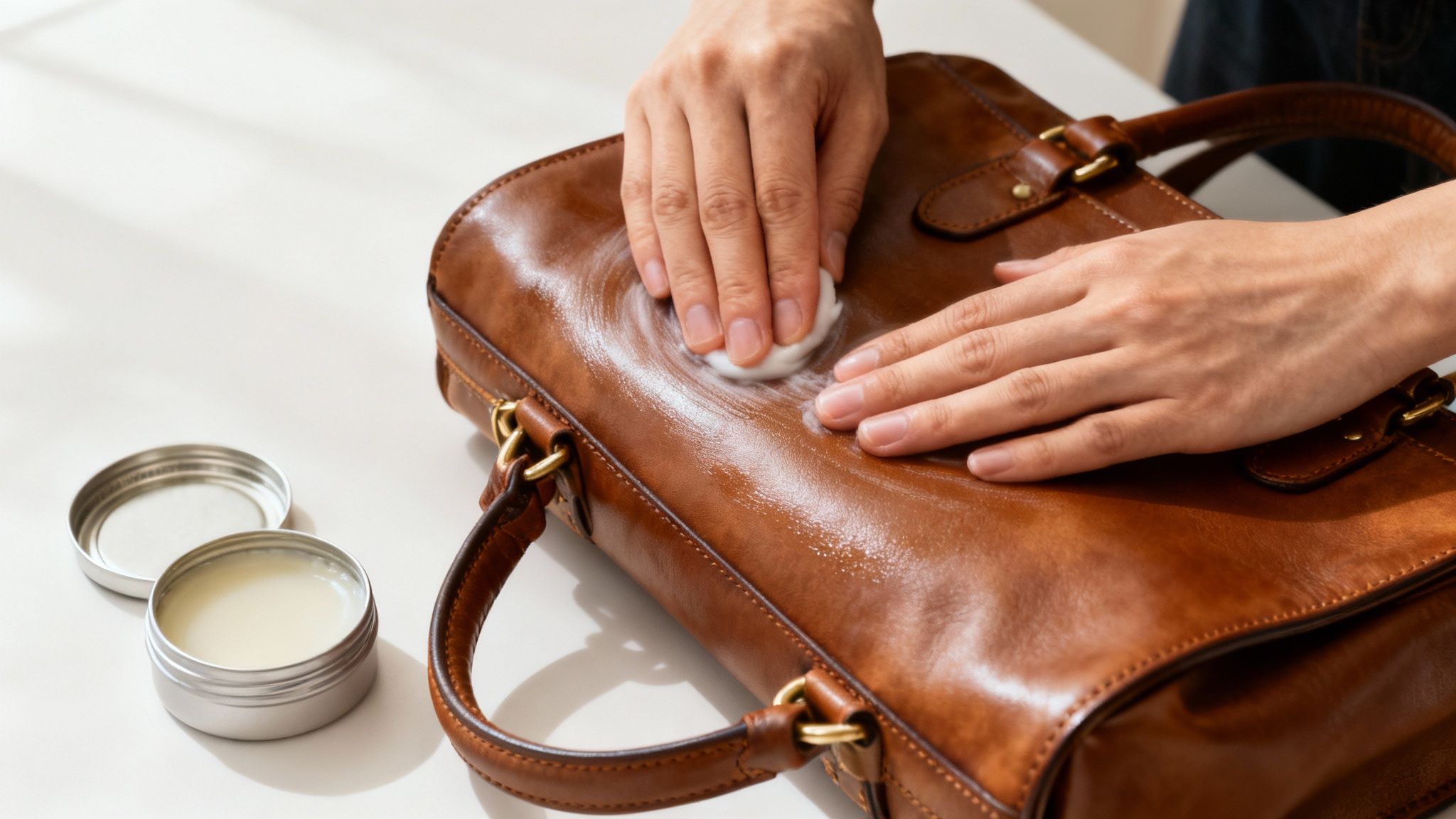
Successfully removing a stain is a huge relief, but your work isn't quite done yet. The cleaning process, even a gentle one, can strip away some of the leather's natural oils, leaving it thirsty and vulnerable. Think of this final stage as the essential aftercare that locks in your repair and brings your bag back to its original, supple state.
If you skip this crucial step, you'll likely notice the treated area looks dull or feels stiff compared to the rest of the bag. Over time, that dryness can lead to permanent cracking. This is where proper drying and conditioning make all the difference, ensuring the leather remains healthy, flexible, and ready for its next outing.
The Art of Proper Air-Drying
Patience is your most important tool here. After any cleaning, the leather will be slightly damp, and how you dry it will determine its final texture and shape. The biggest mistake you can make is trying to speed things up with heat.
Never, ever use a hairdryer, place your bag near a radiator, or leave it in direct sunlight. Intense heat pulls moisture out way too quickly, causing the leather fibers to constrict and shrink. The result is a stiff, brittle, and sometimes warped material that is nearly impossible to fix.
Instead, the safe method is simple:
- Stuff the bag. To help it hold its shape and prevent creasing, lightly stuff your bag with acid-free tissue paper or a clean, old towel.
- Find the right spot. Place it in a well-ventilated room at normal temperature, far away from any direct heat sources or sunbeams.
- Let it be. Allow the bag to air dry completely. This could take anywhere from a few hours to a full day, depending on how damp it was. Don't rush it.
Why Conditioning Is Non-Negotiable
Once your bag is completely dry to the touch, it's time to reintroduce the moisture it lost. That's exactly what a quality leather conditioner is for. It replenishes the essential fats and oils that keep the leather soft, flexible, and protected from the elements.
Conditioning is what restores that beautiful, subtle sheen and luxurious feel to your bag. It also acts as a protective barrier against future minor spills and scuffs, making your bag more resilient in the long run.
A good leather conditioner is like a moisturizer for your skin. It nourishes the material from within, preventing dryness and premature aging, ensuring your investment remains beautiful for years.
How to Apply Conditioner Correctly
Applying conditioner is a simple but delicate process. Remember, a little goes a long way, and the right technique ensures an even, beautiful finish.
First, choose a high-quality cream or lotion-based conditioner formulated for fine leather goods. Avoid heavy oils or waxes that can clog the leather's pores or leave a greasy residue. Once you have your product, apply a small, pea-sized amount to a clean, soft microfiber cloth—never directly onto the bag.
Using gentle, circular motions, work the conditioner into the leather. Pay special attention to the area you just cleaned, but it’s always best to condition the entire panel (or even the whole bag) for a uniform look.
After you've applied a thin, even layer, let it sit for about 15-30 minutes. This gives the leather time to fully absorb the nourishing ingredients.
Finally, take a second clean, dry cloth and gently buff the entire surface. This removes any excess product and brings out a lovely, natural-looking luster. This final touch is essential for anyone wanting to maintain the timeless craft of their luxury bags. You can explore more on this topic by reading our complete guide to Tuscany leather craft and care.
Proactive Care to Prevent Future Stains
While knowing how to rescue your bag from a spill is a great skill, the real goal is to never need it. Moving from damage control to prevention is the single best way to preserve the beauty and value of your luxury bag for the long haul. A few smart habits can build a powerful defense against accidents and daily wear.
This isn't about hiding your bag away in a closet; it's about making small, clever adjustments to how you use and store it. These simple routines dramatically lower the risk of stains, keeping your investment looking pristine for years.
Create an Invisible Shield
One of the most effective tools in your arsenal is a high-quality leather protectant spray. Think of it as an invisible shield for your bag. These sprays create a barrier on the leather's surface that repels water and prevents oils from setting in, buying you precious seconds to blot a spill before it becomes a permanent mark.
When you're choosing a spray, make sure it’s formulated for your specific type of leather—this is especially critical for delicate materials like suede or nubuck. And always, always do a patch test on a hidden spot first to make sure there’s no discoloration.
How often should you reapply it?
- For bags in heavy rotation: A fresh coat every two to three months will keep that protective barrier strong.
- For occasional-use bags: Treating them once or twice a year is plenty to keep them safe in storage and ready for an outing.
Cultivate Smart Everyday Habits
How you handle your bag day-to-day has a huge impact on its condition. It's the small, consistent actions that separate a well-loved bag from one that looks prematurely worn. You don’t have to be precious with it—just mindful.
A few practical adjustments can make all the difference:
- Contain the Chaos: Keep pens, makeup, and lotions inside their own dedicated pouches. A leaky pen or a lipstick that’s lost its cap are the top culprits behind those stubborn, deep-set stains.
- Watch Out for Dye Transfer: Be extra careful when pairing a light-colored bag with brand-new dark denim. That indigo dye loves to rub off, leaving a bluish tint that is notoriously difficult to remove.
- Avoid the Floor: Public floors are a minefield of dirt, grime, and mystery spills. Make it a habit to place your bag on your lap, a spare chair, or a bag hook instead.
The best defense against stains is a good offense. By anticipating common risks—like a spilled drink or dye from new clothing—you can avoid most problems before they ever happen.
Master the Art of Proper Storage
How you store your bag when it’s not in use is just as crucial as how you care for it on the go. Storing it the wrong way can lead to dust buildup, misshapen silhouettes, and even mildew if you live in a humid climate.
When you’re ready to put your bag away, always follow these simple rules. First, empty it out completely to prevent the lining from stretching or developing odd lumps. Then, stuff it lightly with acid-free tissue paper or an old, clean t-shirt to help it hold its beautiful structure.
Finally, slip it into its original dust bag. This simple cover protects it from dust, sunlight, and accidental scratches. Find a spot on a shelf in a cool, dry place with good airflow. Whatever you do, never hang your bag by its straps for long periods—this will cause them to stretch and weaken over time. These practices are especially vital for preserving high-end pieces, a topic we explore more in our guide on what makes Italian leather bags so exceptional.
Common Questions About Leather Bag Stain Removal
Even with the best guide, certain "what-if" scenarios always pop up right when you’re about to tackle a stain. It’s that moment of hesitation before you act. This is your troubleshooting guide for those tricky situations.
Let's clear up some of the most common questions we get, so you can move forward with confidence.
Can I Use Rubbing Alcohol to Remove Ink Stains?
This is a big one, and the short answer is no—please don’t. While it feels like a strong ink stain needs a strong solvent, rubbing alcohol is far too harsh for leather. It acts like a chemical stripper, dissolving the protective top coat and pulling out the essential oils that keep the leather supple.
What you'll likely end up with is a bleached-out, discolored patch. That area will become dry, brittle, and eventually start to crack. For a luxury bag, the risk of creating irreversible damage is just too high.
Key Takeaway: The potential for permanent damage from rubbing alcohol far outweighs any chance of it working. It's much safer to use a dedicated leather ink remover stick or, if the bag is valuable, take it straight to a professional.
What Should I Do If My Leather Bag Gets Soaked in Rain?
Getting caught in a downpour is every leather bag owner's nightmare, but don't panic. Fast, gentle action can save it from water spots and warping. Your goal is simple: get the water off evenly and let the bag dry slowly and naturally.
As soon as you get inside, here’s what to do:
- Empty the Bag Immediately: Take everything out. This prevents moisture from getting trapped inside and helps the bag hold its shape as it dries.
- Blot, Don't Rub: Grab a clean, dry microfiber cloth and gently blot the water off the surface. If you rub, you’ll just push the moisture deeper into the leather’s pores and risk damaging the grain.
- Stuff It for Shape: Loosely fill the bag with crumpled newspaper or absorbent cloths. This is crucial for helping it keep its original silhouette and for wicking away any interior moisture.
- Let It Air Dry Naturally: Find a spot in a well-ventilated room, far away from direct heat sources like a radiator, vent, or sunlight. Heat is the enemy here—it will cause the leather to shrink, stiffen, and crack. Be patient; it might take a full day or two to dry completely.
- Recondition Thoroughly: Once you're 100% sure it's dry (and not a moment sooner), apply a high-quality leather conditioner. This step is non-negotiable, as it replenishes the oils the water stripped away, bringing back its softness and flexibility.
How Is Cleaning Suede Different from Smooth Leather?
The difference is night and day, and it all comes down to the leather's surface. Smooth leather has a finished, sealed top layer that gives it a bit of a shield against spills. You're essentially cleaning the finish, not the leather itself.
Suede, however, is the complete opposite. It's an unfinished leather with a napped, fuzzy texture. Its surface is incredibly porous and acts like a tiny sponge, absorbing liquids and oils almost on contact and pulling them deep into the fibers. Using water or a typical liquid cleaner will instantly create dark spots, matte the delicate nap, and permanently ruin its velvety feel.
Because of this, suede requires its own special toolkit and a totally different strategy:
- Your Tools: A dedicated suede brush and a suede eraser are your best friends. These are designed for dry stains, scuffs, and reviving the nap.
- Your Technique: For a liquid spill, blot immediately with a cloth and then cover the spot with a generous amount of cornstarch or talcum powder. Let it sit to absorb the stain, then gently brush the powder away once it’s dry.
- What to Avoid: Never, ever use creams, oils, waxes, or any water-based cleaners on suede.
Knowing the difference is vital if you own bags made from various materials. For a deeper dive into leather types, our guide on everything you need to know about Italian leather bags is a great resource.
At Databazaar.com, we believe a beautiful bag deserves the best care. Explore our curated collection of luxury Tuscany Leather bags and discover the perfect piece to elevate your style. Shop with confidence at https://www.databazaar.com.