 Skip to content


Italian Leather Handbags An Expert Guide
An Italian leather handbag isn’t just another accessory. It’s a statement—a piece that carries with it unmatched quality, timeless style, and generations of artisanal heritage. The ‘Made in Italy’ stamp isn’t just a label; it’s a guarantee of superior materials and obsessive craftsmanship that makes each bag a lifelong investment, not a passing trend.
The Timeless Allure of Italian Craftsmanship
A genuine Italian leather handbag tells a story. You can feel it in the rich history of the artisans, smell it in the air from the naturally tanned leather, and sense it in the satisfying weight of solid, polished hardware.
Unlike mass-produced bags that chase fleeting fads, these pieces are born from a tradition where skill is passed down through families. Every single stitch is a testament to a legacy of excellence. It’s the difference between a machine-printed poster and a hand-painted canvas; one is a copy, the other is a unique work of art.
This deep-rooted heritage is exactly what gives these bags their staying power. Owning one is about appreciating the slow, deliberate process behind its creation. It’s knowing that the buttery-soft feel of the leather and the perfect, balanced design are the results of countless hours of dedicated, passionate work.
More Than Just a Bag
The world's love affair with Italian leather isn't just about aesthetics; it's a massive economic force. The market for Italian leather handbags was recently valued at USD 907.20 million and is expected to climb to USD 1,621.91 million by 2033. This isn't just a trend; it's a reflection of a consistent global demand for true, lasting quality.
This growth is a direct result of the 'Made in Italy' promise—a promise of durability, style, and a piece that will only get better with age.
In this guide, we’re going to pull back the curtain on these coveted accessories, giving you the knowledge to become a true connoisseur. We'll cover:
- The different types of Italian leather and what makes each one unique.
- How to spot authentic craftsmanship and steer clear of imitations.
- The right care techniques to keep your investment beautiful for years.
- Styling tips to make your handbag a signature part of your wardrobe.
This isn’t just about buying a bag; it's about making a confident choice that reflects your personal style. For a deeper look into what truly sets these pieces apart, check out our article on why Italian leather bags define luxury. By the time you're done, you’ll understand why these creations aren’t just purchased—they’re collected and cherished.
Understanding the Artisan’s Leather Palette
To really appreciate an Italian leather handbag, you have to get to know its soul—the leather itself. "Italian leather" isn't just one thing. Think of it as a rich palette of materials, where each type has its own feel, character, and story. Just like a painter chooses the right pigment to create an effect, an Italian artisan picks the perfect leather to bring a handbag’s design to life.
Calling all leather the same is like saying all fabrics are identical. The differences are huge, and they impact everything from the bag's structure and durability to the way it softens and changes over the years. An artisan’s choice is deliberate, and it defines the final piece.
The Beauty of Full-Grain Leather
At the very top of the hierarchy is full-grain leather. This is the best you can get, taken right from the outermost layer of the hide. It keeps all the natural markings, pores, and little imperfections from the animal's life, which means no two pieces will ever be exactly alike.
Imagine a beautiful piece of solid oak furniture. You can see the unique grain, the knots, and all the character that proves it's real. Full-grain leather is the same—it tells a story. Over time, it doesn’t wear out; it wears in. It develops a gorgeous patina, a soft sheen that deepens its color and adds character with every use. This is why a vintage full-grain Italian handbag often looks even more stunning than a brand-new one.
This visualization shows how the core elements of Italian handbag allure—craftsmanship, quality, and heritage—are deeply interconnected.
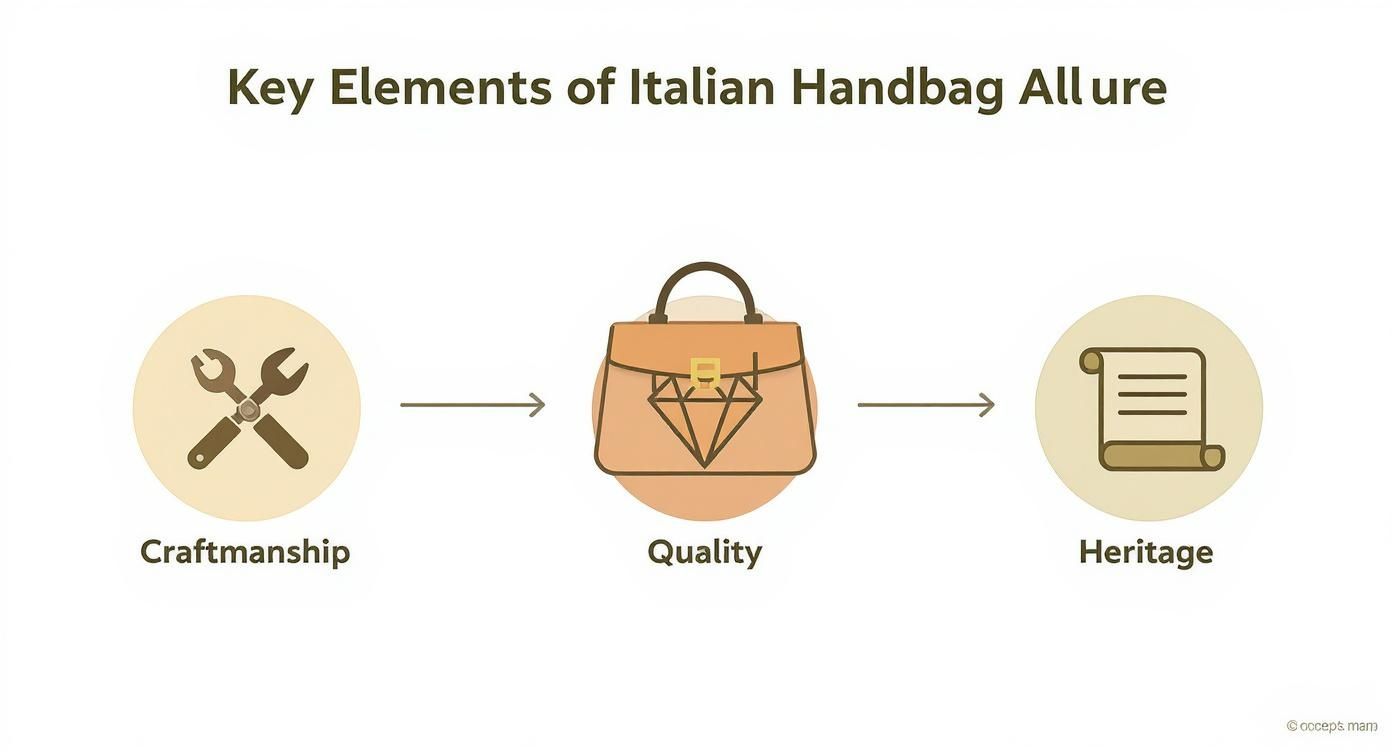
This connection illustrates that the final product's quality is a direct result of the artisan's skill and the rich history behind the materials.
A Quick Guide to Italian Leather Types
To help you tell these beautiful materials apart, here's a quick comparison of the most common leathers you'll find in luxury handbags. Understanding these differences will help you appreciate their feel, durability, and how they evolve over time.
| Leather Type | Key Characteristic | How It Ages | Ideal For |
|---|---|---|---|
| Full-Grain | The most natural and durable layer of the hide, with visible imperfections. | Develops a rich, beautiful patina over time, becoming softer and more unique. | Heirloom-quality bags, briefcases, and pieces that are meant to last a lifetime. |
| Top-Grain | The top layer is sanded to remove blemishes, creating a uniform finish. | Ages well but doesn't develop the deep patina of full-grain. More resistant to stains. | Everyday bags, work totes, and items needing a balance of durability and polish. |
| Saffiano | Top-grain leather with a machine-pressed cross-hatch pattern, sealed with wax. | Extremely resistant to aging, scratches, and water. Maintains its original look. | Structured handbags, wallets, and professional accessories that need to look pristine. |
| Vegetable-Tanned | Tanned using natural materials like tree bark, giving it a warm, earthy feel. | Develops a deep, personal patina that darkens and softens beautifully with use. | Artisan bags, belts, and goods where the story of the leather is part of the appeal. |
Each of these leathers brings something special to the table, and the artisan's choice is a key part of the bag's final personality.
Top-Grain and Saffiano Leather
Just a step below full-grain is top-grain leather. For this type, the very top layer of the hide is sanded and buffed to smooth out any imperfections. This gives it a more uniform and flawless finish. While it won't develop that same rich patina you see on full-grain, top-grain leather is more resistant to stains and daily wear, making it a fantastic choice for everyday bags that have to take a few hits.
And then there's Saffiano leather, an Italian invention made famous by some of the world's biggest luxury brands. It starts as top-grain leather, but then a machine presses a distinctive cross-hatch texture into the surface before it's sealed with wax.
The result is a material that is incredibly resilient, scratch-resistant, and water-resistant. Think of its finish like the durable, pristine coating on a luxury car—it’s built to look flawless for years.
This makes Saffiano a go-to for structured totes and professional bags that need to keep their sharp, polished look. The unique texture adds a touch of modern elegance while providing the kind of practical durability that modern life demands.
The Tuscan Vegetable-Tanning Tradition
You can't talk about Italian leather without mentioning the ancient art of vegetable tanning, a craft perfected in the heart of Tuscany. It's an eco-friendly process that uses natural tannins from things like tree bark, leaves, and roots to treat the hides.
It’s a slow, painstaking method—it can take up to two months—but the result is leather with incredible depth, warmth, and that wonderful earthy smell. Vegetable-tanned leather is famous for its strength and the graceful way it ages, developing an intensely personal patina over time. To learn more about this amazing tradition, you can explore the rich history of Tuscan craftsmanship in leather making and see why it's so revered.
Knowing the different materials is the key to truly appreciating the artistry. For instance, the unique feel and toughness of a Teal Italian Buffalo Cowhide crossbody show just how different hides create distinct styles and functions. Once you understand this artisan's palette, you can read a product description like a true connoisseur.
How to Spot an Authentic Italian Leather Handbag
Alright, now that you know what goes into making Italian leather, let's move from theory to the real world. Spotting a genuine Italian leather handbag is an art form, one that uses all your senses. It’s less about finding a single "tell" and more about recognizing a combination of subtle clues that, together, scream quality.
Think of yourself as a detective for luxury. You're learning to spot the tiny details that counterfeiters almost always get wrong.
This skill is more important than ever. The market for Italy's luxury leather handbags was recently valued at a staggering USD 475.02 million and is expected to climb to USD 821.06 million by 2033. While this growth is great for iconic brands, it also fuels a massive wave of fakes. You can read the full research on the luxury handbag market to see just how big this industry is. Learning to spot the real deal ensures your investment is a smart one.
Trust Your Senses: A Sensory Checklist
The very first step is to trust your gut—and your senses. Real Italian leather has a unique character that’s incredibly difficult to fake well. Here’s what to check for:
- The Look: Authentic full-grain or top-grain leather isn't perfect; it has a history. Look closely for tiny pores, faint lines, or subtle variations in the grain. If the surface looks perfectly uniform and plastic-like, that’s a major red flag for synthetic materials.
- The Touch: Run your hand across the bag. Real leather feels supple, soft, and warm to the touch. When you press into it, it should have a bit of give, wrinkling naturally just like skin. Fakes often feel cold, rigid, and plasticky.
- The Smell: This is one of the most powerful giveaways. Genuine leather, especially the vegetable-tanned kind, has a rich, earthy, and slightly sweet smell. It’s a scent that’s almost impossible to replicate. Counterfeits, on the other hand, usually reek of harsh chemicals or plastic.
It's a common myth that all real leather smells the same. The distinct, pleasant aroma of vegetable-tanned Tuscan leather is a true hallmark of Italian craftsmanship, setting it miles apart from chemically treated hides.
Just by using this quick sensory checklist, you can weed out many of the low-quality imitations before you even start looking at the finer details.
Examine the Craftsmanship and Hardware
Beyond the leather itself, the way a bag is put together tells you everything about the artisan's skill. An authentic Italian leather handbag is built with precision, and the little things matter. A lot. This is where counterfeiters love to cut corners.
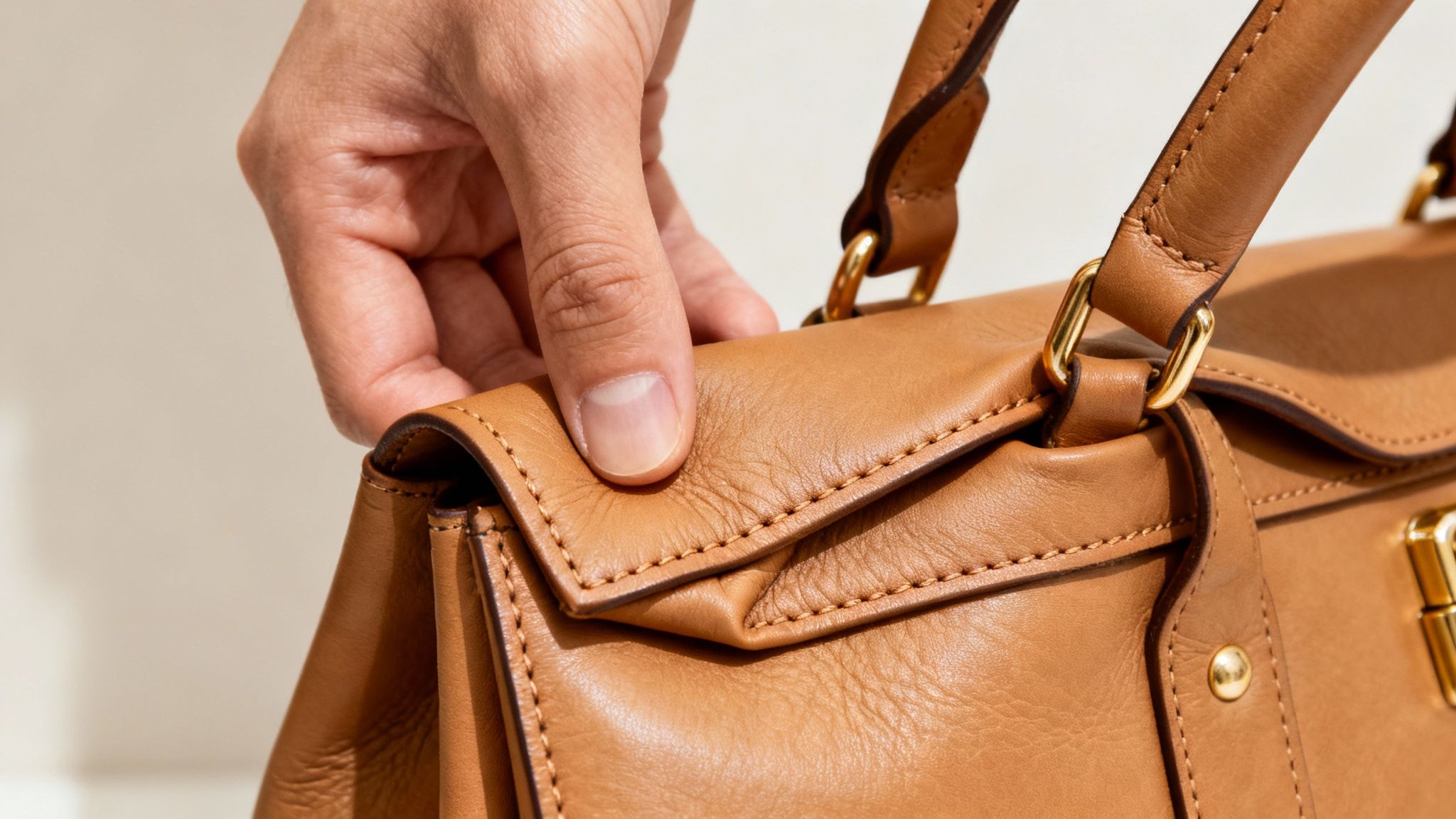
The stitching is a dead giveaway. On a genuine bag, the stitches are tight, even, and consistent. They should blend almost seamlessly into the design, not stand out. Sloppy, frayed, or uneven stitching is a clear sign of cheap, mass-produced work.
Next, get a feel for the hardware. The zippers, clasps, buckles, and feet should feel solid and heavy—not hollow or flimsy. Look for a flawless finish, whether it’s polished gold or brushed nickel, with no signs of chipping. High-quality zippers from makers like YKK or Riri will glide smoothly without ever catching or snagging.
Check the Lining and Labels
Don't forget to look inside. Luxury isn't just skin deep. The interior of a high-quality bag is often lined with premium fabric like canvas or jacquard, or even more leather. The lining should be stitched neatly, with no loose threads or raw, unfinished edges.
Labels and logos are the final checkpoint. Authentic bags will have branding that is clear, crisp, and perfectly executed. Check for these three things:
- A "Made in Italy" Stamp: It should be cleanly embossed or stitched, not cheaply printed on. It's often placed subtly inside the bag or on a small leather tag.
- Brand Logo: The font, spacing, and spelling must be perfect. Fakers often make tiny mistakes here that are easy to catch if you’re paying attention.
- Authenticity Cards: While these can also be faked, they often accompany high-end bags and add another layer of verification.
Getting good at spotting these details takes a little practice, but it's a skill that will serve you well. For a deeper dive, you can learn more about solving the mystery of authenticity in Tuscany leather bags right here on our blog. By combining your sensory instincts with a sharp eye for craftsmanship, you can invest confidently in a piece you’ll love for a lifetime.
A Practical Guide to Handbag Care and Preservation
An Italian leather handbag isn't just an accessory—it's an investment meant to last for years, even decades. But like any beautiful, natural material, its longevity comes down to how well you care for it. Protecting your bag from the elements and everyday life is the key to keeping its color rich and its texture supple.
Think of it like a good skincare routine. Your bag needs consistent, gentle cleaning to get rid of daily grime, a little conditioning to stay hydrated, and the right storage to keep its shape. A little effort goes a very long way in making sure it ages beautifully.
The Essentials of Regular Cleaning
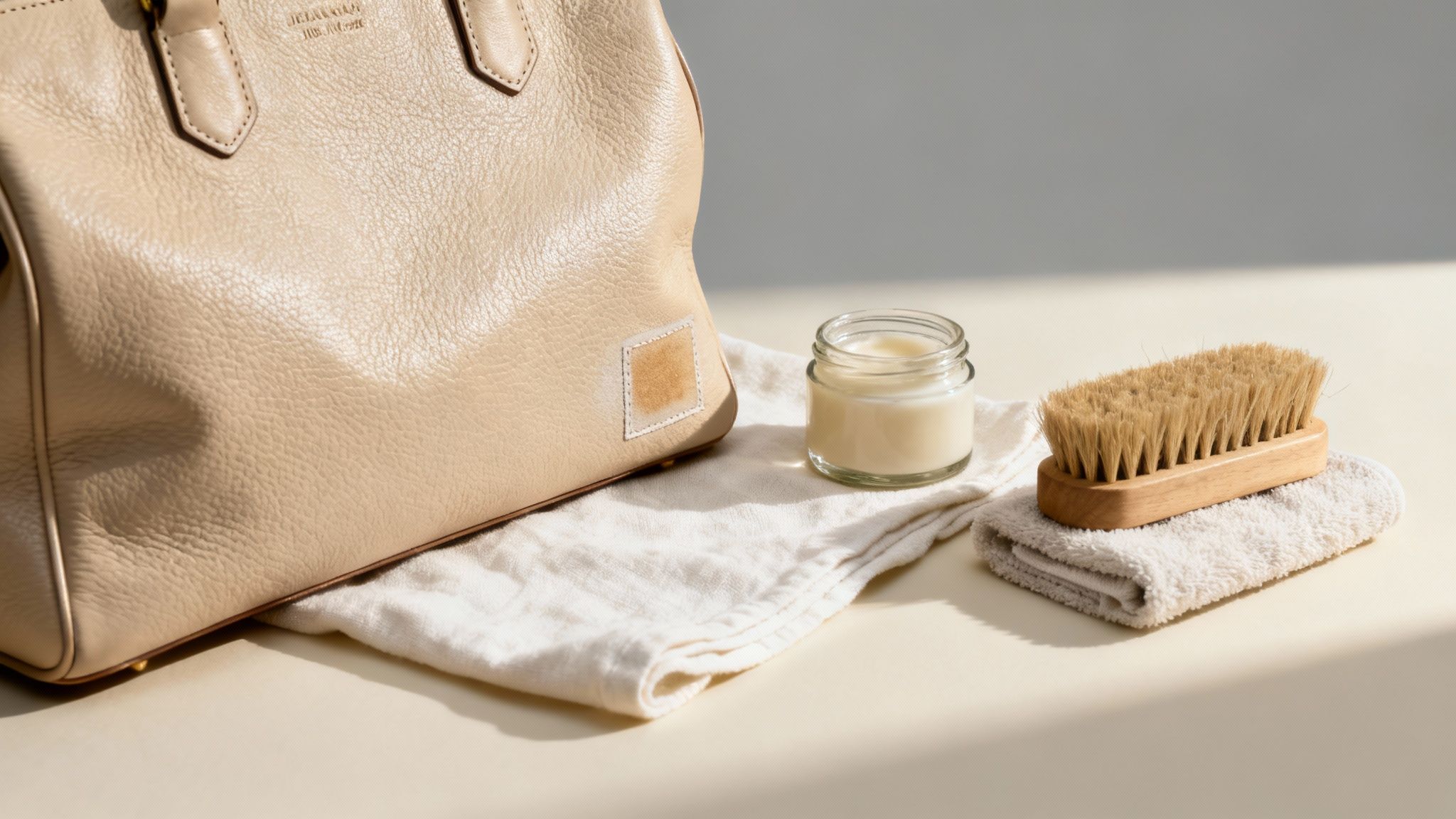
Every day, your bag comes into contact with dust, oils from your hands, and bits of dirt. A quick wipe-down once a week with a dry, soft microfiber cloth is a fantastic habit to get into. It’s a simple step that stops grime from working its way into the leather’s pores.
For a slightly deeper clean, you can dampen the cloth just a tiny bit. Never soak the leather. Gently wipe down the surface and then let it air dry completely, far away from direct sunlight or heat, which can cause the material to fade or crack over time.
The golden rule of leather care: always test any new product on a small, hidden spot first. Try the underside of a strap or an interior pocket to make sure it won’t discolor or damage the beautiful finish.
Conditioning Your Leather Handbag
Leather is skin, and just like our own skin, it can get dry. A high-quality leather conditioner is like a moisturizer, putting back the natural oils that keep the material flexible, soft, and resistant to cracking. You don't have to go overboard with this—once or twice a year is plenty for most handbags.
Just apply a small, pea-sized amount of conditioner onto a clean cloth and work it into the leather with gentle, circular motions. Let the bag sit for a while to fully absorb the product, then buff off any extra with a separate dry cloth. This doesn't just nourish the leather; it brings back that gorgeous, subtle sheen.
Proper Storage for Long-Term Preservation
How you store your Italian leather handbag when it’s not in use is just as critical as how you clean it. Tossing it in a closet can cause it to lose its shape, develop nasty creases, or get scratched.
Follow these simple rules for safe storage:
- Empty It Out: First thing's first—take everything out. This prevents the lining from stretching out and avoids stray marks from pens or makeup.
- Give It Some Stuffing: Fill the bag with acid-free tissue paper or a proper handbag pillow to help it keep its original structure. Never use newspaper, as the ink can easily transfer and stain the lining.
- Use Its Dust Bag: Always store your handbag inside the breathable dust bag it came with. This is your first line of defense against dust, sunlight, and scratches, while still letting the leather breathe.
- Store It Upright: Place your bag on a shelf inside a cool, dark closet. Never, ever hang your bag by its straps for long periods. This will cause them to stretch and weaken over time.
Handling Common Mishaps
Accidents are bound to happen. The trick is to act fast and know what to do. For minor scuffs, you can often just buff them out with a clean, dry cloth. If you spill a little liquid, gently blot the spot immediately with a dry cloth to soak up as much as you can. Do not rub it in!
For tougher stains like ink or grease, your best bet is to consult a professional leather cleaner. Trying to fix it yourself can sometimes make it worse.
Following these practices will ensure your cherished handbag remains a stunning and useful part of your wardrobe for years. For an even more detailed breakdown, check out our resource on how to care for leather bags a complete guide.
How to Style Your Italian Leather Handbag
An exquisite Italian leather handbag isn’t just something you own; it’s a piece you wear. The real magic happens when that beautiful bag becomes an extension of your personal style—that final, perfect touch that pulls an entire outfit together.
The best part? Its incredible versatility. A structured tote isn’t just for the office, and a fun crossbody isn’t only for the weekend. It’s all about knowing how to pair the right bag with the right occasion to create a look that feels confident and completely you.
Elevating Your Professional Look
In a professional setting, your handbag does a lot of the talking. It signals polish, preparedness, and an eye for detail. This is where those classic, structured shapes and timeless colors really get to shine, turning a simple business outfit into a powerful statement.
Consider these pairings for the workplace:
- The Structured Tote: A classic tan or black leather tote is the ultimate workhorse. Pair it with tailored trousers, a silk blouse, and pointed-toe flats for a look that’s both sophisticated and ready for anything. It’s got all the room you need without ever looking bulky.
- The Sophisticated Satchel: For something a bit more compact, a top-handle satchel in a deep burgundy or navy adds a pop of rich color without being distracting. It’s the perfect companion for a sharp sheath dress or pencil skirt, lending an air of classic elegance.
There's a reason these styles dominate. The formal leather handbag segment commands over 66% of the market share, driven by professionals who value both form and function. Within that, tote bags are the clear favorite, making up 32% of the market thanks to their everyday practicality. You can discover more insights about these handbag market trends to see just why these designs have such staying power.
Mastering Casual and Weekend Style
Weekends are when your bag’s personality can really come out to play. This is your chance to experiment with bolder colors, interesting textures, and more relaxed shapes. A great Italian leather bag can instantly elevate a simple jeans-and-tee look from basic to chic.
A great handbag is the "little black dress" of accessories. It should be versatile enough to look just as good dressed up for a night out as it does dressed down for a Sunday brunch.
For a relaxed yet stylish vibe, try these ideas:
- The Effortless Crossbody: A small leather crossbody in a vibrant color like cognac or even a bold red becomes the star of the show. Wear it with dark-wash jeans, a crisp white tee, and your favorite ankle boots for a look that feels put-together without even trying.
- The Slouchy Hobo Bag: If you're going for a more bohemian, laid-back feel, a soft hobo bag is perfect. Its relaxed structure pairs beautifully with a flowy maxi dress or a cozy knit sweater and leggings, adding just a touch of understated luxury.
- The Playful Patchwork: Bags with unique details, like artful patchwork designs, add a creative flair to any casual outfit. They can often be styled in different ways—from a crossbody to a top-handle—making them incredibly adaptable for brunch, shopping, or a casual get-together.
A Smart Buyer's Guide to Finding Your Perfect Handbag
Alright, you’ve done the homework. Now for the fun part: finding your perfect match. This is where all that knowledge about leather, stitching, and craftsmanship comes together. Choosing an Italian leather handbag is a deeply personal decision, balancing what you need with what you love. It’s about finding a piece that doesn't just hold your things but feels like it was made just for you.
Before you even start browsing, it helps to ask yourself a few key questions. Think of it as creating a blueprint for your ideal bag. This simple exercise will narrow your focus and lead you to a handbag you’ll not only adore on day one but continue to cherish for decades.
Defining Your Needs and Style
First up, your lifestyle. Are you a minimalist who just needs space for a phone, keys, and a wallet? Or are you the type who needs a tote that can handle a laptop, a notebook, and a spare pair of shoes? Be honest about your daily routine. A bag that doesn't fit your life, no matter how beautiful, will just end up sitting in your closet.
Next, think about your personal aesthetic. What colors fill your wardrobe? Do you gravitate toward classic, structured silhouettes or more relaxed, bohemian shapes?
- For the Classicist: A structured satchel or a sleek tote in a timeless neutral like black, tan, or navy will give you endless versatility.
- For the Modern Minimalist: A clean-lined crossbody or a simple shoulder bag with minimal hardware makes a quiet yet powerful statement. Think shades of grey, cream, or taupe.
- For the Bold Trendsetter: Don’t be shy with color. A handbag in a rich emerald green, a deep burgundy, or even a vibrant cobalt can become the signature piece that ties your whole wardrobe together.
Getting clear on these preferences is the first step. For more guidance on this crucial decision, you can learn how to choose your first luxury leather bag in our detailed article, which offers even more helpful tips.
Big Brands vs. Artisan Workshops
One of the most exciting choices you'll face is whether to go for an iconic luxury brand or seek out a hidden gem from a small, family-run artisan workshop. There are wonderful benefits to both paths, and neither is wrong.
Iconic brands offer the prestige of a globally recognized name and instantly identifiable designs. You're buying into a legacy, a piece of fashion history. On the other hand, discovering a small artisan in Florence offers something different—a direct connection to the craftsperson. These workshops often produce limited runs, meaning your bag will be a truly unique find, built with generations of skill passed down through one family.
The choice really comes down to what you value most: the storied legacy of a major fashion house or the intimate, personal story of an independent artisan. Both represent the pinnacle of Italian quality.
Tips for a Safe and Smart Purchase
Whether you're buying from a famous boutique on the Via Condotti or a small online store, a few final checks will ensure you make a confident and secure purchase.
- Verify the Seller's Reputation: Look for real customer reviews, clear contact information, and a professional website. A trustworthy seller is always transparent about who they are.
- Examine Product Descriptions and Photos: Reputable retailers provide detailed descriptions of the leather type, hardware, and dimensions. Look for high-resolution photos that show the bag from every angle—including the interior and the stitching.
- Understand the Return Policy: Before you click "buy," make sure you understand the return and exchange policy. This gives you peace of mind, especially when purchasing such a significant item online.
By following this guide, you can navigate the market like a true expert. You'll be able to move beyond just the look of a bag to appreciate its story, its construction, and its perfect fit within your life.
Frequently Asked Questions
Even after getting to know Italian leather, a few practical questions always pop up. Here are some clear, straightforward answers to the most common ones, so you can feel totally confident when choosing, buying, and caring for your bag.
Why Are Italian Leather Handbags So Expensive?
The price comes down to a powerful trio: top-tier raw materials like full-grain Tuscan leather, the incredible skill and hours poured in by artisans, and the design legacy that comes with the 'Made in Italy' promise. You're not just buying a bag for one season; you're investing in exceptional quality and strength built to last a lifetime.
How Can I Be Sure My Handbag Is Real Italian Leather?
Your best tools are your own senses. Real, high-quality leather has a beautifully imperfect, natural grain and a distinct, earthy smell—a world away from the chemical odor of synthetics. Go ahead and press your finger into the surface; authentic leather should wrinkle just a bit, almost like skin.
Beyond that, keep an eye out for these tell-tale signs:
- High-Quality Hardware: Zippers, clasps, and protective feet should feel solid and weighty, never light or hollow.
- Meticulous Stitching: The stitches should be tight, even, and perfectly consistent across the entire bag. No exceptions.
- A Clear Label: Look for a cleanly stamped or stitched "Made in Italy" label, usually tucked away on the interior.
A common mistake is thinking a perfectly uniform texture means better quality. In reality, those subtle variations in the grain are the very signature of genuine leather—proof of its authenticity and natural character.
What Is the Best Way to Store My Leather Handbag?
Proper storage is key to keeping your bag's shape and beautiful condition over the years. First, completely empty it out to keep the lining from stretching. Then, gently stuff it with acid-free paper or a handbag pillow to help it hold its structure.
Finally, slide it into its original protective dust bag. This simple step lets the leather breathe while shielding it from damaging dust and light. And always store your bag upright on a shelf—hanging it by the straps for long stretches can cause them to weaken and warp.
Is Vegetable Tanned Leather a Better Choice?
Whether it’s "better" really comes down to what you value most in a handbag. Vegetable tanning is a traditional, eco-friendly Italian method that uses natural tannins from things like tree bark. This time-honored process creates a durable leather that develops a rich, deep, and totally unique patina as you use it, telling its own story over time.
Chrome tanning, on the other hand, is a much faster process that produces a softer, more water-resistant leather with a very uniform color. For a classic, character-rich bag that will age beautifully and become uniquely yours, vegetable-tanned leather is hands-down the preferred choice among connoisseurs.
At Databazaar.com, we're passionate about the enduring beauty and unmatched quality of authentic Italian craftsmanship. Explore our curated collection of genuine Tuscany Leather bags and find a piece you’ll cherish for a lifetime. Shop luxury with confidence today.