 Skip to content


The Secret Behind Italy’s Most Desired Leather Products
Step into the world of Tuscany Leather, and you're touching a piece of Italian heritage. This isn't just any leather; it’s a material that embodies centuries of artistry, unmatched quality, and a style that simply never fades. Straight from the heart of Tuscany, it's a global benchmark for luxury and durability.
The Enduring Allure of Tuscan Leather
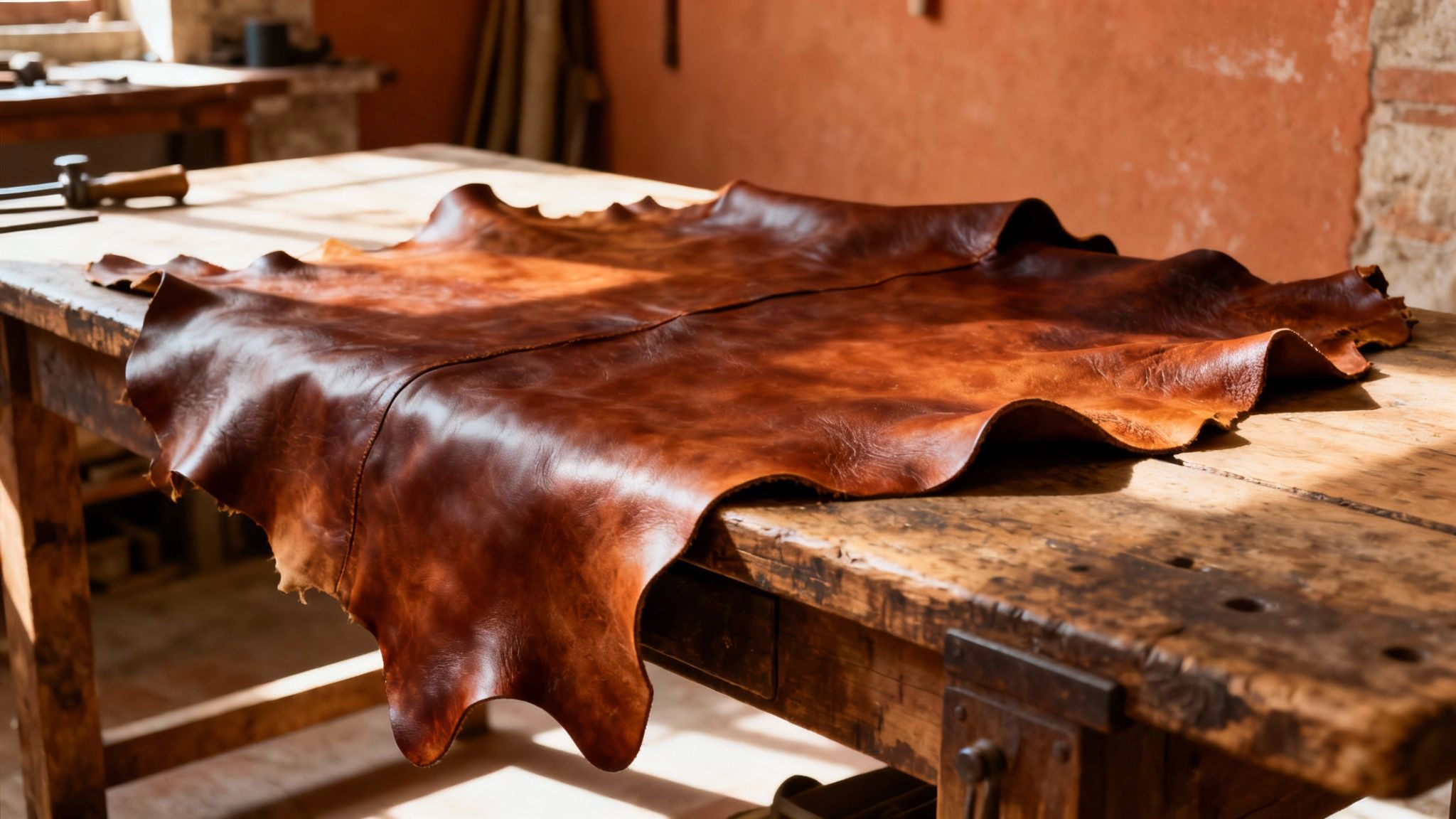
The romantic pull of Tuscan leather comes down to one thing: the skilled hands that craft each and every piece. This guide pulls back the curtain on its prestige, showing you why it's so much more than a product—it's a legacy you can own. Get ready to see what really makes this material so exceptional.
At its core, the reputation of leather from Tuscany is built on a foundation of tradition and painstaking craftsmanship. This isn't a factory assembly line; it's an art form passed down from one generation to the next.
This fierce dedication to heritage is what transforms a simple hide into a piece of functional art. It’s a commitment to getting it right, not getting it done fast, resulting in a product that’s both beautiful and built to last a lifetime.
What Defines This Italian Treasure
The journey starts with sourcing the finest raw hides, but the real magic happens during the tanning process. Unlike the mass-produced leather you see everywhere else, artisans in Tuscany stick to a traditional vegetable tanning method. This age-old technique is the secret behind the material's distinct character.
This process relies on natural tannins extracted from plants like chestnut or mimosa bark. The payoff for this classic, slower method is huge:
-
Exceptional Durability: The slow, natural tanning strengthens the leather’s fibers, creating a remarkably resilient material that can handle daily wear and tear with ease.
-
Unique Character: Over time, each hide develops a rich, warm patina—a beautiful aging process that tells the story of its journey with you.
-
Environmental Consideration: Using plant-based tannins makes it a far more eco-conscious choice compared to the harsh, chemical-heavy methods used in modern tanneries.
Ultimately, choosing an item made from this material, like one of the exquisite Tuscany Leather bags, is an investment in a piece of history. It’s a choice that says you appreciate true craftsmanship and a style that endures.
A Journey Through Tuscan Tanning History
The story of Tuscan leather isn’t just about a product. It's a centuries-long saga of resilience, artistry, and an absolute refusal to compromise on quality. This legacy was born in small, family-run workshops where master craftsmen perfected the techniques that would one day put the entire region on the map.
Those humble beginnings laid the groundwork for a true industrial powerhouse. By the early twentieth century, the tanning industry had become the backbone of Tuscany's economy. Fueled by new methods like liquid tanning, there were 47 tanneries operating by 1916.
But that growth was met with immense challenges. The Great Depression and World War II hit hard, damaging or dismantling many of these facilities. Through it all, the artisans adapted, shifting their focus to durable cowhide and sole leather just to survive. You can discover more about this rich industrial history on artsandculture.google.com.
Post-War Reconstruction and Global Leadership
The end of the wars marked a major turning point. The reconstruction of the 1950s wasn't just about rebuilding factories; it was about reaffirming an entire economic model centered on the art of tanning. This revival ignited an economic boom that lasted for decades, cementing Tuscany's reputation on the world stage.
This era saw the industry flourish, blending time-honored traditions with modern efficiency. That same spirit is still alive today.
The resilience shown during those difficult times is a testament to the deep-rooted passion and expertise of Tuscan tanners. It proved that true craftsmanship could not only survive adversity but emerge stronger and more respected than ever before.
Today, that rich history supports a thriving local economy. The leather tuscany sector employs around 10,000 people across nearly 900 small and medium-sized tanneries. This network of artisans continues to uphold the same standards of excellence set by their predecessors.
To dive deeper into this heritage, you might be interested in our article on the story of authentic Italian leather products. Each piece of leather tells a story of survival, dedication, and artistry.
What Makes True Tuscan Leather Unique
The unique character of genuine Tuscan leather boils down to one thing: a deep, unwavering commitment to vegetable tanning. This isn't just a manufacturing step; it's an entire philosophy that sets this material apart from almost everything else you'll find. Think of it as the difference between slow-cooking a rich, flavorful stew versus grabbing something from a drive-thru.
Instead of harsh chemicals, Tuscan artisans use natural tannins pulled from organic materials like chestnut wood, quebracho, or mimosa bark. This traditional method is a slow, patient process that can take weeks, allowing the tannins to gradually work their way into the hide. This unhurried approach is what strengthens the leather’s fibers, giving it a sturdiness that modern, faster methods just can’t match.
This infographic breaks down the core ideas that define the uniqueness of Tuscany Leather.
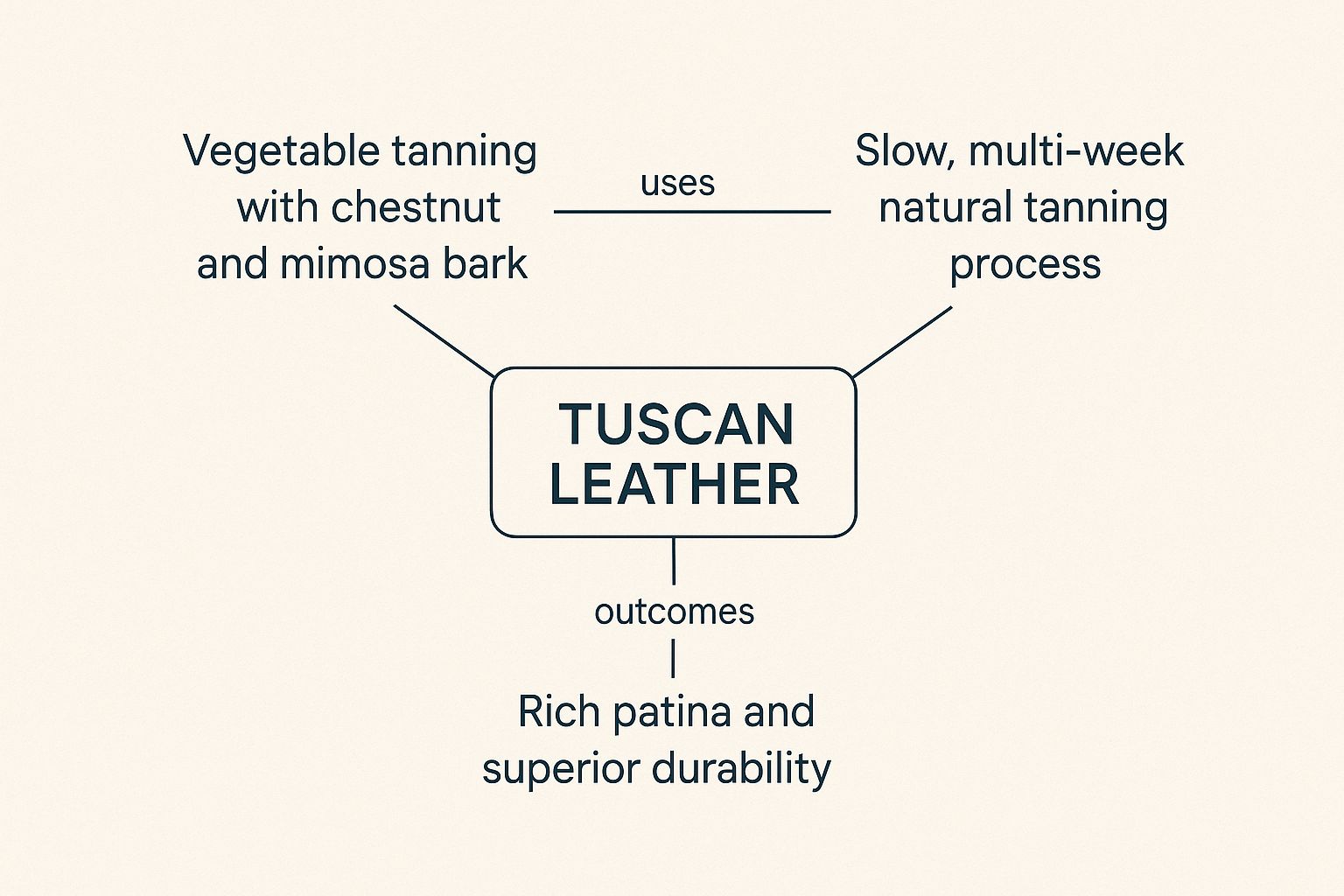
As you can see, the real magic happens at the intersection of natural ingredients and a process honed over centuries. The result is a product famous for its long life and its ability to get better with age.
The Contrast with Chrome Tanning
To really get why vegetable tanning is so special, it helps to look at its modern counterpart: chrome tanning. This is the method used for the vast majority of leather goods worldwide. It uses chromium salts to tan a hide in as little as a single day. While it’s incredibly efficient and keeps costs down, the final product is fundamentally different.
Chrome-tanned leather often feels softer right off the shelf and comes in a wider range of bright colors, but it lacks the soul and resilience of its vegetable-tanned cousin. It’s a product of speed, not of patience.
The two approaches create products that are worlds apart. Here’s a quick look at how they stack up against each other.
Vegetable Tanning vs Chrome Tanning
|
Feature |
Tuscan Vegetable Tanning |
Modern Chrome Tanning |
|---|---|---|
|
Tanning Agents |
Natural tannins from wood, bark, and leaves |
Chromium salts and other chemicals |
|
Process Time |
Up to 40 days |
Typically 1-2 days |
|
Environmental Impact |
Biodegradable and eco-friendly |
Produces hazardous chemical waste |
|
Aging |
Develops a rich patina; improves with time |
Tends to crack, fade, or peel |
|
Artisan Skill |
Requires deep knowledge and manual skill |
Largely automated and industrial |
|
Scent & Feel |
Earthy, natural aroma; firm yet supple |
Often has a chemical smell; can feel thin |
As you can see, the differences are stark. Choosing vegetable-tanned leather means you're investing in an eco-conscious product built on generations of skill.
This dedication to tradition is a huge part of the story. If you're curious about how Tuscany leather stands out against other Italian brands, our detailed comparison offers even more insights. In the end, it really comes down to whether you value a legacy of true craftsmanship over the convenience of mass production.
The Global Economic Impact of Tuscan Leather
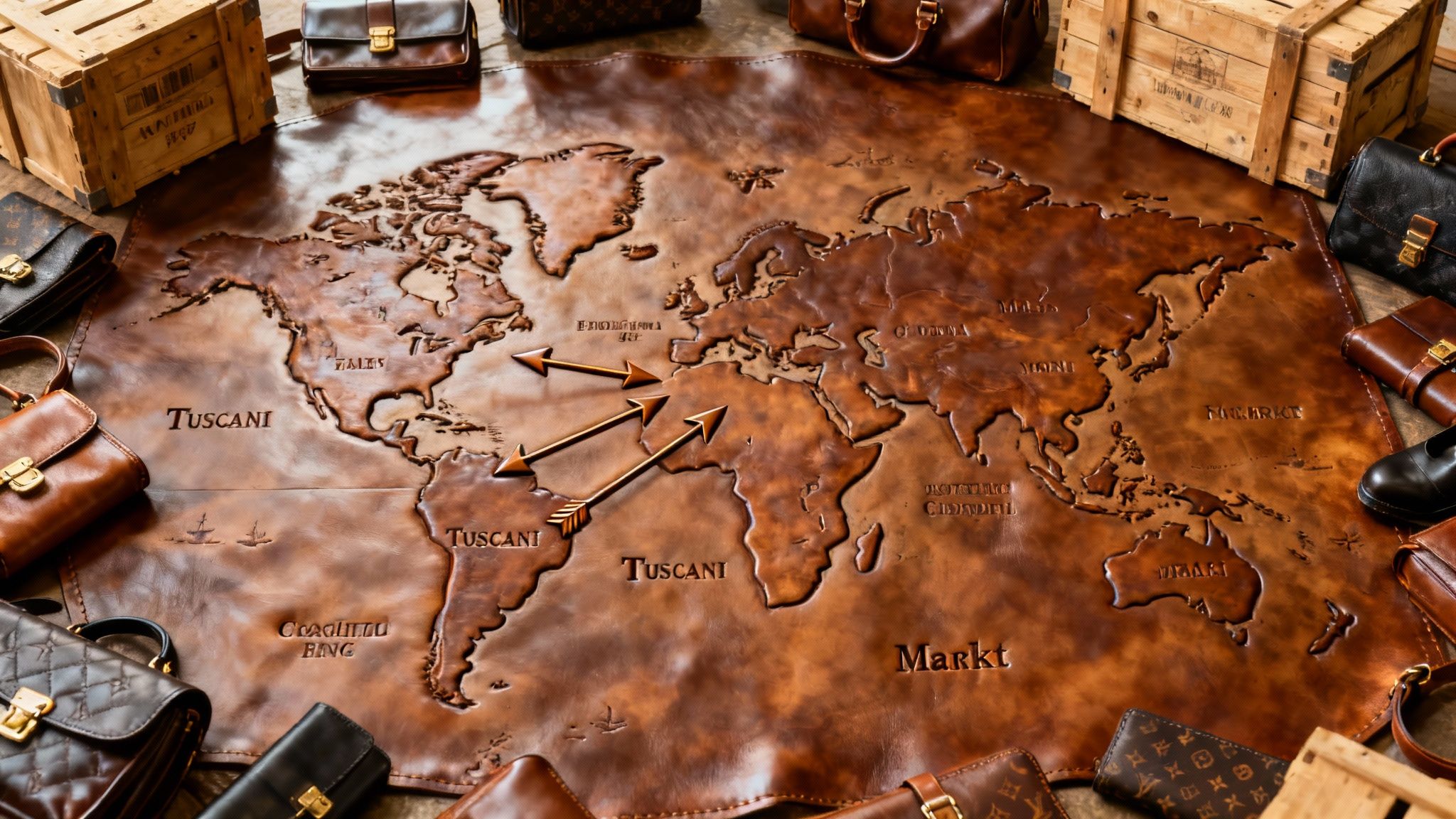
Tuscan leather’s influence stretches far beyond the rolling hills of its homeland, making it a major player in the global luxury market. It's a true economic powerhouse, built on a foundation of artisanal heritage and a modern, export-driven business model. This isn’t just about preserving tradition; it's about projecting that unmatched quality onto the world stage.
This unique blend of old-world skill and savvy global commerce creates a powerful economic engine. It’s no coincidence that world-renowned luxury brands have set up shop in and around Florence—they rely on the unparalleled craftsmanship of local tanneries. This symbiotic relationship cements Tuscany's status as the gold standard for high-end leather goods.
A Legacy of Growth
The industry's economic strength is impossible to ignore. In a remarkable show of market power, the Tuscan leather industry saw its exports jump from €6 billion to €8 billion in 2019 alone. That’s a massive 33% increase in turnover, underscoring its vital position as Italy’s primary leather manufacturing hub. You can dig deeper into this incredible economic evolution on blog.florenceleathermarket.com.
This isn't just about impressive numbers. It’s a testament to the region's ability to innovate while staying true to its roots, proving that authentic craftsmanship holds immense value in today's global economy.
Historically, the region had a natural advantage. The Arno River provided the water essential for tanning and easy logistics, sealing the area's industrial destiny centuries ago. Today, with over 20 municipalities economically dependent on leather production, the sector continues to thrive by marrying tradition with cutting-edge design and quality.
This economic resilience and unwavering commitment to excellence are key reasons why Tuscany leather is worth the investment. When you buy a piece, you’re not just getting a product—you're getting a share in a legacy of enduring quality and economic significance.
How to Care for Your Tuscan Leather Goods
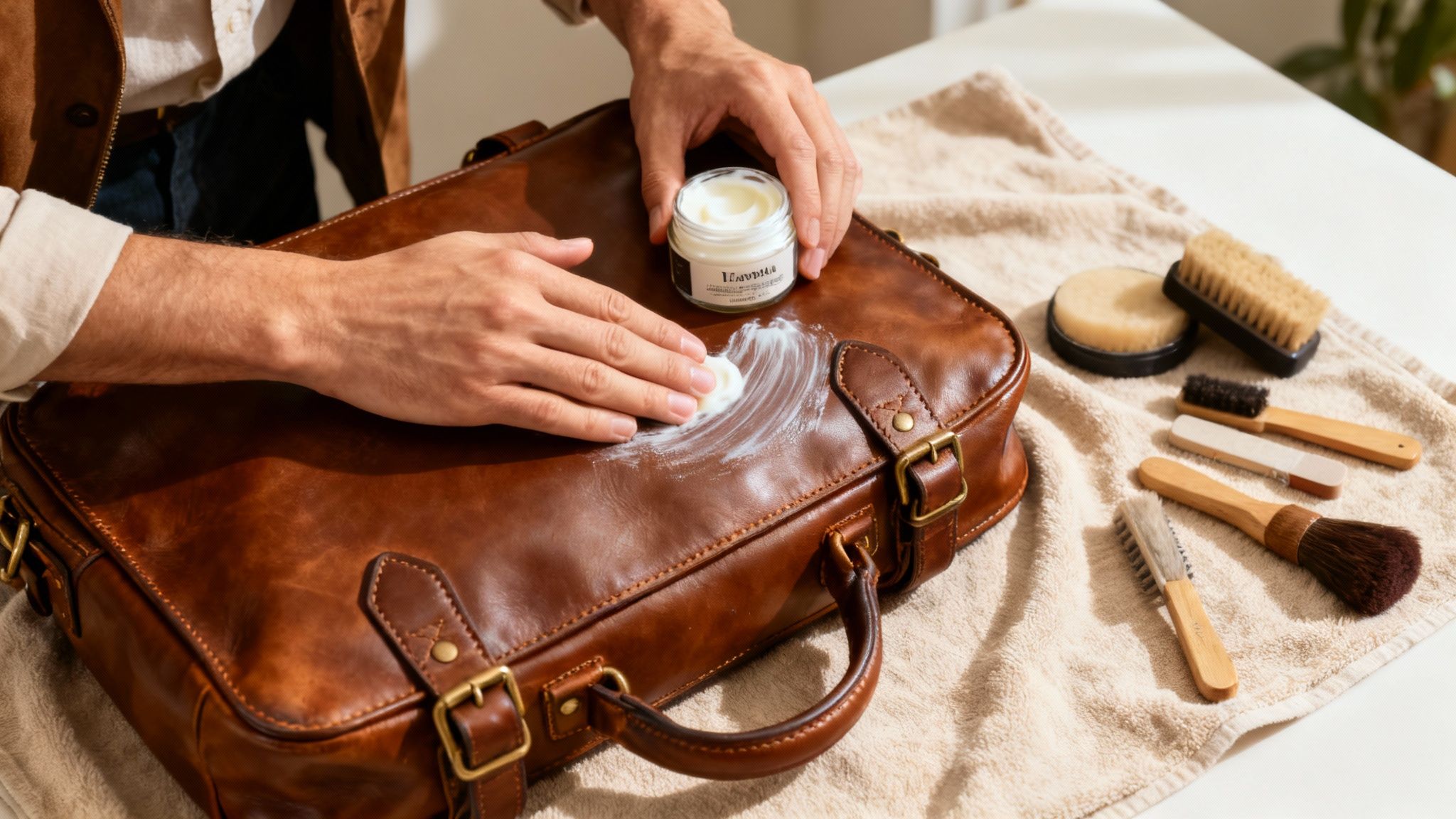
Owning a genuine Tuscany Leather piece is an investment. And like any good investment, a little care goes a long way. With just a bit of attention, your bag or accessory won't just last for decades—it will develop a rich, personal character that tells its own story. The secret is consistent, gentle maintenance.
First things first: light, regular cleaning is your best friend. This prevents everyday dirt and oils from settling deep into the leather’s pores. Simply wipe your item down with a soft, dry cloth every week or so. If it needs a bit more, a slightly damp cloth will do the trick. Just be sure to avoid harsh chemical cleaners or abrasive soaps, as they can strip the leather of its natural, protective oils.
To keep the leather supple and prevent it from drying out, you'll want to do some deeper conditioning every 6-12 months. A specialized leather cream or conditioner is non-negotiable here. Apply a small, pea-sized amount to a clean, soft cloth and gently rub it into the leather using circular motions until it's absorbed. Do this whenever the leather starts to feel a little dry to the touch.
Proper Storage and Handling
Believe it or not, how you store your Tuscan leather is just as important as how you clean it. When you’re not using your bag, keep it in a breathable dust bag. This protects it from scuffs and dust while allowing the leather to breathe.
Always store it away from direct sunlight and extreme heat or cold, which can cause the leather to dry out and crack. And whatever you do, never store it in plastic—that’s a surefire way to trap moisture and invite damage.
Remember, the development of a patina—a soft sheen and darkening of the leather over time—is not a flaw. It is the hallmark of high-quality, vegetable-tanned leather and a sign that your item is aging beautifully.
Even with the best care, life happens, and minor scratches can appear. Don't panic. Often, you can buff these out yourself by gently rubbing the scratch with your fingertip. The natural oils from your skin are sometimes all it takes to help the mark blend back into the surrounding leather.
For a more detailed look at specific products and long-term care, check out The Buyer’s Guide to Tuscany Leather Handbags, which offers even more insights into product longevity.
Your Guide to Authentic Tuscan Leather
Now that you know what makes leather tuscany so special, you can shop for the real thing with confidence. It’s time to move beyond the specs and focus on what you can see, feel, and even smell. When you’re ready to invest, look for the story the leather tells through its unique character.
A genuine piece has a distinct, earthy aroma from the natural tannins—a world away from the chemical smell of mass-produced, chrome-tanned goods. Real vegetable-tanned leather feels rich and substantial in your hands, not thin or plasticky. Look for minor imperfections, too. Those aren't flaws; they're the authentic marks of a natural hide, showcasing its one-of-a-kind journey.
The most telling sign of quality is its potential to develop a beautiful patina. This natural aging process, where the leather darkens and softens with use, is the ultimate mark of superior, vegetable-tanned craftsmanship from Tuscany.
Choosing a trusted source like Databazaar ensures you're getting a product that upholds these time-honored traditions. And once you've found the perfect piece, styling it is half the fun. For a polished look, check out these tips for coordinating your leather accessories to make sure your new investment truly shines.
A Few Final Questions About Tuscan Leather
As we wrap up our tour through the world of Tuscan leather, let's tackle a few common questions. Think of this as your final checklist to make sure you’re choosing a piece with confidence and knowledge.
Is All Leather From Italy Considered Tuscan Leather?
Not at all. While Italy produces incredible leather nationwide, the "Tuscan" label is reserved specifically for leather made in the Tuscany region using its famous traditional vegetable tanning methods.
It’s this heritage of craftsmanship that gives Tuscan leather its signature durability, rich aroma, and the ability to develop that gorgeous, sought-after patina over time. It’s a mark of a specific place and a specific process.
Why Does Vegetable-Tanned Leather Change Color?
That beautiful color change is called a patina, and it's the number one sign of high-quality, vegetable-tanned leather. It's a completely natural process. The tannins in the leather slowly react to sunlight, the air around you, and even the natural oils from your hands.
This journey creates a unique, richer, and often darker finish that tells the story of where your bag has been.
Unlike chemically treated leathers that might crack, fade, or peel, this organic aging process adds a layer of character and beauty, making the item uniquely yours.
How Can I Spot Genuine Tuscan Leather?
Trust your senses. Authentic Tuscan leather has a very distinct, earthy, and almost sweet smell thanks to the natural tannins. It should feel supple and rich to the touch, never stiff or plasticky.
Also, look for official certifications like the ‘Pelle Conciata al Vegetale in Toscana’ trademark, which guarantees its origin and method. Don't be afraid of minor imperfections on the surface, either—those are signs of a natural hide, not a uniform, mass-produced material.
Ready to feel the difference that true Tuscan craftsmanship makes? Explore the curated collection at Databazaar.com and find a piece that’s built to last a lifetime.
Discover your perfect leather companion at https://www.databazaar.com.